France Urges Citizens to Evacuate Mali Amid Surging Tuareg and Jihadist Offensive
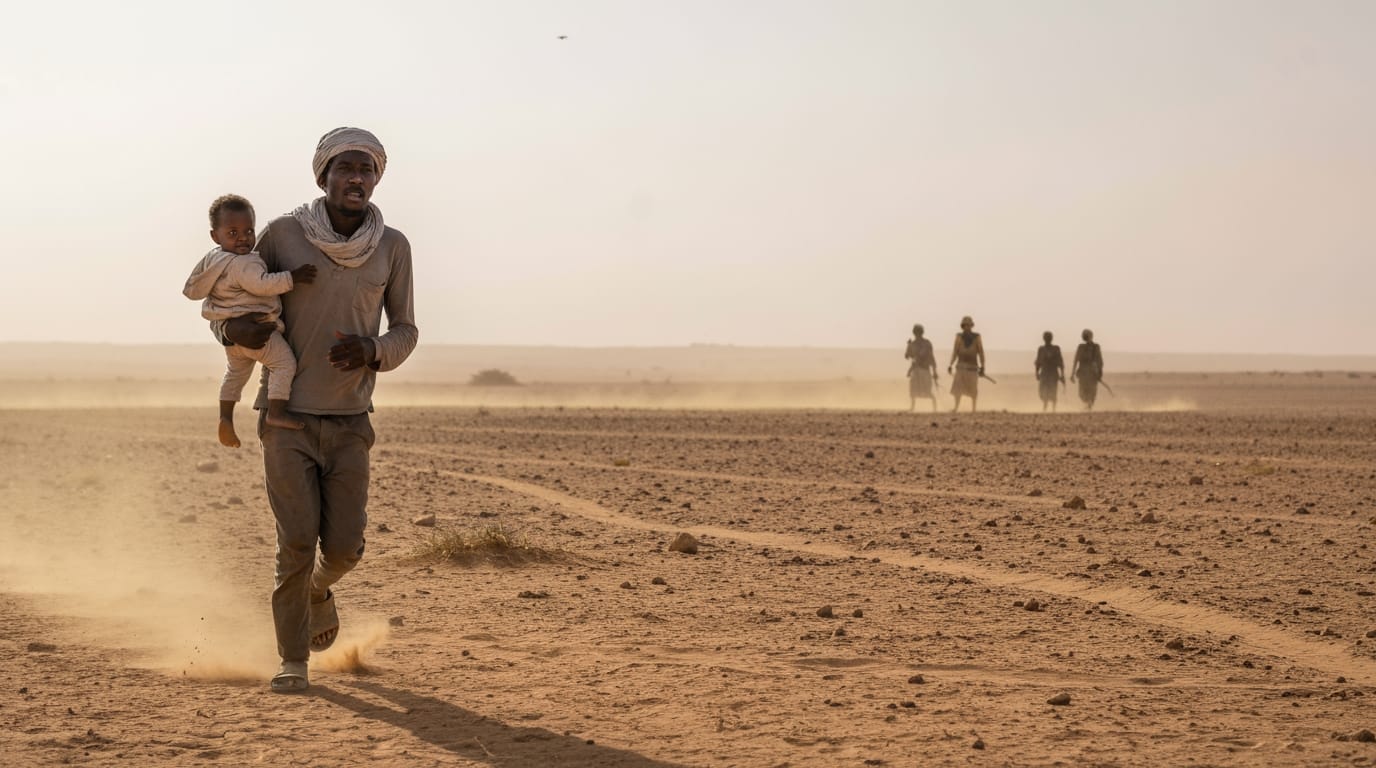
Bamako, Mali – France has issued an urgent directive for its citizens to depart Mali "as soon as possible," citing an "extremely volatile" and rapidly deteriorating security situation across the West African nation. The unprecedented advisory comes in the wake of a coordinated and widespread offensive launched by an alliance of Tuareg separatists, primarily the Azawad Liberation Front (FLA), and al-Qaeda-linked jihadist groups, including Jama'at Nusrat al-Islam wal-Muslimin (JNIM). Attacks have been reported not only in the northern strongholds but also in the capital Bamako and the strategic military town of Kati, highlighting the profound and immediate threat gripping the country. Compounding the crisis, Mali's Defense Minister, Sadio Camara, was reportedly killed during a sophisticated assault on his residence over the weekend.
A Nation Under Siege: The Escalating Offensive
The current wave of violence marks Mali's most severe security crisis in years, characterized by a series of lethal and coordinated attacks that began over the past weekend. Reports indicate that the combined forces of the FLA and jihadist elements have successfully seized control of Kidal, a strategically vital town in the north. This significant development notably forced the withdrawal of Russian Africa Corps personnel, who had been supporting the Malian government. A spokesperson for the FLA, Mohamed Elmaouloud Ramadane, explicitly stated the group's objective: the permanent withdrawal of Russian forces from Azawad and all of Mali.
Beyond Kidal, the offensive has spread alarmingly. Explosions and gunfire have been reported in multiple cities, including Bamako, Kati, Gao, Mopti, and Sevare. The attack that claimed the life of Defense Minister Sadio Camara underscores the reach and audacity of the armed groups, striking at the heart of the military government's leadership. This multi-front assault suggests a sophisticated level of coordination between the Tuareg separatists and the jihadist factions, despite their historically divergent long-term objectives.
France's Dire Warning and International Concern
The gravity of the situation prompted the French foreign ministry to issue an updated travel advisory on Wednesday, April 29, 2026. The advisory unequivocally describes the security environment in Mali as "extremely volatile" and strongly discourages all travel to the country. French nationals already in Mali have been urged to make arrangements for a "temporary departure" via available commercial flights as soon as possible. For those unable to leave immediately, the ministry advised staying indoors, limiting movement, and diligently following instructions from local authorities while maintaining contact with relatives. Land travel remains particularly hazardous, with national roads frequently targeted by terrorist groups.
France is not alone in its concern. The United States and the United Kingdom had previously issued travel warnings and initiated the evacuation of non-essential personnel and their families due to the deteriorating conditions. Adding to the woes, the al-Qaeda-linked JNIM has been actively enforcing a fuel blockade since September, targeting tankers primarily from Senegal and Ivory Coast. This blockade has severely crippled Mali's landlocked economy, leading to widespread disruptions including school closures, hindered agricultural harvesting in several regions, and limited access to electricity, further exacerbating the humanitarian situation.
A Tumultuous History: Mali's Decade of Instability
Mali has been embroiled in a protracted conflict since a Tuareg rebellion erupted in 2012, aiming for independence or greater autonomy for the northern region known as Azawad. This rebellion marked the beginning of a complex and evolving crisis, where secular-oriented Tuareg groups sometimes allied with, and at other times clashed with, various Islamist factions seeking to impose their own rule. The Sahel droughts of the 1970s and 1980s played a significant role in fueling earlier Tuareg insurgencies by contributing to marginalization and prompting migration, exposing some to military training and revolutionary ideologies in neighboring countries.
The political landscape has been further destabilized by a series of coups since 2020, bringing a military government to power. These coups were followed by the expulsion of French military forces (Operation Barkhane/Serval) in 2022 and the United Nations Multidimensional Integrated Stabilization Mission in Mali (MINUSMA) by December 2023. MINUSMA's departure, requested by Mali's transitional authorities, was seen by some as a "fatal blow" to the peace process and a potential emboldening factor for jihadist groups. Its withdrawal also removed a significant humanitarian aid operation and thousands of jobs. Following these expulsions, Mali's military government pivoted its alliances, increasingly relying on Russia and its Africa Corps (formerly the Wagner Group) for security assistance. This shift has made the current offensive against Russian-backed positions even more significant.
Regional Fallout and Uncertain Future
The escalating violence in Mali carries profound implications for the wider Sahel region, with experts warning of a potential "large-scale security breakdown." Such instability could send shockwaves across West Africa, impacting neighboring countries and regional bodies like ECOWAS. The Malian government's ability to maintain control and project authority is increasingly in question, particularly with reports that its leader has not been seen publicly since the weekend's attacks.
The complex interplay between Tuareg separatists and jihadist groups, despite their differing long-term goals — with the former seeking an independent state for the Tuareg people and the latter aiming for Islamic rule — creates a volatile and unpredictable environment. While the Tuareg rebels have indicated their primary issue is with the Bamako regime and Russian involvement, rather than Russia itself, their offensive has demonstrably weakened the central government's hold. The future trajectory of Mali remains highly uncertain, caught between an emboldened insurgency, a struggling military government, and a shifting international presence.
The current crisis represents a critical turning point for Mali, presenting its most severe security challenge in years. The coordinated offensive by Tuareg separatists and jihadist groups has not only sparked urgent international advisories for foreign nationals to leave but has also exposed the fragility of the Malian government's control. With significant losses, including the nation's defense minister and the retreat of Russian forces from key areas, the humanitarian and regional implications are dire. As instability deepens, the path forward for Mali remains fraught with uncertainty, demanding urgent attention from both domestic and international actors to avert a wider catastrophe across the Sahel.


