France's Fiscal Storm Threatens Macron's Pro-Business Legacy Amidst Budgetary Chaos
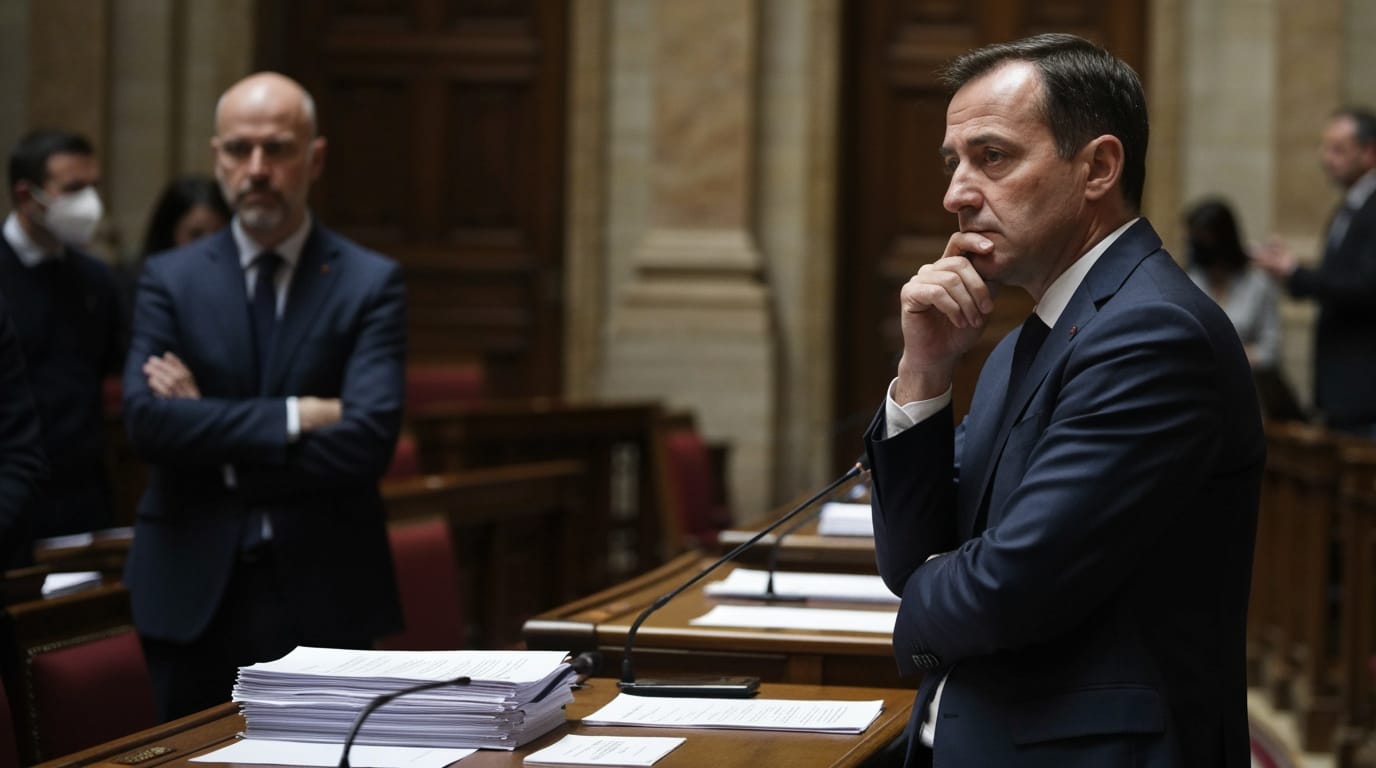
Paris, France – President Emmanuel Macron's ambitious agenda to transform France into a dynamic, pro-business European economic powerhouse is facing its most significant challenge yet, as a burgeoning budget deficit and profound political instability cast a long shadow over the nation's financial future. What began as a promise of fiscal discipline and economic revitalization now grapples with the harsh realities of soaring public debt, dwindling investor confidence, and a deeply fractured political landscape, raising questions about the sustainability of the president's reformist vision.
Macron's Economic Blueprint: A Vision Unraveled
Upon his initial election in 2017, Emmanuel Macron embarked on a mission to re-energize the French economy, advocating for a suite of pro-business reforms designed to boost investment, stimulate job creation, and streamline an often-perceived rigid labor market. His early tenure saw the implementation of significant tax cuts for businesses, labor law reforms, and targeted deregulation, aiming to project France as an attractive destination for global capital. These efforts initially showed promise, with France's budget deficit notably decreasing in 2018 and 2019, bringing it into compliance with European Union budget rules for the first time in over a decade. This period fostered optimism among international investors, with many anticipating a brighter economic outlook for the euro area's second-largest economy.
However, the trajectory of this economic blueprint has been abruptly altered by a series of unforeseen global and domestic crises. The momentum gained in pre-pandemic years has dissipated, replaced by growing fiscal uncertainty and political turbulence that now threatens to undermine the very foundations of Macron's economic project.
Unforeseen Headwinds and Soaring Deficits
The onset of the COVID-19 pandemic and the subsequent energy crisis following Russia's invasion of Ukraine dramatically shifted France's fiscal landscape. The government responded with substantial spending on subsidies to support businesses and shield consumers from rising energy costs, actions that, while necessary, significantly ballooned public expenditure. Simultaneously, global interest rates began to climb, exacerbating the cost of servicing France's already considerable national debt. These factors, combined with a shortfall in tax revenues by approximately €21 billion compared to projections, and increased spending on unemployment benefits and local government, led to a rapid deterioration of public finances.
The stark reality of this fiscal decline became undeniable as the budget deficit for 2023 reached 5.5% of Gross Domestic Product (GDP), significantly exceeding the government's own revised estimate of 4.9%. This critical breach pushed France's public debt to an alarming 110.6% of GDP by late 2023, a figure projected to climb further to 120% by late 2027. The European Union, having suspended its budget rules during the crises, has since reinstated them, placing France under an Excessive Deficit Procedure – a formal warning for violating the bloc's mandated 3% deficit limit. This situation underscores a severe fiscal challenge that demands urgent and effective solutions.
The Scramble for Solutions and a Political Quagmire
In response to the escalating crisis, the French government has outlined plans for substantial spending cuts. Initially, €10 billion in cuts were announced for 2024, followed by intentions for an additional €20 billion in 2025 and an anticipated €40 billion in cuts and tax hikes for the 2026 budget. These proposed measures aim to bring the deficit back within the EU's 3% threshold, with a target of 5.0% for 2024 and 4.7% for 2025. Economy and Finance Minister Bruno Le Maire has publicly opposed income tax increases, instead favoring reductions in social benefits and local government budgets. However, the search for savings has been broad, even leading to proposals to cut public holidays and reduce healthcare spending, triggering widespread backlash. Businesses, particularly large companies, are facing increased scrutiny, with a new levy on their profits expected to raise €7.3 billion in 2026.
The path to implementing these austerity measures is fraught with political peril. President Macron lost his absolute parliamentary majority in 2022, forcing his government to navigate a fragmented National Assembly where opposition forces from the far-right, far-left, and even the Socialists have coalesced against his fiscal plans. The government has frequently resorted to Article 49.3 of the French Constitution, a special power allowing it to pass legislation without a parliamentary vote, most notably for the controversial pension reforms. While this mechanism allows for the passage of budgets, it has fueled mass protests, strikes, and numerous no-confidence motions, intensifying political instability and contributing to a perception of "chaos." The constant parliamentary deadlock, compounded by frequent changes in prime ministers, has made it exceedingly difficult for Macron's administration to secure consensus on critical economic reforms.
Eroding Confidence and Economic Fallout
The prevailing budgetary chaos and political uncertainty are having tangible repercussions on investor sentiment and France's broader economic outlook. A recent survey by the American Chamber of Commerce and Bain & Company revealed a dramatic decline in confidence among US investors. Only 17% now expect conditions in France to improve within the next two to three years, a significant drop from 72% in 2018. Furthermore, a striking 77% of respondents expressed a lack of confidence in the government's ability to implement necessary economic reforms before the 2027 elections. This erosion of trust is translating into tangible concerns, with 28% of American investors anticipating a reduction in their French workforce in 2026.
The fiscal turmoil has also driven up France's borrowing costs. Investors have sold off French bonds, pushing interest yields higher. The yield on France's 10-year bond, a key indicator of risk, has risen, now sitting just below heavily indebted Italy's and even surpassing Greece's. This increase in interest payments diverts substantial funds that could otherwise be allocated to essential public services like education and healthcare. The lack of a clear economic roadmap and the ongoing debates over potential additional taxes introduce significant risk for technology and development companies, potentially slowing long-term investment in critical sectors like research and development. The combination of political paralysis and fiscal pressures heightens the risk of sustained economic stagnation, jeopardizing France's position as a leading European economy.
A Critical Juncture for Macron's Legacy
As President Macron approaches the final year of his presidency, the confluence of a widening budget deficit, rising public debt, and a deeply fragmented political landscape presents a formidable challenge to his economic legacy. His initial vision of a revitalized, pro-business France is now in jeopardy, constrained by the need for painful austerity measures and the struggle to secure political buy-in. The ongoing budgetary chaos not only strains domestic finances but also raises concerns across the European Union, which views France's fiscal stability as crucial for the broader eurozone. The next few years will be pivotal in determining whether France can navigate these turbulent economic waters and re-establish the fiscal credibility essential for sustained growth and investor confidence. The delicate balancing act between fiscal discipline and social protection, amidst entrenched political divisions, will ultimately define the success or failure of Macron's ambitious economic reforms.


