Franco-German Axis Reaffirms Unity Amidst Global Turmoil
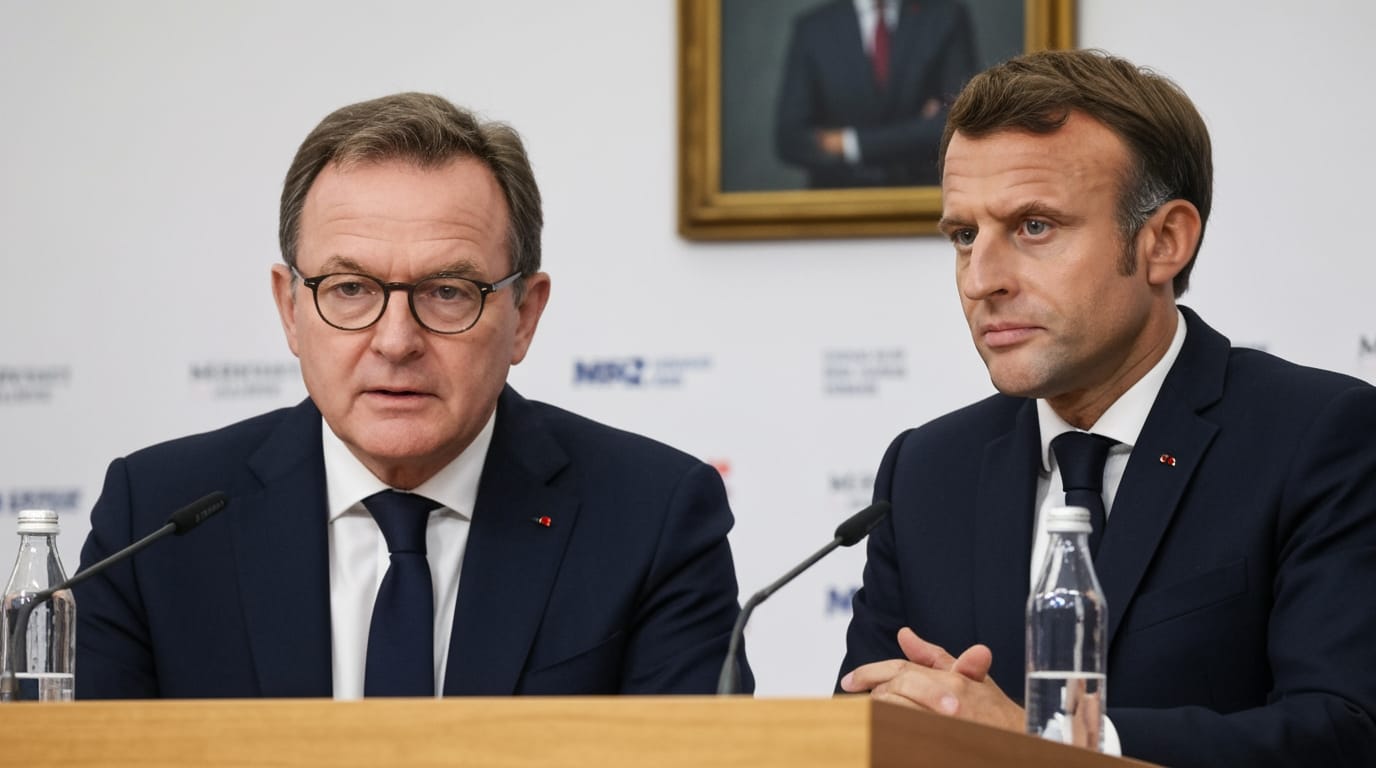
Cologne, Germany – In a powerful display of rekindled solidarity, German Chancellor Friedrich Merz and French President Emmanuel Macron concluded a significant week of bilateral engagements this Friday, signaling a renewed impetus for the Franco-German partnership at the heart of the European Union. From Parisian commemorations to strategic defense talks near Cologne, the leaders sought to project a united front, addressing pressing challenges ranging from continental security to economic competitiveness. Their comprehensive agenda underscored a shared commitment to strengthening European sovereignty in an increasingly complex geopolitical landscape.
The series of high-level meetings, culminating in a joint Franco-German Ministerial Council, comes at a critical juncture for Europe. With ongoing conflict in Ukraine, evolving transatlantic relations, and a global economic climate demanding greater European self-reliance, the traditionally pivotal relationship between Berlin and Paris is being tasked with setting the strategic direction for the entire bloc. Both leaders emphasized the necessity of a cohesive Franco-German approach to navigate these turbulent waters, aiming to translate their ambitious rhetoric into tangible outcomes for the continent.
A New Chapter: Merz's Ascent and the Franco-German "Renaissance"
The groundwork for this intensified cooperation was laid following Friedrich Merz's appointment as German Chancellor in May 2025. His inaugural foreign trip saw him meet President Macron in Paris, where both leaders declared their intent for a "Franco-German renaissance for Europe" and a "new push for Europe." This initial encounter also established a commitment to regularly convene a Franco-German Defense and Security Council, a pledge that has demonstrably materialized over the past year.
Subsequent meetings further solidified this renewed alignment. In August 2025, the 25th Franco-German Council of Ministers in Toulon addressed crucial areas including competitiveness, energy, trade, and advanced technology. A notable outcome from this period was Germany's evolving stance on nuclear power, with Berlin signaling its support for including nuclear energy in the EU's energy rulebook – a significant concession and a long-sought objective for France. Early in 2026, both leaders reaffirmed their consensus on enhancing the EU's speed and competitiveness at an informal summit in Brussels, underscoring their "almost always agree" stance on these pivotal issues. These diplomatic exchanges set the stage for the concentrated efforts observed this past week, aiming to overcome past divergences and forge a more cohesive European strategy.
Intensive Diplomacy: From Paris to the Rhine
The recent "week of harmony" commenced on Monday, July 13, with Chancellor Merz's participation in a "coalition of the willing" meeting in Paris, focusing on continued support for Ukraine. This gathering highlighted the leaders' shared concern for regional stability and a collective determination to aid Kyiv in its defense efforts. The diplomatic itinerary continued on Tuesday, July 14, a symbolically potent day as Merz attended France's National Day military parade on the Champs-Élysées. Merz reportedly described the occasion as a "truly moving event," signifying a deepening of personal rapport and shared cultural understanding between the nations.
The focal point of the week shifted to Germany from Thursday, July 16, through Friday, July 17, with a comprehensive series of joint ministerial meetings held near Cologne. Discussions covered a broad spectrum of critical areas, including economic policy, energy policy, and robust security and defense strategies. These intensive dialogues, beginning with a working dinner at Bensberg Castle and continuing with a full Cabinet meeting at the historic Augustusburg Palace, aimed to synchronize national policies and amplify their collective influence within the EU. Augustusburg Palace holds particular significance in Franco-German relations, having been the site where Charles de Gaulle and Konrad Adenauer discussed the Franco-German Friendship Treaty in 1962, adding a historical resonance to the contemporary discussions.
Forging a European Defense Identity
A cornerstone of the week's agenda was the significant advancement in Franco-German defense cooperation. Despite past setbacks, such as the cancellation of the Future Combat Air System (FCAS) fighter jet program, both nations expressed a strong desire to inject "new dynamic" into their defense relationship. The leaders underscored their commitment to joint projects on radar systems, "deep-strike capabilities," missile defense, and space initiatives.
A groundbreaking development emerged with the announcement of Germany's first-ever participation in French nuclear exercises. This initiative, long championed by President Macron as a means to foster greater European strategic autonomy, will see German troops integrate into French nuclear deterrence drills, with preliminary joint deployment practices involving nuclear-capable Rafale fighter jets and German Eurofighters already undertaken. This move signals a profound step towards integrating France's nuclear arsenal into a broader European defense framework, complementing NATO's existing deterrent capabilities. The discussions also addressed conventional military capabilities, early warning systems, and long-range strike capabilities, with Macron noting a "European strategic awakening" in these critical areas.
Charting Europe's Future Course
Beyond defense, the Merz-Macron week also tackled issues of European competitiveness and bureaucratic streamlining. Both leaders committed to reducing administrative hurdles and advancing digital policy, acknowledging the need for the EU to be "faster" and "better" in a competitive global market. This concerted effort aims to drive forward the EU's economic agenda, particularly against the backdrop of international trade tensions.
The collaborative spirit demonstrated this week signals a deliberate effort by Merz and Macron to overcome previous strains and reinforce the Franco-German engine as a driving force for European policy. Their shared vision for a more sovereign, secure, and competitive Europe emphasizes unity in the face of external pressures and a commitment to shared values. By addressing critical issues from defense integration to economic strategy, the leaders are seeking to lay a robust foundation for the EU's future trajectory, ensuring that the bloc can effectively respond to emerging challenges and assert its role on the global stage.


