Franco-German Fighter Jet Project Grounded Amidst Irreconcilable Industrial Disputes
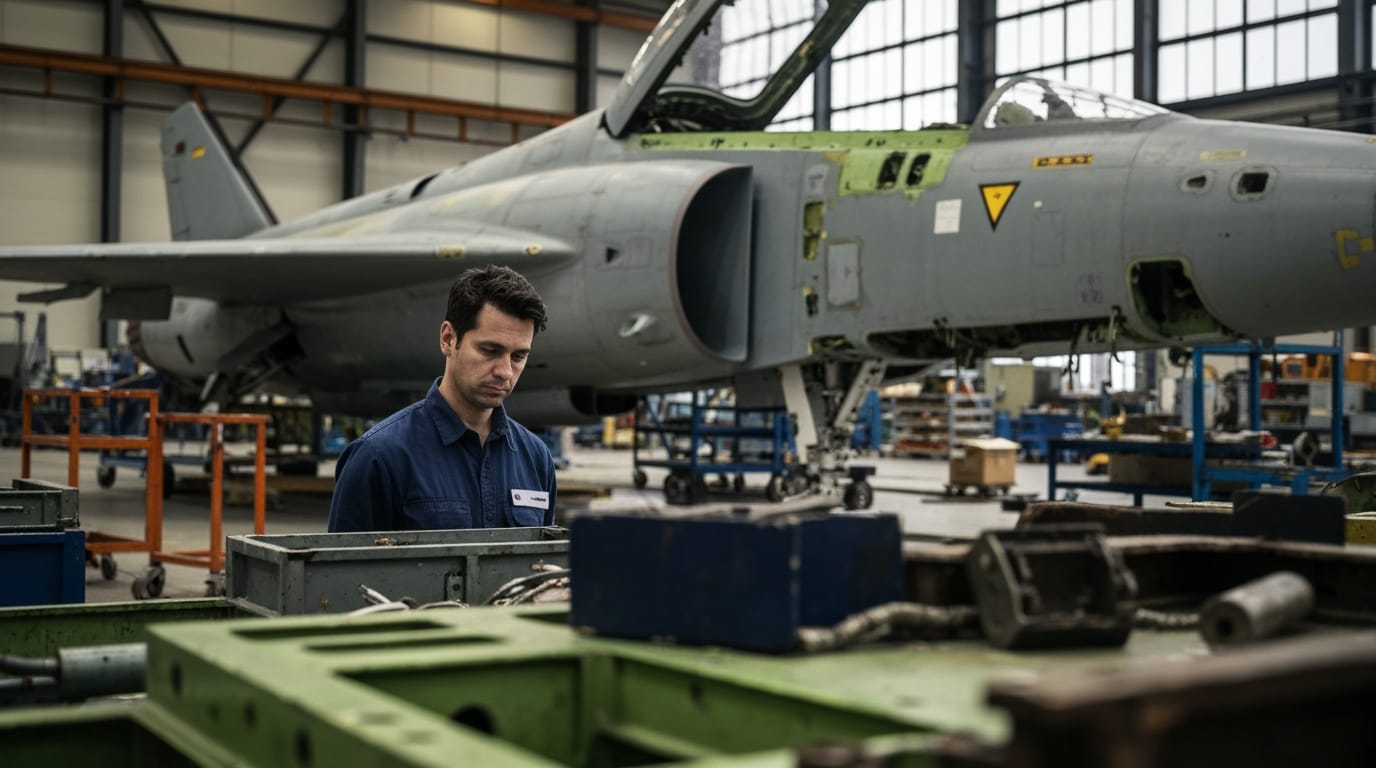
The ambitious Franco-German project to develop a next-generation fighter jet, the cornerstone of the Future Combat Air System (FCAS), has officially collapsed after years of persistent industrial disputes between key aerospace manufacturers. French President Emmanuel Macron and German Chancellor Friedrich Merz jointly acknowledged on June 8 the inability of their respective industrial partners, Dassault Aviation and Airbus Defence and Space, to reach a fundamental agreement on the future combat aircraft. This decision marks a profound setback for European defense cooperation and the aspirations for greater strategic autonomy, leaving a €100 billion endeavor in disarray.
A Grand European Vision Takes Flight
The Future Combat Air System (FCAS) was initially conceived as a symbol of Franco-German strategic partnership and Europe's determination to forge an independent defense capability. Launched in 2017 by President Macron and then-German Chancellor Angela Merkel, with Spain joining the initiative later, the project aimed to replace France's Rafale jets and the Eurofighter aircraft operated by Germany and Spain by approximately 2040. It was envisioned as a comprehensive "system of systems," featuring a New Generation Fighter (NGF) at its core, complemented by remote carrier drones and an advanced "combat cloud" designed to integrate various platforms and information.
With an estimated cost exceeding €100 billion, or roughly $110 billion, FCAS represented the most expensive European defense program ever attempted. Beyond military hardware, the project carried immense political weight, intended to showcase European industrial prowess and reduce reliance on external defense suppliers, particularly the United States. Initial plans projected demonstrator flight tests around 2027, with the new aircraft entering service by 2040. However, these timelines would prove overly optimistic as fundamental disagreements began to surface.
Deepening Divisions: Industry and National Interests Collide
The primary catalyst for the project's demise was an escalating and ultimately irreconcilable dispute between the lead industrial partners: France's Dassault Aviation and the European aerospace group Airbus, which represented German and Spanish interests. The core points of contention revolved around critical issues of leadership, workshare allocation, and the control of intellectual property for the New Generation Fighter.
Dassault Aviation, with its long history of independent fighter jet development like the Rafale, reportedly insisted on assuming a dominant leadership role for the NGF component. This stance was driven by a desire to protect its intellectual property and maintain its technological edge, with Dassault CEO Éric Trappier reportedly demanding a larger share of the industrial work. Conversely, Airbus advocated for a more balanced and equal partnership, emphasizing significant technology transfers to ensure equitable participation for its German and Spanish stakeholders. This industrial tug-of-war prevented substantial progress, with the project reportedly stalled for over a year before its official cancellation.
Beyond the industrial disagreements, differing national operational requirements further complicated the collaborative effort. France, with its distinct defense needs, sought an aircraft capable of carrying nuclear weapons and operating from aircraft carriers, directly aligning with the capabilities of its Rafale fleet. Germany, however, was reportedly exploring alternatives, including a long-range bomber, and questioned the long-term necessity of a crewed sixth-generation fighter. This divergence in strategic vision added another layer of complexity to an already strained partnership. Multiple attempts at political mediation by both President Macron and Chancellor Merz, including the appointment of two independent mediators in March, ultimately failed to bridge the chasm between the industrial giants. As a result, the initial timeline for demonstrator flight tests, originally set for 2027, had slipped to 2028 or 2029, and the in-service date for the NGF had been pushed back to at least 2045, or even as late as 2050, rendering the project increasingly unfeasible.
The Fallout: A Blow to European Strategic Autonomy
The termination of the NGF component of FCAS represents a significant setback for European defense integration and the broader ambition of strategic autonomy. The project's collapse underscores the formidable challenges inherent in large-scale multinational defense collaborations, particularly when national industrial interests and distinct strategic priorities clash. European Parliament member Marie-Agnes Strack-Zimmermann, in her reaction to the news, stated that the project's failure had been "foreseeable," attributing it to the French industry's demand for a "dominant leadership role," while Germany was "expected to simply tag along." She emphasized that such initiatives require partners to participate on "equal footing."
The unraveling of FCAS raises questions about Europe's ability to develop advanced aerospace systems independently and could potentially increase reliance on non-European suppliers, such as the United States' F-35 fighter jet. For France, the decision leaves a void in its long-term fighter development strategy, though the Rafale F5 standard is expected to extend the multirole combat aircraft's frontline service until around 2060, buying time for an alternative path. Germany, meanwhile, had already been exploring other options, including greater investment in drone technology and potentially developing a long-range bomber. The estimated €100 billion investment, while partially allocated to early development phases, represents a considerable sum tied up in a now-defunct core project.
A Fragmented Future for European Air Power
While the New Generation Fighter has been abandoned, all is not lost for the broader FCAS initiative. Both French and German officials have indicated that cooperation will continue on other elements of the "system of systems," particularly the "combat cloud" and remote carrier drones. The combat cloud, described as a "nervous system" linking aircraft, drones, and other components into an integrated whole, remains a viable area for joint development, along with advanced sensors and autonomous systems. This suggests a recalibration rather than a complete cessation of European defense collaboration in the air domain.
The French and German defense ministries have now been tasked with formulating a new joint work plan that focuses on "realistic, relevant projects," signaling a move towards more targeted and perhaps less ambitious bilateral initiatives. The collapse of the NGF also highlights the presence of other European next-generation combat air programs, such as the British-led Global Combat Air Program (GCAP), which includes Italy and Japan, and Sweden's own FCAS efforts. These parallel initiatives underscore a fragmented approach to future European air power development, a stark contrast to the initial, unified vision of the Franco-German project.
The demise of the Future Combat Air System's core fighter component serves as a potent reminder of the complexities involved in fostering deep defense industrial integration between sovereign nations. Despite the expressed regret from both French and German leadership, the inability to reconcile divergent national requirements and industrial power struggles proved insurmountable. The aspiration for a truly integrated European sixth-generation fighter jet has been grounded, pushing Europe towards a more fragmented, yet potentially more achievable, path of cooperation in specialized defense technologies. The long-term implications for European defense capabilities and its global standing will undoubtedly continue to unfold.


