French Far-Right's Diplomatic Overtures to Germany Meet German Apprehension Amidst European Power Shift
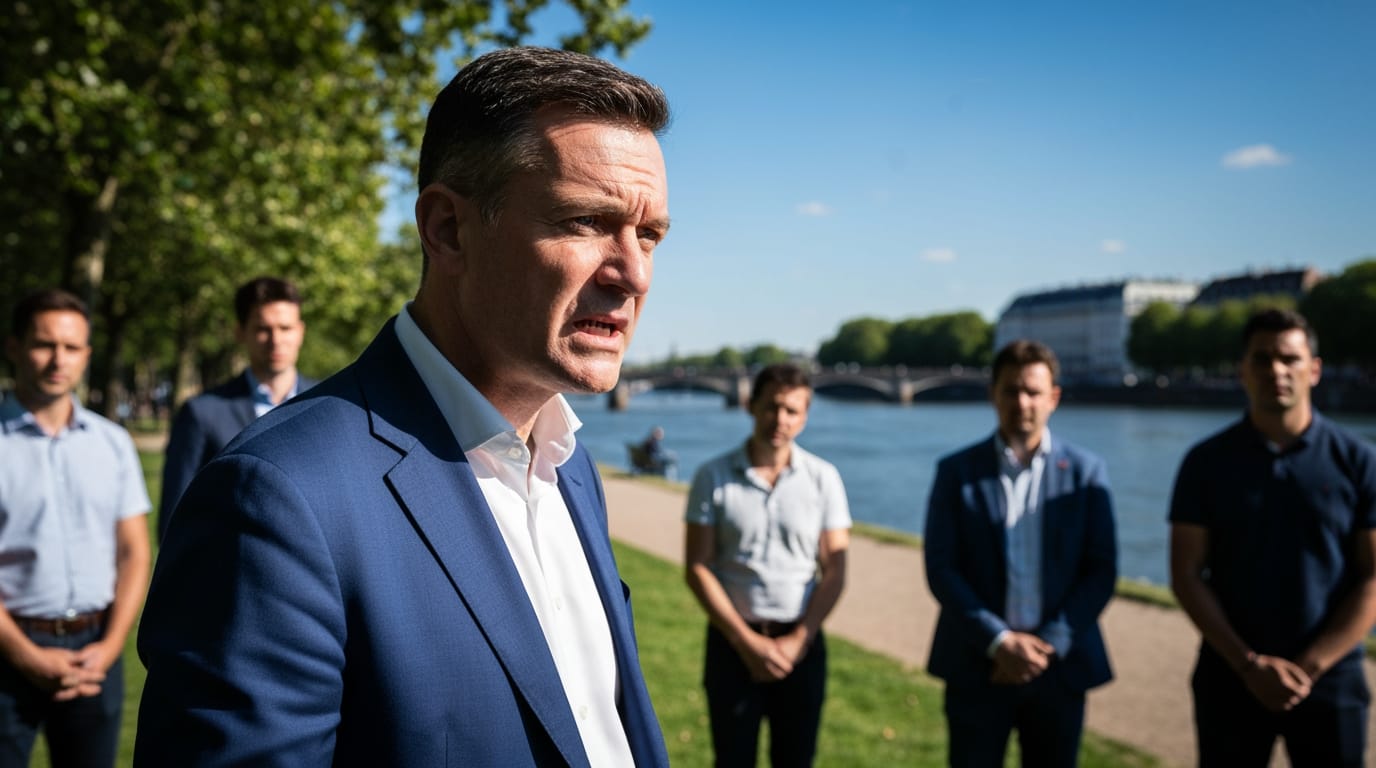
In a significant shift within European politics, France's far-right National Rally (RN) is signaling a more pragmatic, even conciliatory, approach toward Germany. This overture from a party historically critical of European integration and the Franco-German axis is emerging as the RN solidifies its position as a major political force in France. However, these diplomatic gestures are being met with deep apprehension in Berlin, where concerns persist about the potential impact of a far-right French government on the decades-long bedrock of European cooperation and the future direction of the European Union.
The National Rally's Evolving European Stance
The National Rally, led by Marine Le Pen and its current president Jordan Bardella, has undergone a notable strategic evolution, particularly regarding its stance on the European Union and key international partners like Germany. Once advocating for a "Frexit"—France's exit from the EU—the party has since recalibrated its position, now framing itself as a protector of French interests within a "Europe of free nations" and advocating for EU reform rather than outright departure. This "de-demonization" strategy, spearheaded by Marine Le Pen, has aimed to soften the party's image and broaden its appeal, cleaning up past associations with xenophobia and anti-Semitism.
This strategic shift extends to its engagement with Germany. Despite a history of criticism from within the RN towards Germany, party president Jordan Bardella has expressed a willingness to engage with German leaders. In February 2026, Bardella reportedly met with the German ambassador to Paris, an interaction seen as part of a charm offensive ahead of the upcoming French presidential election. Bardella has also publicly stated his desire to "talk with the German chancellor" should he assume the role of prime minister, indicating an acknowledgement of the indispensable nature of the Franco-German relationship, even if he views the German Chancellor as a political rival and prioritizes French national interests. This pragmatic engagement stands in contrast to earlier, more confrontational rhetoric. In 2022, Marine Le Pen had sharply criticized Germany as an "incorrigible obstacle" to French interests and asserted "irreconcilable strategic differences," even threatening to cease French support for Germany's bid for a permanent UN Security Council seat. The current approach suggests a recognition of the geopolitical realities and the intertwined nature of the two economies.
Berlin's Unease and the Future of the Franco-German Engine
Despite the RN's attempts at diplomatic engagement, the prospect of a far-right government in France triggers significant concern and apprehension in Berlin. Germany views a potential far-right victory in France as a threat that could "harm the two countries' close relations," which have been meticulously built over decades since the end of World War II. German Chancellor Olaf Scholz has openly voiced his worry, expressing "relief" when the eurosceptic far-right did not secure an outright victory in a previous French snap election, highlighting the critical importance of a stable, pro-European partner in Paris.
The Franco-German relationship is widely regarded as the "twin engine" or "core" of the European Union, a cornerstone of European integration that has driven major policies and initiatives. Experts caution that if this pivotal relationship were to sour, the repercussions would be felt across the entire EU. Jacob Ross, an expert on Franco-German relations, warns that a far-right French government could "block many EU projects," potentially hindering cooperation on critical areas such as financial and banking policies, European armaments projects, and even the administrative functioning of the EU. The further expansion of the EU, a policy strongly advocated by Germany, could also be jeopardized, as the National Rally is not a supporter of rapid EU expansion into regions like the Western Balkans or Ukraine. This German concern underscores the understanding that the stability and effectiveness of the EU are deeply intertwined with robust Franco-German cooperation. German officials acknowledge that "no French president can do without Germany and, conversely, no German chancellor can do without France" due to their economic, monetary, social, and cultural interdependence.
Bridging the Divide: Pragmatism vs. Ideological Chasm
The current dynamic between the French far-right and Germany is characterized by a tension between pragmatic engagement and fundamental ideological differences. While Jordan Bardella's willingness to communicate with the German Chancellor suggests a more practical approach to diplomacy, the core tenets of the National Rally's "France First" policy inevitably clash with Germany's traditionally integrationist stance. The RN's focus on national sovereignty over European law, a core principle for Marine Le Pen, creates a significant point of divergence.
Areas such as defense, industrial policy, and immigration are often cited as potential common ground where shared concerns might bridge some gaps. For instance, both nations grapple with issues of border control and national security, which could theoretically lead to cooperation on immigration policies, albeit from different ideological starting points. However, previous French far-right positions have been explicitly critical of German policies, particularly regarding energy and migration. The RN's protectionist economic views also diverge from Germany's often more export-oriented, free-trade approach.
Moreover, the relationship between the French National Rally and Germany's own far-right party, Alternative for Germany (AfD), highlights the complexities and inherent divisions within the European populist right. Despite some superficial similarities, the RN has actively distanced itself from the AfD, even orchestrating its expulsion from their shared European Parliament group due to the AfD's more radical positions and controversial statements. This move suggests the RN's strategic aim to project a more responsible and less extreme image on the European stage, even as it maintains its core nationalist agenda. This distance between the far-right parties of the two nations further complicates any notion of a cohesive "far-right axis" in Europe that would naturally lead to improved Franco-German ties.
Implications for the European Union
The evolving relationship between a potentially far-right-led France and a wary Germany carries profound implications for the future of the European Union. The traditional role of France and Germany as joint leaders in advancing European integration could be significantly undermined. Instead of functioning as a cohesive "engine," the relationship could become a source of friction and paralysis, particularly on critical issues where their national interests or visions for Europe diverge.
Such a scenario could lead to a less unified and effective European Union, struggling to address pressing challenges ranging from economic competitiveness and defense capabilities to climate change and migration. Without the strong, coordinated leadership historically provided by Paris and Berlin, the EU's ability to act decisively on the global stage could diminish. This uncertainty comes at a time when Europe faces increasing geopolitical instability, pressure on its security guarantees, and economic headwinds. The rise of nationalist sentiments, not just in France and Germany but across other member states, suggests a broader trend that could challenge the very foundations of EU solidarity and cooperation. While some political veterans believe the Franco-German relationship is too strong to fail, stating that the two countries are too intertwined, the form this continued relationship will take under a far-right French government remains a significant question.
A Pragmatic Partnership or a Precarious Future?
The narrative of France's far-right seeking to improve ties with Germany is, therefore, a complex one, steeped in both strategic recalculation and persistent apprehension. While the National Rally under Jordan Bardella and Marine Le Pen has demonstrably moved to present a more pragmatic and less isolationist image, including a stated willingness to engage with Berlin, this does not necessarily equate to a desire for deeper integration or a return to the traditional "special relationship" as envisioned by past leaders. Instead, any "improvement" is more likely to be transactional, driven by a recognition of mutual dependency rather than shared ideological conviction regarding the European project.
For Germany, the prospect remains largely one of concern, fearing a potential unraveling of decades of close cooperation and a disruption to the stability of the European Union. The ingrained historical significance of the Franco-German axis and the deep economic and political interdependence between the two nations suggest that complete disengagement is improbable. However, the ideological chasm between the RN's "France First" agenda and Germany's pro-European integration stance promises a future marked by cautious diplomacy, potential friction, and a significant reassessment of how Europe's most vital bilateral relationship will function, posing critical questions for the continent's trajectory.


