Supreme Court Upholds Birthright Citizenship, Delivering Major Relief to Indian Families
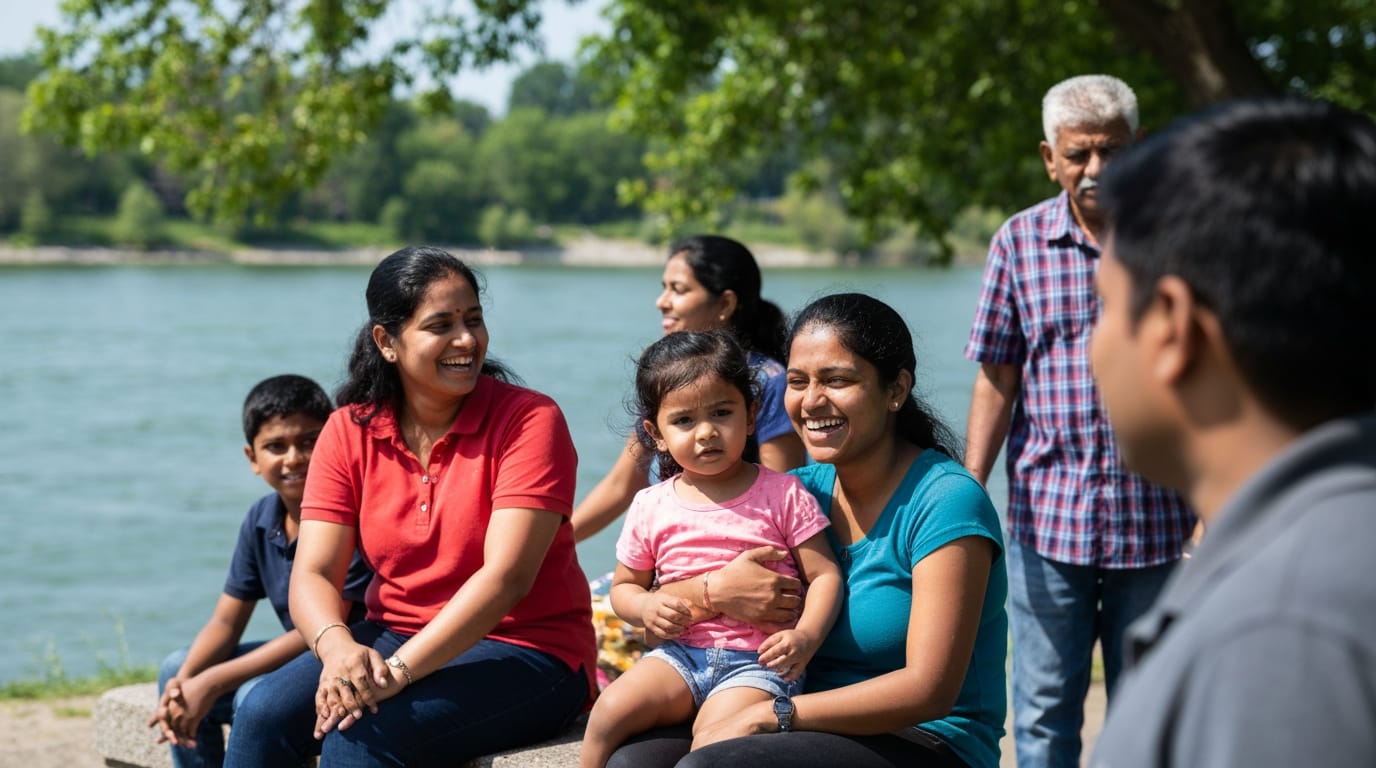
Washington D.C. — In a landmark decision that reaffirms a bedrock principle of American law, the U.S. Supreme Court has upheld birthright citizenship, striking down a presidential executive order that sought to limit the automatic granting of citizenship to children born on American soil. The 6-3 ruling, handed down on Tuesday, June 30, 2026, provides significant relief and clarity for hundreds of thousands of immigrant families, particularly those of Indian origin, who have long faced uncertainty regarding the status of their U.S.-born children.
The High Court's decision, originating from the case Trump v. Barbara, effectively nullifies an executive order issued by former President Donald Trump at the outset of his second term in January 2025. That order aimed to reinterpret the 14th Amendment's Citizenship Clause, specifically seeking to deny automatic U.S. citizenship to children born to undocumented immigrants and temporary visa holders, including those on work, student, or tourist visas. The ruling safeguards a constitutional guarantee that has stood for over 150 years, ensuring that children born within the nation's borders continue to be recognized as American citizens irrespective of their parents' immigration status.
Reaffirming a Constitutional Pillar
At the heart of the Supreme Court's judgment is the Citizenship Clause of the 14th Amendment, ratified in 1868 in the aftermath of the Civil War. It unequivocally states, "All persons born or naturalized in the United States, and subject to the jurisdiction thereof, are citizens of the United States and of the State wherein they reside." This foundational principle, known as jus soli, or "right of the soil," has historically been interpreted to grant citizenship to nearly everyone born in the U.S.
Chief Justice John Roberts, writing for the majority, emphasized that the decision broke no new ground, instead reaffirming a consistent legal understanding traced from English common law through the nation's founding. The Court’s opinion referenced the seminal 1898 case, United States v. Wong Kim Ark, which established that children born in the U.S. to immigrant parents are citizens at birth, with limited exceptions such as children of foreign diplomats. The current ruling reinforces this long-standing precedent, asserting that this constitutional guarantee cannot be altered by executive action.
The executive order challenged by the Supreme Court had attempted to narrow the interpretation of the phrase "subject to the jurisdiction thereof," arguing it should not apply to individuals whose parents lacked permanent legal residency or were in the country temporarily. However, the Court sided with the view that such a restrictive reading would undermine the clear intent and historical application of the amendment, which was originally enacted to ensure equality and prevent the creation of a permanent underclass following the abolition of slavery.
Easing Anxieties in the Indian Diaspora
The Supreme Court's decision has been met with particular relief within the Indian community across the United States. Hundreds of thousands of Indian professionals reside in the U.S. on temporary work visas, such as H-1B and L-1, or student visas (F-1). Many of these individuals navigate a complex immigration system marked by decades-long backlogs for employment-based green cards, often spending years, if not decades, in temporary status while building lives and raising families in America.
For these families, the potential denial of birthright citizenship to their U.S.-born children had created immense anxiety and uncertainty. Had the executive order taken effect, children born during this protracted period could have been left in a legal limbo, born in the U.S. but without the full rights and protections of citizenship. This ruling removes that significant area of concern, ensuring that their children born in the United States will retain their American citizenship automatically.
Advocacy groups and Indian-American lawmakers swiftly welcomed the verdict. Chintan Patel, Executive Director of Indian American Impact, described the ruling as "a profound affirmation of who belongs in America." He underscored that for families caught in visa backlogs, where children are often born long before their parents secure permanent residency, the decision sends a clear message: "Your children are Americans. They belong here."
Implications for Immigration Policy
The Supreme Court's ruling underscores the enduring strength of the 14th Amendment and significantly limits the ability of any presidential administration to unilaterally alter birthright citizenship through executive fiat. By grounding its decision in constitutional interpretation, the Court has made any future reversal an arduous task, likely requiring a constitutional amendment — a process that historically succeeds only rarely.
While the decision is a decisive victory for birthright citizenship, the broader debate over immigration policy in the U.S. continues. Opponents of birthright citizenship argue that the 14th Amendment has been misinterpreted and that the original intent of the "subject to the jurisdiction" clause was not meant to apply to children of non-citizens. However, the Court's majority opinion firmly rejected these arguments, upholding the established interpretation.
The ruling's impact is particularly felt by the millions of immigrants who contribute significantly to the American economy and society. The Indian community, in particular, forms a vital part of the nation's technology, engineering, healthcare, and finance sectors, with Indian nationals constituting a substantial majority of H-1B visa holders. The reaffirmation of birthright citizenship ensures that the children of these contributing members of society will not be arbitrarily stripped of their fundamental rights.
A Renewed Sense of Belonging
The Supreme Court’s decision provides legal certainty and a renewed sense of security for many families who have made the United States their home, albeit on temporary visas. It validates the aspirations of parents raising children who know no other home than America, ensuring their future remains firmly rooted in the nation where they were born. The ruling confirms that the constitutional promise of equality and citizenship remains a cornerstone of American identity, standing resilient against attempts to narrow its scope.


