Hamas Dissolves Gaza Government in Pivotal Shift Towards Technocratic Rule
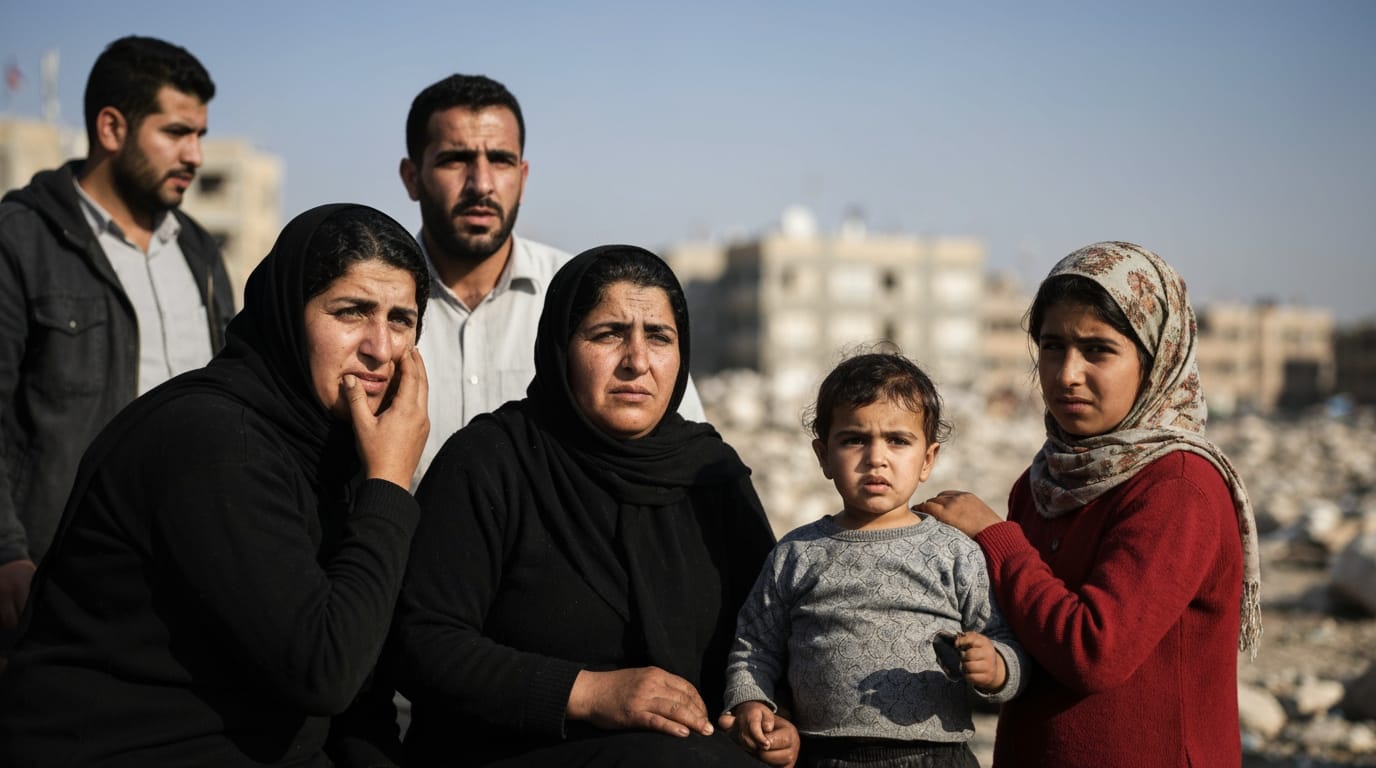
Gaza City, Gaza Strip – In a significant political development, the Islamist movement Hamas announced on Monday, July 6, 2026, the dissolution of its governing authority in the Gaza Strip, signaling a potential new chapter for the beleaguered enclave. This move, which comes after nearly two decades of Hamas's de facto rule, is presented as a crucial step towards implementing a U.S.-backed peace plan and paving the way for a transitional technocratic body, the National Committee for the Administration of Gaza (NCAG), to assume civilian governance. The decision has drawn cautious optimism from international mediators but skepticism from Israel, as the complex issues of disarmament and the NCAG's full operational capacity remain unresolved.
A Strategic Retreat or a Path to Peace?
Hamas's announcement marks the formal end of its direct administrative control over Gaza, a role it assumed following its legislative victory in 2006 and subsequent violent takeover from rival Fatah in 2007. The group's decision to dissolve the "Emergency Committee," which functioned as its governing body, was coordinated with mediators from Egypt, Qatar, and Turkey. According to Hamas spokesman Hazem Qassem, this step aims to "remove any pretexts for the occupation" and underscore the group's commitment to the ceasefire and reconstruction plan for Gaza. Experts suggest the move is also intended to signal to the international community, particularly the United States, that Hamas is not an impediment to the broader peace process.
The transition is envisioned to facilitate the entry and operation of the NCAG, a committee of Palestinian technocrats established under a UN Security Council resolution and created by the "Board of Peace" – an entity led by U.S. President Donald Trump, which brokered the October 2025 ceasefire between Hamas and Israel. The NCAG, currently based in Cairo and chaired by Ali Shaath, a Gaza-born engineer and former Palestinian Authority official, is mandated to restore essential services and oversee civilian affairs.
The Thorny Issue of Disarmament
While Hamas has expressed readiness to hand over governmental responsibilities, the crucial element of disarmament remains a significant sticking point. The U.S.-backed peace plan requires Hamas to decommission its weapons, a demand echoed by Israel and the Board of Peace, which stresses the principle of "one authority, one law, and one weapon" under the NCAG's control. However, Hamas has not explicitly pledged to disarm, with some analysts viewing its latest move as an attempt to remove a "pretext" for Israeli aggression while retaining its military capabilities.
Diplomatic sources indicate that Hamas has presented obstacles in recent talks, including refusing access to weapons stored in tunnels and rejecting the condition that all weapons in Gaza be exclusively controlled by the technocratic government. This intransigence on disarmament has led to a deadlock in the second phase of the ceasefire implementation, which also includes a gradual withdrawal of Israeli forces from Gaza.
International Reactions and Israeli Skepticism
The dissolution of Hamas's government has been met with a mix of cautious welcome and outright skepticism. Nickolay Mladenov, Director-General of the Board of Peace, welcomed the decision, emphasizing the importance of a roadmap for implementing the Gaza peace plan. The United Nations, which established the NCAG, also supports efforts toward unified Palestinian governance.
However, Israeli officials have largely dismissed Hamas's announcement as "spin" and a strategic maneuver rather than a genuine shift in power dynamics. An unnamed Israeli official stated that "in practice, all the officials remain in their posts and Hamas continues to rule," suggesting that the move is a façade to avoid disarming. Israeli Foreign Minister Gideon Saar drew parallels to Hezbollah's role in Lebanon, where a militant and political group holds significant power despite civilian governance. The Board of Peace itself stated it would assess developments "by actions, not promises."
The Road Ahead for Gaza's Governance
The immediate future of Gaza's governance remains uncertain. The NCAG, despite being ready to assume its responsibilities, has yet to gain entry into Gaza, reportedly due to Israeli objections. Hamas has affirmed that its "technical and professional staff" will continue providing services under the NCAG, aiming to ensure continuity in daily affairs. However, the logistical and security challenges of transitioning power to a new entity in a war-devastated territory are immense.
The humanitarian situation in Gaza remains dire, with a crippling electricity crisis, acute food insecurity, and widespread damage to infrastructure. The success of the NCAG and the broader peace plan hinges on several critical factors: Hamas's willingness to genuinely cede control and disarm, Israel's cooperation in allowing the NCAG to operate and easing restrictions, and sustained international support for reconstruction and stability. The ongoing debate over disarmament and the conflicting perspectives on Hamas's intentions underscore the fragility of the current peace efforts and the long, arduous path toward a stable future for the Gaza Strip.


