Fuego Unleashes New Fury, Guatemalan Towns Evacuated Amid Escalating Eruption
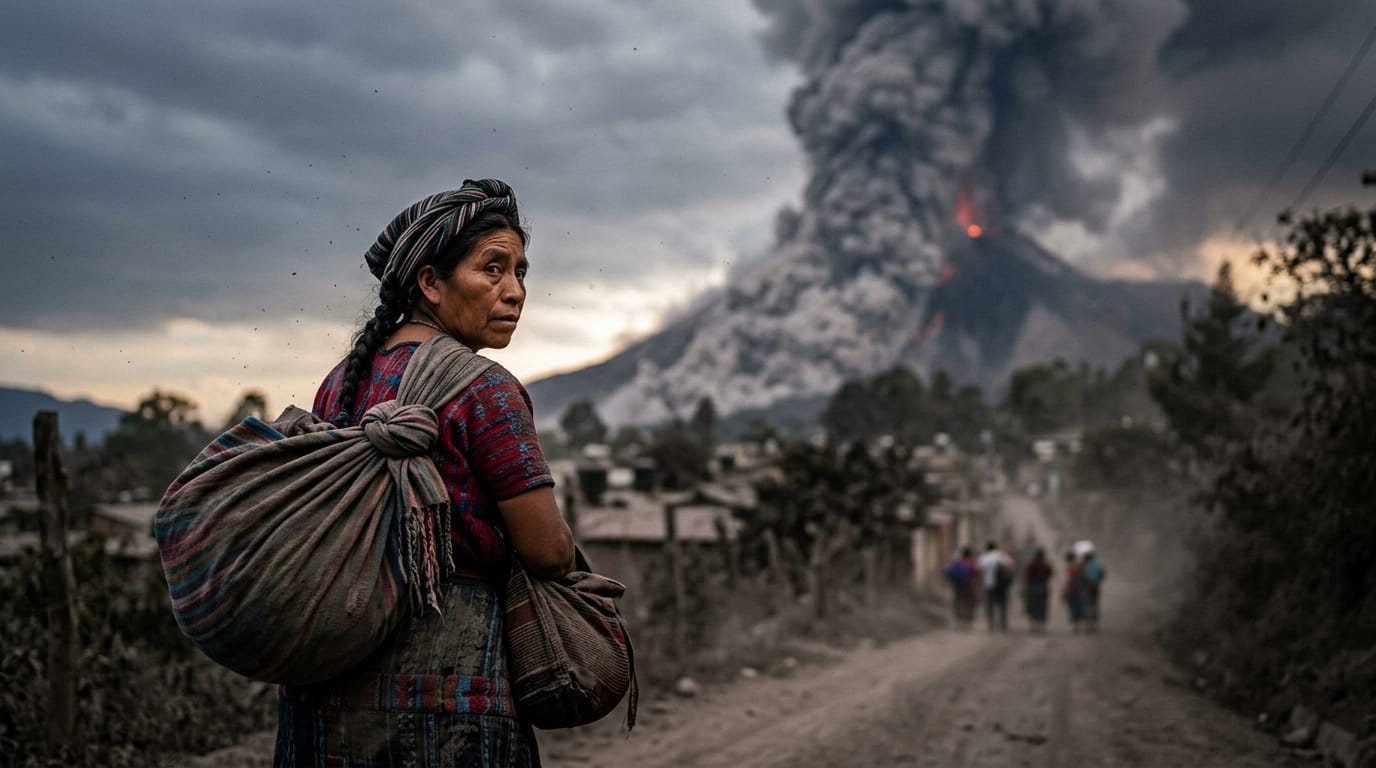
GUATEMALA CITY, Guatemala – Guatemala's Volcán de Fuego, one of Central America's most active and formidable volcanoes, erupted with renewed intensity on Monday, August 3, 2026, prompting urgent preventative evacuations of several communities nestled in its shadow. The National Coordinator for Disaster Reduction (CONRED) elevated the national alert level to orange, signifying danger, as lava fountains illuminated the night sky and fast-moving pyroclastic flows descended the volcano's flanks, renewing fears in a region all too familiar with its destructive power.
The Current Crisis Unfolds
The latest eruptive phase began on Monday morning and rapidly escalated throughout the day, transforming Fuego into a spectacle of raw geological force. By Monday evening, a lava fountain between 200 and 300 meters (650 to 1,000 feet) high had developed over the crater, propelling incandescent material into the upper reaches of surrounding ravines. The Guatemalan Seismology, Vulcanology, Weather and Water Institute (INSIVUMEH) reported that the eruption's explosiveness had increased significantly, with ash plumes soaring to heights of 5,000 to 6,000 meters above sea level and drifting across nearby areas. Pyroclastic flows, dangerous mixtures of hot gas, ash, and volcanic rock, were observed advancing rapidly down the volcano's slopes, particularly towards the Seca and Ceniza ravines on its southwestern flank.
In response to the escalating threat, authorities initiated preventive evacuations in vulnerable communities. The villages of El Porvenir and the hamlet of Las Lajitas were targeted for immediate relocation, affecting approximately 50 families, or around 250 individuals. CONRED underscored the necessity of these measures, citing the potential for further advancement of pyroclastic flows and widespread ashfall. As a precautionary measure, National Route 14, a major highway near the volcano, was closed, and the Ministry of Education suspended classes in towns adjacent to Fuego to ensure the safety of students and staff. Buses were made available to assist with the evacuations, facilitating the safe movement of residents to temporary shelters.
Volcanic Dynamics and Persistent Threats
Fuego, whose name translates to "Volcano of Fire," is a stratovolcano characterized by its nearly constant activity, interspersed with more violent, "paroxysmal" eruptions. Located approximately 44 kilometers (27 miles) southwest of Guatemala City, it forms part of the Sierra Madre mountain range and is a prominent feature of the Pacific Ring of Fire, a region known for its high seismic and volcanic activity. The volcano's current eruption exemplifies this dynamic, exhibiting both intense lava fountaining and the generation of pyroclastic density currents, which are among the most dangerous volcanic phenomena due to their speed and destructive temperature.
INSIVUMEH plays a critical role in monitoring Fuego's unpredictable behavior, providing real-time data and warnings to CONRED. Their latest bulletins have cautioned that the eruptive pulse is expected to intensify further, becoming even more explosive. The institute specifically advised communities within a 10-kilometer radius of the volcano to evacuate immediately, emphasizing that pyroclastic density currents pose the greatest threat to municipalities on the western and southern flanks, particularly near the Seca and Ceniza ravines. Civil aviation authorities have also been advised to take precautions due to the expansive ash plumes, which can pose a significant hazard to aircraft.
A Troubled History of Eruptions
Guatemala has a long and often tragic history with Volcán de Fuego. Its ongoing eruptive phase dates back to 1999, with numerous significant events occurring over the past two decades. The most devastating recent event was the eruption on June 3, 2018, which stands as the deadliest volcanic eruption in Guatemala since 1902. That catastrophic event produced a massive ash plume, pyroclastic flows that descended the Las Lajas ravine, and lahars (volcanic mudflows), resulting in the official deaths of nearly 200 people, though local estimates suggested a much higher toll. Entire villages, including San Miguel Los Lotes and El Rodeo, were engulfed, affecting an estimated 1.7 million people and leaving hundreds missing.
Other notable eruptions have also necessitated large-scale evacuations. In September 2012, authorities recommended the evacuation of 33,000 people, with approximately 5,000 ultimately moved. November 2018 saw preventive evacuations of around 4,000 residents from communities close to the volcano. More recently, in May 2023, about 1,200 people were evacuated, and in June 2025, over 500 residents from areas like Panimache and El Porvenir were forced to flee their homes due to lava flows and gas and ash emissions. These recurring crises underscore the inherent dangers of living in close proximity to a volcano as continuously active as Fuego.
Human Resilience and Urgent Preparedness
For the thousands living in the shadow of Volcán de Fuego, eruptions are a constant, life-altering reality. The latest evacuations once again highlight the profound human impact, forcing families to leave their homes with little notice, bringing with it uncertainty and disruption. The collective memory of past tragedies, particularly the 2018 disaster, casts a long shadow over every new plume of ash and every rumble from the crater.
Guatemala's disaster management agency, CONRED, remains at the forefront of the response, coordinating closely with scientific institutions like INSIVUMEH to monitor activity and implement emergency protocols. Beyond immediate evacuations, the agency issues warnings, advises residents to prepare emergency supplies for up to 72 hours, and stresses the critical importance of adhering to official instructions and voluntary evacuations when necessary. The repeated closures of vital infrastructure, such as National Route 14, and the suspension of educational activities in affected areas reflect the authorities' unwavering commitment to prioritizing public safety, even as communities grapple with the logistical and emotional toll of displacement.
The ongoing eruption of Volcán de Fuego serves as a stark reminder of nature's formidable power and the delicate balance that exists for communities living on its slopes. While the immediate focus remains on safeguarding lives and providing support to those displaced, the long-term challenge lies in continually refining preparedness strategies and fostering resilience in the face of an ever-present, yet captivating, natural force. As the volcano continues its fiery display, vigilance remains paramount for all those within its reach.


