Fuel Famine Fuels Filth: Cuba Grapples with Escalating Garbage Crisis Amid Scarcity
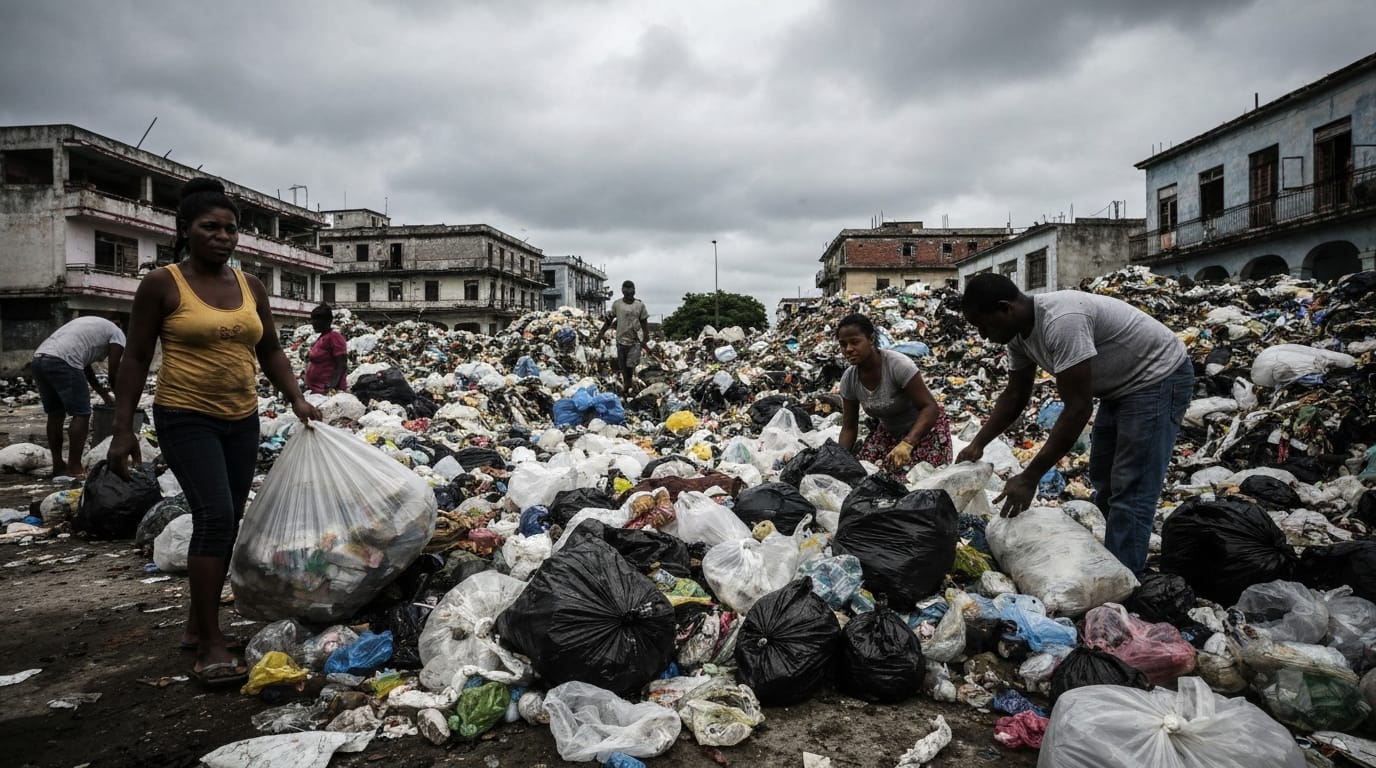
Havana, Cuba – A deepening fuel shortage across Cuba has paralyzed essential services, creating a mounting public health crisis as uncollected garbage piles up in streets, neighborhoods, and vital urban centers. Residents face the grim reality of overflowing bins and discarded waste accumulating for days, sometimes weeks, transforming once-vibrant avenues into unsanitary landscapes rife with health risks and a pervasive stench, all stemming from the critical lack of diesel needed to power collection trucks.
The immediate and most visible consequence of Cuba's energy scarcity is the profound disruption to municipal sanitation services. Across the island, particularly in densely populated cities like Havana, Santiago de Cuba, and Camagüey, the absence of regular garbage collection has become a defining feature of daily life. Waste, including organic matter, plastics, and construction debris, forms grotesque mounds that spill onto sidewalks and into gutters, attracting rodents, insects, and other vectors of disease. This environmental degradation is not merely an aesthetic problem; it poses a serious threat to public health, raising concerns about the potential spread of infectious diseases such as dengue, leptospirosis, and cholera in a nation already vulnerable to resource limitations. The desperation is palpable, with some residents resorting to burning refuse in makeshift piles, further contributing to air pollution and local health hazards.
The roots of Cuba's current fuel crisis are complex and multifaceted, drawing from a confluence of geopolitical shifts and economic pressures. Historically, Cuba has relied heavily on subsidized oil imports, primarily from Venezuela, a key political ally. However, Venezuela's own severe economic downturn and steep decline in oil production have drastically curtailed its ability to supply Cuba, leaving a significant void in the island's energy matrix. This reduction in supply has been exacerbated by stringent U.S. sanctions, which target ships and companies involved in transporting oil to Cuba, effectively tightening the blockade and making it increasingly difficult and costly for the island nation to secure fuel from alternative sources. These external factors have converged to create an acute scarcity of petroleum products, particularly diesel, which is indispensable for powering not just sanitation vehicles but also public transportation, agricultural machinery, and power generation.
The impact of the fuel shortage extends far beyond garbage collection, creating a cascading effect across various sectors of Cuban society. Public transportation, once a lifeline for millions, has been severely curtailed, with buses running infrequently or breaking down due to lack of fuel and spare parts. Commutes that once took minutes now stretch into hours, forcing many to walk long distances or rely on overcrowded, informal modes of transport. This has a direct bearing on the workforce, leading to reduced productivity and difficulties in accessing essential services. Furthermore, the agricultural sector, reliant on diesel for tractors and transportation of produce, faces significant challenges, potentially impacting food security. The scarcity has also affected the distribution of goods, leading to empty shelves in stores and contributing to inflationary pressures on basic necessities. This pervasive strain on daily life amplifies public frustration and highlights the deep interconnectedness of the nation's infrastructure.
In response to the escalating crisis, Cuban authorities have publicly acknowledged the severity of the situation, characterizing it as a temporary but profound challenge. Government messaging emphasizes austerity measures, appealing to citizens for patience and understanding while urging conservation efforts. Measures have included reducing public lighting, shortening work hours in some sectors, and prioritizing fuel allocation for critical services, though sanitation often struggles to make the cut. Attempts have been made to diversify energy sources and explore alternative transportation methods, but these long-term solutions offer little immediate relief. The government's strategy hinges on navigating a complex international landscape to secure fuel shipments, often facing significant logistical hurdles and financial constraints. Despite these efforts, the daily reality for most Cubans remains one of persistent shortages and mounting challenges to maintaining basic standards of living.
The confluence of a debilitating fuel shortage and an overwhelmed waste management system paints a stark picture of the immense challenges facing Cuba. The accumulation of garbage is not merely an inconvenience; it represents a tangible manifestation of broader systemic vulnerabilities, threatening public health, environmental integrity, and the overall quality of life for millions. As the nation navigates complex geopolitical currents and grapples with severe economic limitations, the ability to restore fundamental urban services like waste collection will be a critical test of resilience. Without a significant and sustained influx of fuel, or a radical transformation of its energy matrix, the island nation is poised to contend with these visible and invisible costs for the foreseeable future, making the fight for sanitation inextricably linked to the broader struggle for economic stability and public welfare.


