Fujimori Takes Helm in Peru, Navigating a Geopolitical Balancing Act Between Washington and Beijing
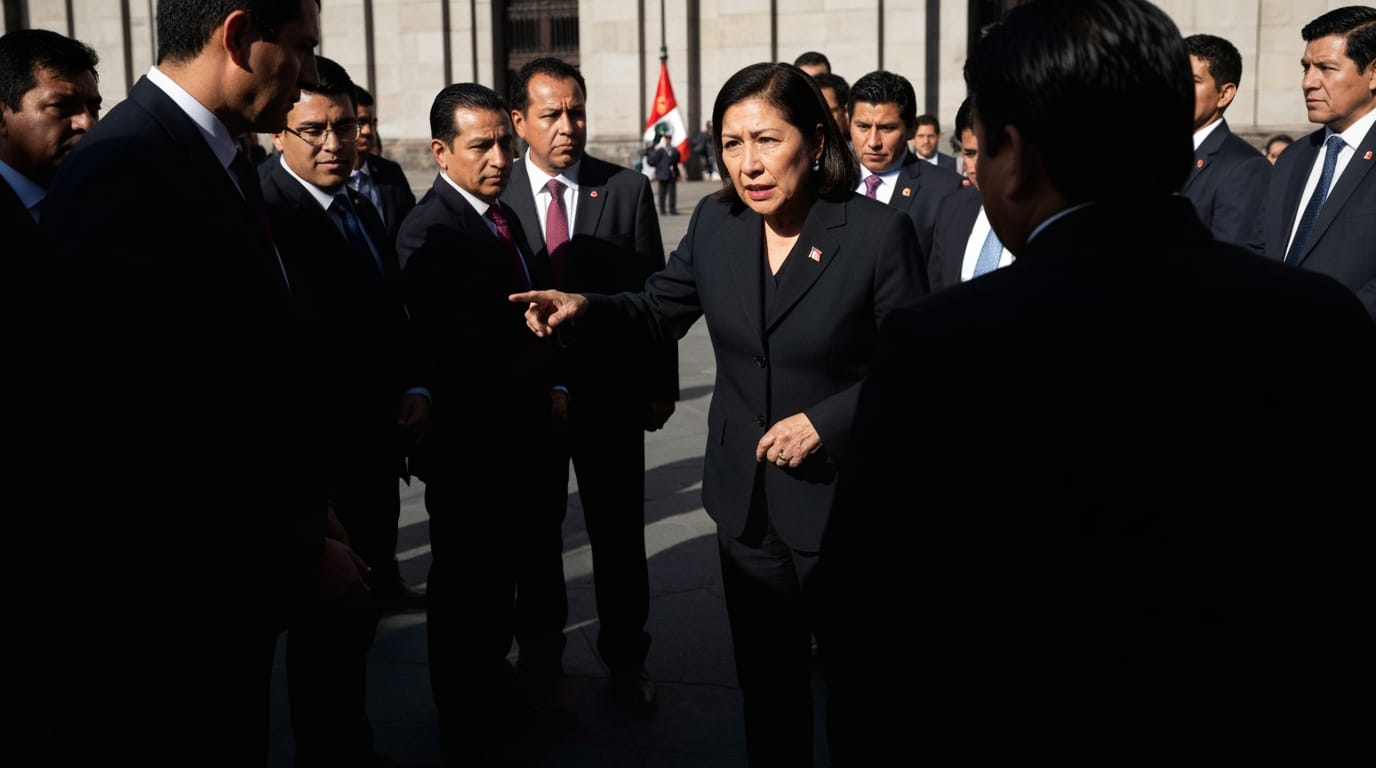
LIMA, Peru – Keiko Fujimori has officially been declared the victor of Peru's recent presidential runoff election, ushering in her administration amidst a complex geopolitical landscape that demands a delicate balancing act between the United States and China. Her narrow win, confirmed in early July 2026, positions her as the country's ninth president in a decade, highlighting Peru's persistent political volatility and the urgent need for stable governance. With a platform emphasizing market-friendly policies and a tough stance on surging crime, Fujimori now faces the formidable challenge of fostering domestic stability while strategically managing the competing interests of the world's two largest economies.
A New Era Amidst Enduring Instability
Fujimori, daughter of controversial former president Alberto Fujimori, secured the presidency after a fiercely contested runoff election in June, winning by a slim margin of just over 50,000 votes out of more than 18 million cast. This marks her fourth attempt at the highest office, finally culminating in a victory that reflects a regional shift towards conservative leadership. Her inauguration, set for later this month, places her at the head of a nation grappling with a highly fragmented economy, where over 70% of the workforce operates in the informal sector, limiting tax revenue and hindering productivity growth. Compounding these economic pressures are deep-seated challenges such as corruption and social conflicts, particularly prevalent in the vital mining sector, which constitutes approximately 9.5% of Peru's Gross Domestic Product (GDP). Fujimori's campaign pledges to combat crime with an "iron fist" resonated with voters primarily concerned with increasing levels of organized crime and extortion, signaling a clear domestic priority for her incoming administration. Peru's economic outlook remains cautiously optimistic, with projected GDP growth of 2.7% in 2026, buoyed by robust commodity prices and ongoing infrastructure projects, yet political uncertainty continues to pose a significant risk to sustained private investment.
China's Deep Economic Roots and Strategic Reach
Peru's economic ties with China have deepened substantially over the past decades, transforming Beijing into Lima's largest global trading partner and a paramount investor. This robust partnership is largely driven by Peru's abundant natural resources, with China serving as the dominant destination for nearly half of Peru's mining and fisheries exports. Chinese investment, totaling an estimated US$2.35 billion by the end of 2023, spans critical sectors including mining, energy, and infrastructure. A cornerstone of this expanding influence is the Port of Chancay, a Chinese-majority-owned mega-port on Peru's Pacific coast that began operations in November 2024. Envisioned as a continental trade hub, Chancay is poised to redirect significant trade traffic, potentially rivaling the Panama Canal and cementing Peru's role as China's "Gateway to South America." This strategic infrastructure project, alongside others like the $420 million railway line connecting Chancay to key mineral-rich regions, underscores China's long-term geoeconomic strategy to secure resources, optimize logistics, and expand its influence across Latin America. While these investments offer economic opportunities and improved connectivity for Peru, they also raise concerns regarding potential over-reliance on a single foreign power and questions about national sovereignty over critical infrastructure.
Reaffirming Ties: The United States' Enduring Partnership
In contrast to China's primarily economic leverage, the United States maintains a multifaceted and long-standing strategic partnership with Peru, rooted in shared values of democracy, human rights, and security. The U.S.-Peru Trade Promotion Agreement (PTPA), in effect since 2009, has significantly bolstered economic and commercial ties, leading to a 140% increase in total trade between the two nations, reaching over $22 billion in 2021. The United States remains a top partner in job creation for Peru, with bilateral trade generating over 1.1 million jobs in 2023. Beyond trade, U.S. engagement focuses heavily on security cooperation, particularly in counternarcotics operations, combating transnational organized crime, and strengthening the rule of law. The U.S. has provided substantial assistance to Peru, with the U.S. Agency for International Development (USAID) investing over $1.8 billion since 2001 to promote economic, social, and political development. The U.S. has also expressed concerns about China's growing presence in Peru, particularly its control over strategic infrastructure like the Chancay port, and is actively seeking to counter Beijing's expanding influence in the Western Hemisphere. Initiatives like designating Peru as a non-NATO military partner in early 2026 reflect a broader U.S. effort to reassert its regional dominance.
Navigating the Geopolitical Crossroads
President Fujimori's administration now faces the unenviable task of meticulously navigating this increasingly competitive geopolitical landscape. Her past statements suggest an inclination towards a "strategically balanced" position, explicitly rejecting "automatic alignment with any power" and emphasizing the importance of protecting trade ties with Beijing while simultaneously fostering closer relations with Washington. This pragmatic approach acknowledges Peru's profound economic dependence on China, especially for its vital export sectors, while recognizing the strategic and diplomatic benefits of a strong relationship with the United States. Peru’s foreign policy has historically been characterized by pragmatism and neutrality, suggesting a familiar path for Fujimori. However, the pressure from both global powers is intensifying. The U.S. is pushing to limit China's regional influence, creating potential material economic risks for Peru if it were to adopt a confrontational stance towards Beijing. Conversely, neglecting the long-standing U.S. partnership could jeopardize security cooperation and development aid. For Fujimori, the challenge lies in leveraging both relationships for Peru's benefit without becoming a pawn in a larger power struggle.
Conclusion
Keiko Fujimori's assumption of the Peruvian presidency marks a pivotal moment for a nation perennially challenged by political instability and socio-economic disparities. Her administration inherits a complex domestic agenda centered on economic growth, reducing informality, and tackling crime. Internationally, her leadership will be defined by an intricate balancing act between the economic opportunities offered by China and the strategic partnership maintained with the United States. Successfully threading this geopolitical needle will require shrewd diplomacy, economic pragmatism, and a steadfast commitment to Peru's national interests. The world will be watching closely to see if Fujimori can chart a course that secures Peru's prosperity and stability amidst the intensifying rivalry of global powers.


