Gabon Heads to the Polls: A Nation Poised for Change After Decades of Bongo Rule
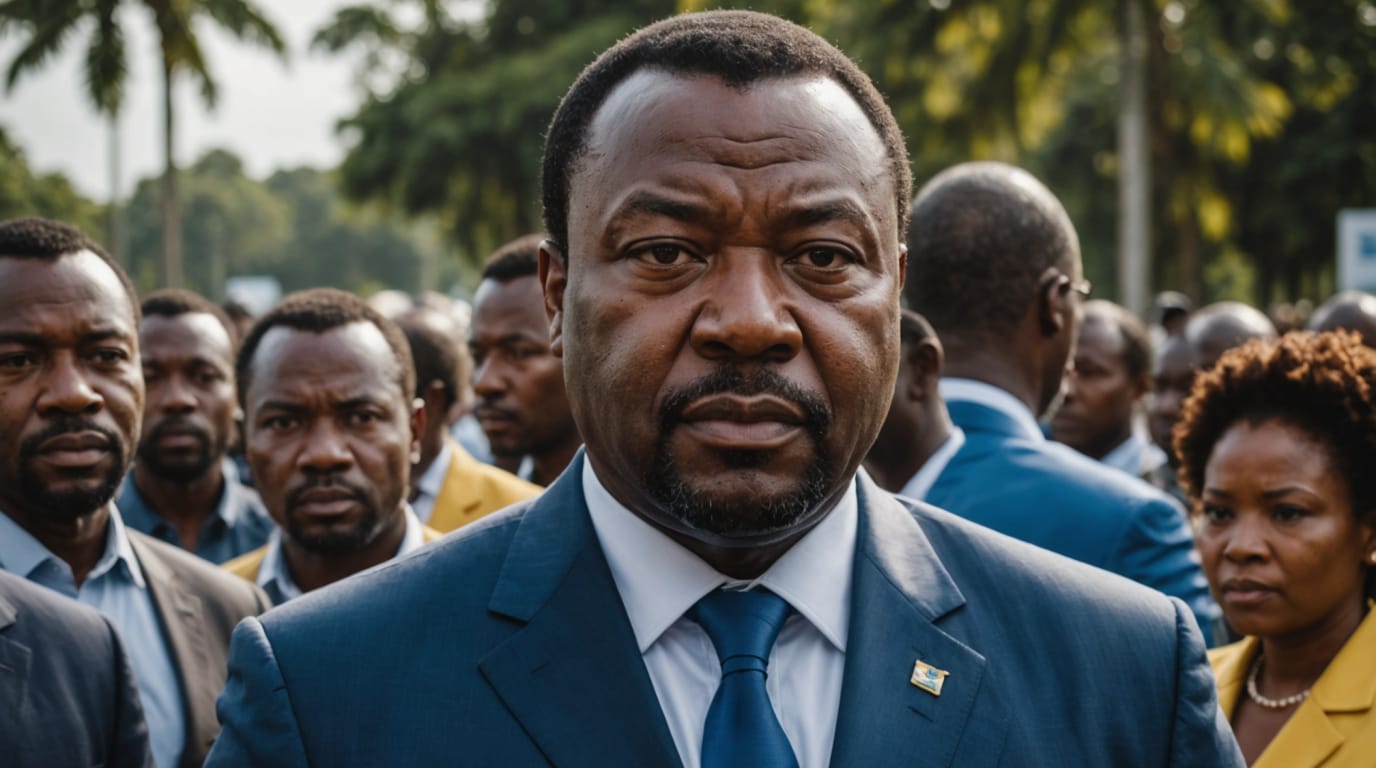
Gabon is set to hold presidential elections on Saturday, April 12, 2025, marking a pivotal moment in the nation's history after a military coup ended the 55-year reign of the Bongo family in August 2023. The upcoming election represents the culmination of a transition period led by military leaders and offers the promise of a return to civilian rule. However, it also presents significant risks, with the potential for instability and uncertainty as the country navigates this complex political landscape.
The End of an Era: The 2023 Coup
The roots of the 2025 election lie in the controversial events of August 2023. Ali Bongo Ondimba, who had been president since 2009, won a third term with 64% of the vote. The results were immediately disputed, and just hours later, a group of military personnel, led by Brigadier General Brice Oligui Nguema, seized power. The coup leaders annulled the election results, dissolved state institutions, and placed Bongo under house arrest.
The coup ended the Bongo family's long grip on power. Omar Bongo Ondimba, Ali's father, ruled Gabon for 42 years, coming to power in 1967. While in power, Omar Bongo was respected for mediating in several African crises, but also had the reputation of a kleptocrat. The Bongo family's rule was marked by accusations of corruption and a failure to distribute the country's oil wealth equitably.
A Transition to Civilian Rule?
Following the coup, Brice Oligui Nguema became the transitional president on September 4, 2023. The Committee for the Transition and Restoration of Institutions (CTRI) was formed, including civilians, and a new constitution was drafted, expanding presidential powers. Oligui initially promised to hand power back to civilians after a transition period. However, he later announced his own candidacy for president, shedding his military uniform to campaign.
A referendum on the new constitution was held in November 2024 and was approved by 91% of voters. The new constitution abolished the post of prime minister, set presidential terms at seven years (renewable once), and stipulated that the president must have at least one Gabonese parent and a Gabonese spouse. The referendum was seen as a key step toward the return to civilian rule.
The Candidates and the Electoral Process
The deadline for submitting candidacy declarations was March 8, 2025. As of late March, ten candidates had announced their intention to run, including transitional president Brice Oligui Nguema and several opposition figures. Applications were submitted between February 27 and March 8, 2025.
The presidential election is scheduled for April 12, 2025. Gabon uses a two-round system, where a candidate must win a majority of the vote to be elected in the first round. If no candidate achieves a majority, a second round is held between the top two candidates. The 143 members of the National Assembly are also elected using the two-round system in single-member constituencies. Voting is compulsory for Gabonese citizens aged 21 and over, with fines for non-participation.
Gabon's Economic Challenges
Gabon is an oil-rich country with a small population of 2.3 million, giving it one of the highest per capita GDPs in Africa. Besides oil, Gabon also has wood and manganese resources. However, the country has struggled to diversify its economy, and its reliance on oil has made it vulnerable to fluctuations in global crude prices. The contribution of Gabonese oil production to GDP has fallen, and the national debt has deepened, from 72.1% of GDP in 2023 to 73.3% in 2024. Despite its wealth, more than a third of the population lives on less than $2.15 a day, according to the World Bank.
The CTRI promised to revive an economy wracked by "14 years of waste and looting." The next president will face the challenge of addressing these economic issues and ensuring that the country's wealth benefits all Gabonese citizens.
Risks and Uncertainties
The upcoming election is not without risks. The succession of events related to the 2023 coup and the recent evolution of the political and social context indicate a significant risk for the upcoming elections. Based on past election experiences, the period with the highest risk occurs at the time of the announcement of results.
The military's continued influence and Oligui Nguema's decision to run for president have raised concerns about the fairness and transparency of the electoral process. The opposition has called for guarantees of a level playing field and raised concerns about potential manipulation of the vote.
A Nation at a Crossroads
As Gabon prepares to head to the polls, the country stands at a crossroads. The election offers the opportunity to break with the past and establish a more democratic and equitable society. However, it also carries the risk of further instability and a continuation of the patterns of corruption and inequality that have plagued the country for decades. The outcome of the election will have profound implications for Gabon's future and its role in the region.


