Gazans Stage Rare Protests Against Hamas Amidst Devastation
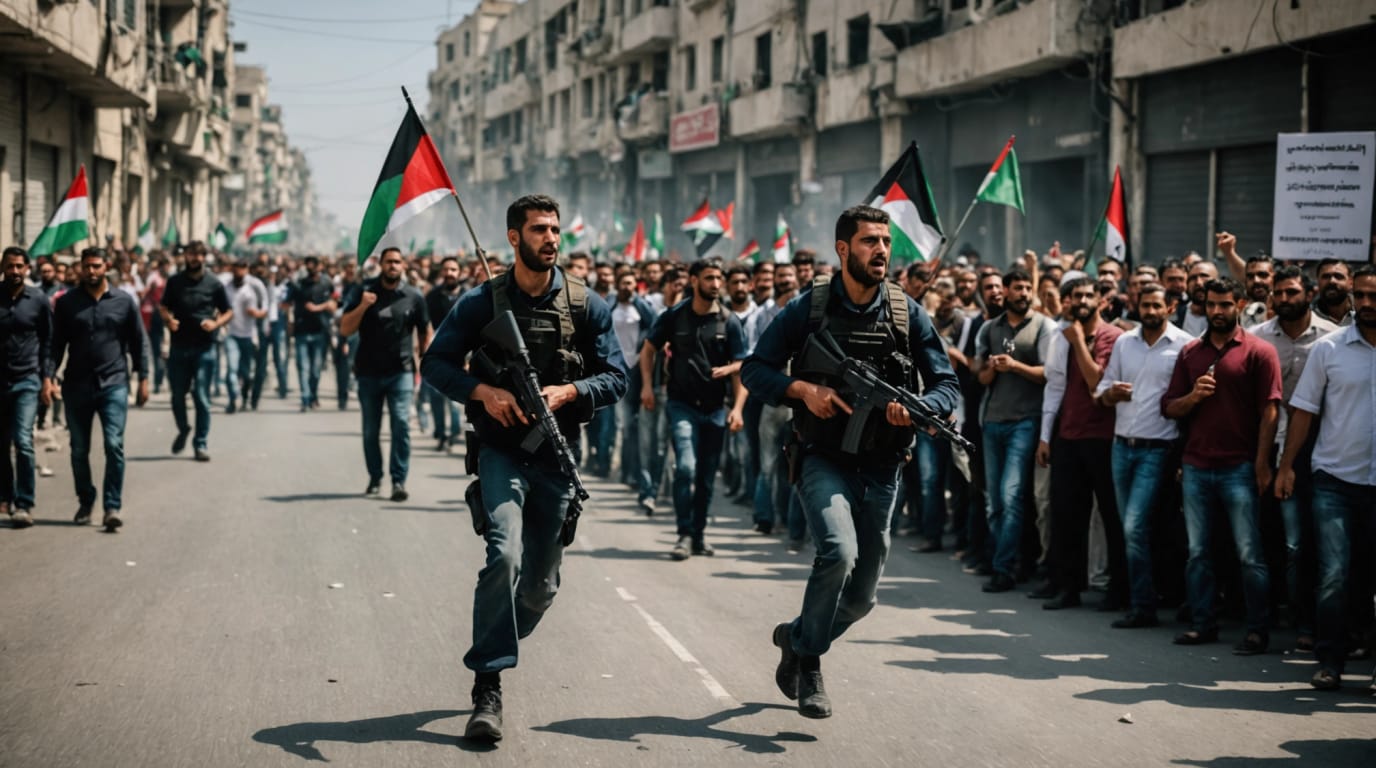
Gaza City, Gaza Strip – Thousands of Gazans have taken to the streets in recent days in a rare display of public anger against Hamas, the ruling faction in the Gaza Strip since 2007. The protests, fueled by widespread despair and frustration over the ongoing war with Israel and the dire humanitarian crisis, represent the largest demonstrations against Hamas since the conflict began in October 2023. While Hamas officials initially downplayed the anti-Hamas sentiment, claiming the protests were directed against Israel, the demonstrations underscore the growing discontent with Hamas's governance amidst the territory's devastation.
A Territory Under Siege
The Gaza Strip has been under Hamas's control since it ousted the Fatah-led Palestinian Authority in 2007. This takeover led to an Israeli and Egyptian blockade, severely restricting the movement of people and goods, and contributing to a long-term humanitarian crisis. The political rights and civil liberties of Gaza residents have been severely constrained under Hamas rule, with limited opportunities for political change. Smaller political parties are tolerated to varying degrees, but those affiliated with Fatah face persecution.
Hamas, which emerged in 1987 during the first Palestinian uprising, is the largest and most capable militant group in the Palestinian territories. The group is committed to armed resistance against Israel and the creation of a Palestinian state. This commitment has led to multiple wars with Israel, including the ongoing conflict that began with Hamas's surprise attack on Israel on October 7, 2023, resulting in approximately 1,200 deaths.
Protests Erupt Amidst Ceasefire Collapse
The recent protests erupted following the collapse of a two-month ceasefire between Israel and Hamas. Israel resumed its military campaign, citing the failure to secure the release of more hostages held by Hamas. The renewed fighting, coupled with restrictions on humanitarian aid, has exacerbated the already dire conditions in Gaza, where over 50,000 Palestinians have been killed and more than 85% of the population has been displaced.
Demonstrations began spontaneously in northern Gaza, specifically in Beit Lahiya and Jabalia, with hundreds gathering to voice their anger. The protests quickly grew, with reports of nearly 300 participants in Deir al-Balah alone. Protesters chanted slogans such as "Hamas out!" and "Hamas is terrorism," expressing their frustration with the group's leadership.
Voices of Discontent
"Our children have been killed. Our houses have been destroyed," said Abed Radwan, a Gazan who joined the protest. He stated that he was protesting "against the war, against Hamas, and the Palestinian political factions, against Israel and against the world's silence."
Other protesters echoed these sentiments, calling for an end to the war and demanding that Hamas release the Israeli hostages. "Hamas is not taking us into account. It has 2 million people in Gaza who need to live," said Ibrahim, a protester who requested anonymity for fear of reprisal. "People are fed up with displacement. There are no more safe places for people to go," added Mohammed, another protester.
Hamas's Response
Initially, Hamas officials dismissed the protests as being directed against Israel and the ongoing war. Naim, a Hamas official, claimed that the rallies were being misrepresented as criticizing Hamas's de facto regime. "People are calling to stop the aggression, but the enemy and other parties with political agendas are diverting the spontaneous protests to serve the occupation's agenda and trying to portray it as if the demonstrators are against the resistance," he said.
However, as the protests gained momentum and attracted widespread media attention, Hamas's military wing accused protesters of being "agents" who support Israel, a term used in Arabic to refer to traitors. The group also suggested that the Palestinian Authority in Ramallah was behind the protests.
Despite the accusations, Hamas has so far refrained from violently suppressing the protests, possibly due to international scrutiny and the risk of becoming an easy target for Israeli drones. Instead, the group has reportedly resorted to threatening local leaders and clan leaders in an attempt to quell the unrest.
Implications for the Future
The protests against Hamas reflect growing internal dissent within Gaza, potentially altering the region's political landscape. This shift could have significant implications for both Israel and the United States, who have long regarded Hamas as a major obstacle to peace efforts.
Some analysts believe that the protests could weaken Hamas's grip on power and create an opportunity for alternative governance models in Gaza. "The main alternatives include a National Unity government, a coalition including Hamas, Fatah, and other factions, under the supervision of the Palestinian Authority, focusing on rebuilding joint national institutions," said Talal Okal, a Palestinian political expert.
However, overthrowing Hamas would require the internal collapse of the strongest armed force in Gaza, a scenario that remains uncertain. Hamas has a significant military presence in the territory, with tens of thousands of fighters. The group also maintains an extensive system of tunnels and uses improvised explosive devices, rockets, and other weapons to advance attacks against Israeli forces and civilians.
A Fragile Future
The future of Gaza remains uncertain as the war continues and the humanitarian crisis deepens. While the protests against Hamas represent a significant challenge to the group's authority, it is unclear whether they will lead to lasting change. The complex political landscape, the ongoing conflict with Israel, and the dire economic conditions all contribute to the fragility of the situation.
The international community faces the challenge of addressing the immediate humanitarian needs of the Gazan population while also working towards a long-term political solution that ensures the security and well-being of both Palestinians and Israelis. The recent protests underscore the urgent need for a new approach that addresses the root causes of the conflict and empowers the people of Gaza to shape their own future.


