Gaza's Future in Limbo: Political Divisions and Security Impasse Stall Stabilization Efforts
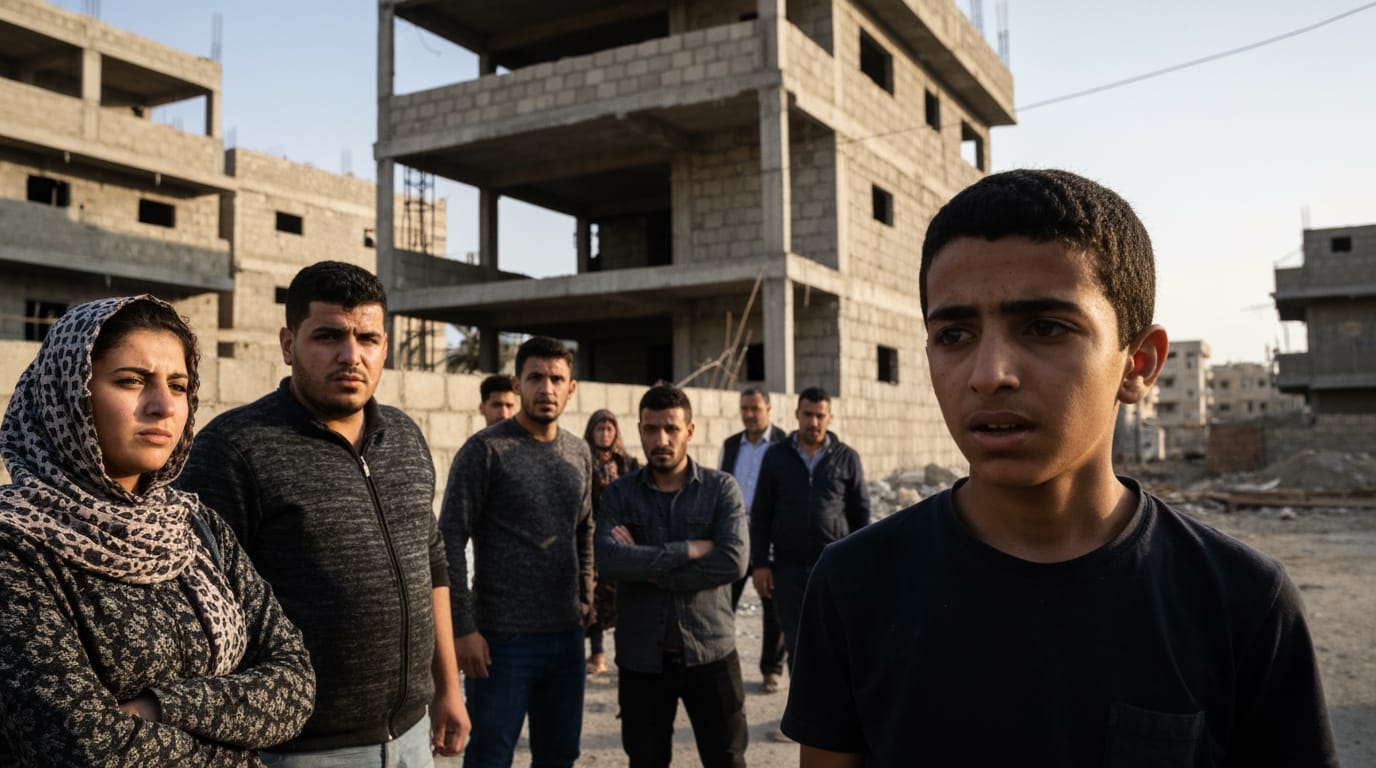
The ambitious vision for stabilizing and reconstructing the Gaza Strip following the October 2025 ceasefire is largely mired in complex political disagreements, persistent security challenges, and a deepening humanitarian crisis. Despite the establishment of international frameworks and pledges of support, fundamental obstacles, primarily centered on governance, disarmament, and divergent national interests, continue to impede meaningful progress, leaving the war-ravaged territory in a precarious state. What began as a hopeful 20-point peace plan now faces significant scaling back, threatening to prolong the suffering of Gaza's 2.1 million residents who remain in urgent need of assistance.
The Elusive Quest for Post-War Governance
Central to the stalled stabilization mission is the lack of consensus on who will govern Gaza. The United Nations Security Council Resolution 2803 endorsed the creation of a transitional body, the National Committee for the Administration of Gaza (NCAG), composed of independent Palestinian technocrats supervised by the U.S.-led Board of Peace. The NCAG officially commenced its work in Egypt on January 16, 2026, with Ali Shaath as chief commissioner, and is intended to eventually succeed the current Hamas administration. However, the committee's entry into Gaza has been delayed, with Israel reportedly blocking its members from entering the territory.
Further complicating matters are deep-seated divisions among Palestinian factions. While Hamas announced the dissolution of its Government Emergency Committee in July 2026, aiming to allow the NCAG to assume administration, this move is viewed with skepticism by some, as Hamas has not committed to disarming. Israeli Prime Minister Benjamin Netanyahu has explicitly rejected any role for the Palestinian Authority (PA) in post-war Gaza, creating a significant political impasse that challenges the comprehensive proposal from the Palestinian government to restore PA governance. Various proposals for governance, including those from Egypt and the UAE, have been put forth, but reconciling these differing visions, particularly with Israel's stated principles, remains a formidable challenge. This fractured political landscape underscores the difficulty in establishing a unified and effective administrative body capable of leading Gaza's recovery.
Security Impasse: Disarmament and a Limited International Force
Another critical barrier is the ongoing security vacuum and the inability to establish a robust International Stabilization Force (ISF). A core tenet of the peace plan involves Hamas relinquishing control of the enclave and disarming. However, Hamas's failure to disarm remains the primary political obstacle blocking reconstruction, with the group yet to commit to any weapons decommissioning process. In fact, Hamas still maintains military and administrative control over a significant portion of Gaza, estimated to be around 47% of the territory at the start of the October 2025 truce.
The proposed ISF, intended to provide security and train Palestinian police forces, has struggled to gain traction. Initial aspirations for a sizable force of tens of thousands of foreign military personnel have been scaled back considerably, with any initial deployment now expected to be in the dozens due to poor security conditions. Securing international commitments for the ISF has proven difficult, partly due to concerns over its mandate and the complex operational environment. Additionally, the U.S. proposal for a UN mandate for the ISF has faced opposition from Russia, China, and some Arab countries, who have expressed unease about the Board of Peace and the limited role for the Palestinian Authority. Israel, meanwhile, has continued military operations and expanded its controlled territory to at least 60% of Gaza since the ceasefire began. The Israeli government is also hesitant to approve the deployment of foreign peacekeeping troops and the vetting of a new Palestinian police force, further impeding the security components of the stabilization plan.
A Deepening Humanitarian Crisis and Stalled Reconstruction
Amidst the political and security gridlock, the humanitarian situation in Gaza remains catastrophic. Nearly every person in Gaza, an estimated 1.9 to 2.1 million people, requires urgent humanitarian assistance, with 1.7 million displaced and living in overcrowded sites. Infrastructure has been shattered, with approximately 90% of water and sanitation infrastructure damaged or destroyed. Access to essential services, including healthcare, water, and sanitation, is critically limited due to damage and restrictions. An assessment indicated that human development in Gaza has been set back 77 years, with projections of over 100,000 children under five facing acute malnutrition in 2026.
Reconstruction efforts, vital for recovery, are largely stalled. Estimated costs for rebuilding Gaza range from $53 billion to over $70 billion over the next decade. However, these figures vastly exceed available commitments, contributing to what experts describe as "donor fatigue" amid repeated cycles of destruction. Despite billions pledged by nations including the U.S., little has been disbursed, as the Gaza Reconstruction and Development Fund has yet to receive money, largely because Gaza remains in a "humanitarian phase" rather than a "reconstruction phase". While local communities, supported by organizations like the United Nations Development Programme, have begun to clear rubble and repave roads, these efforts represent a fraction of the immense task, with full recovery expected to take years. Access restrictions continue to hamper the delivery of even humanitarian aid, with only 44% of UNICEF aid trucks able to offload during May and June 2026.
Political Logjams and Shifting Priorities
The broader geopolitical landscape and domestic political considerations have also contributed to the stagnation. The Iran war, for instance, has reportedly diverted international diplomatic attention away from Gaza, stalling political momentum for reconstruction and stabilization. The ambitious recovery plan pursued by the Board of Peace has dramatically shrunk from a comprehensive blueprint for the entire territory to a small pilot project in the south of the Strip. Even this limited scheme, involving a temporary camp, Palestinian administration, local police, and a small international security force, is not expected to materialize before the end of the year.
Progress is often described as occurring in "baby steps," with meaningful reconstruction and disarmament potentially years away. Israeli elections, scheduled for October, introduce further uncertainty, as a new government might or might not be more flexible in negotiations. The current hardline approach of the Netanyahu government and its expansion of control within Gaza exacerbate the challenges for any stabilization efforts. The collective result is an environment where the crucial elements for stability—unified governance, assured security, and robust reconstruction—remain largely theoretical, while the daily realities for Gazans grow increasingly desperate.
The multifaceted challenges facing the Gaza stabilization mission—ranging from intractable political divisions and Hamas's refusal to disarm to the debilitating humanitarian crisis and donor reluctance—have created a complex and volatile situation. Despite international efforts to establish a framework for peace and recovery, the lack of a clear, universally accepted path forward, coupled with continued military actions and political maneuvering, risks entrenching Gaza in a perpetual cycle of aid dependency and instability. The initial hopes for a comprehensive and swift resolution have given way to a grim reality where even scaled-back plans face significant hurdles, prolonging the suffering of millions and leaving the future of the Gaza Strip profoundly uncertain.


