Gaza's Grim Calculus: Conflict Monitors Affirm Mounting Casualties Amidst Verification Challenges
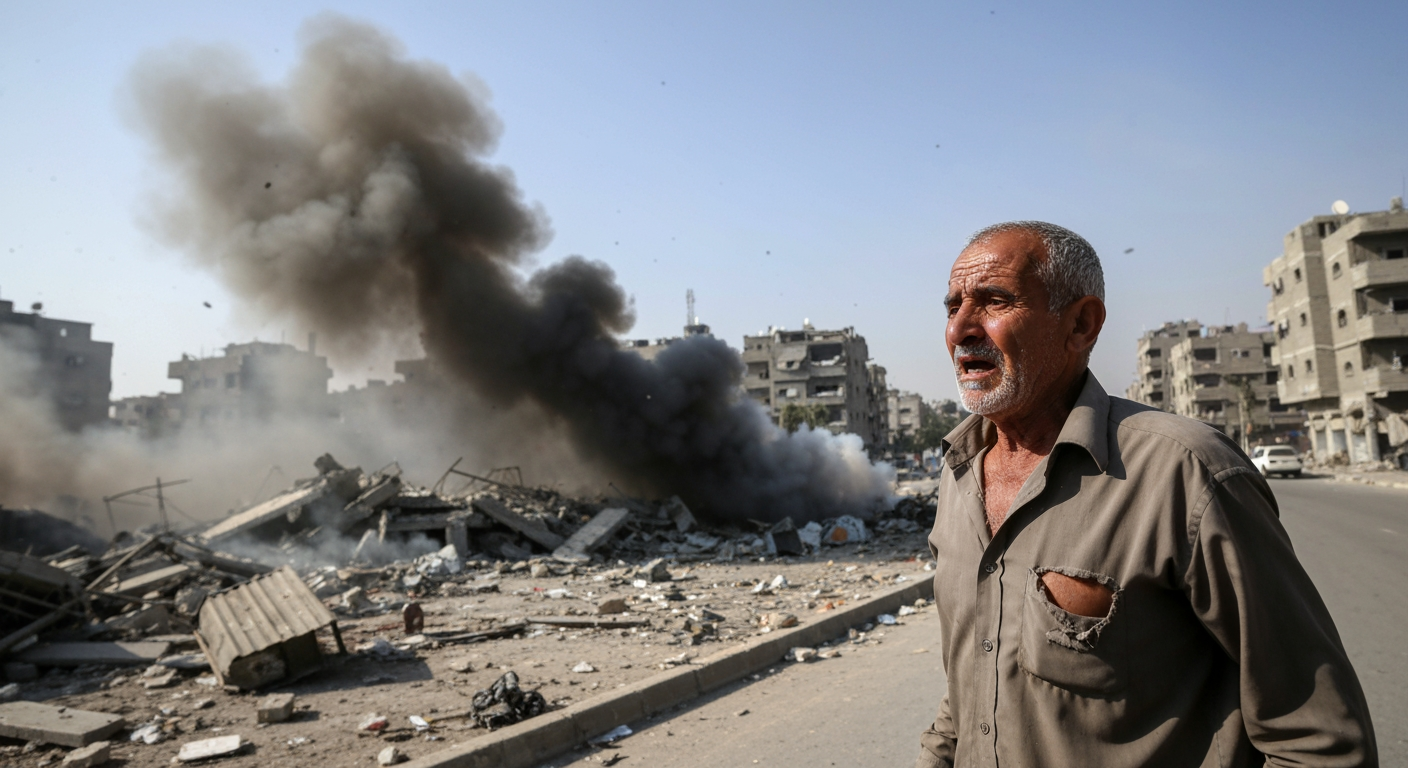
The human toll of the ongoing conflict in Gaza has reached staggering levels, with conflict monitors and humanitarian organizations increasingly affirming that the reported casualty figures, often exceeding 70,000, are "hard to deny" despite persistent challenges in their verification. The immense loss of life, predominantly among Palestinians, has drawn intense international scrutiny and raised profound questions regarding the conduct of hostilities and adherence to international humanitarian law. While precise figures remain a point of contention and methodological debate, the scale of destruction and death is widely acknowledged by various bodies tracking the conflict.
The conflict, which intensified following October 2023, has transformed Gaza into a landscape of profound humanitarian crisis, where counting the dead is a grim and arduous task. This reality underscores the broader implications for civilian protection and the urgent need for clarity and accountability amidst the fog of war.
The Soaring Numbers: An Unprecedented Toll
Reports from the Gaza Health Ministry (GHM), the primary source for casualty figures within the besieged enclave, indicate a death toll exceeding 73,600 as of early January 2026, a figure that includes both Palestinians and Israelis. Other estimates place Palestinian deaths alone at over 71,000 or even 65,000. These numbers represent a dramatic escalation in fatalities, with scholars estimating that approximately 80% of Palestinians killed are civilians. This proportion is further emphasized by studies indicating that women and children constitute a significant majority of those killed in residential areas. For instance, two and a half months into the conflict, the UN Office for the Coordination of Humanitarian Affairs (OCHA) estimated that over 40% of casualties were children and over 31% were women, proportions that remained substantial five months into the hostilities.
The sheer volume of reported deaths, averaging around 70 to 74 fatalities per day over roughly two years, highlights the intense lethality of the conflict. Even amidst a declared ceasefire since October 12, 2025, over 500 Palestinians have reportedly been killed or injured due to continued Israeli strikes, pushing the total further upwards. This persistent human cost has prompted a growing consensus among various conflict monitors that the high casualty figures are undeniably real, even as the specific breakdown and circumstances of each death remain subject to intense scrutiny and debate.
The Intricate Art of Counting in a War Zone
The process of recording casualties in Gaza is fraught with complexities, operating under extreme duress within an active war zone. The Gaza Health Ministry has traditionally been the main source of data, collecting information from hospitals and the Palestinian Red Crescent. This involves recording wounded individuals and bodies arriving at morgues, with data entered into a computerized system that typically includes names, ID numbers, entry dates, and injury types. Notably, Palestinian ID numbers are generated within the Israeli-controlled population registry system, which some monitors cite as a factor supporting the initial reliability of the GHM's data when it included ID numbers.
However, the severe disruption and destruction of Gaza's healthcare infrastructure have significantly impacted the GHM's data collection methods. After key medical facilities were compromised, the initial system, reliant on hospital morgues, largely collapsed. The Ministry then adapted its approach, incorporating headcounts by public relations and media staff when regular hospital reporting channels failed, and working to convert these into documented deaths through handwritten records and judicial verification.
International bodies like the UN OCHA collect casualty data through field staff, aiming for verification from at least two independent and reliable sources. For the current conflict, OCHA has indicated that independently verified figures will be added to its main database eventually, while currently relying on GHM figures in its humanitarian updates. This reliance underscores the GHM's central, albeit challenged, role in documenting the human cost.
Discrepancies, Debates, and Verification Challenges
The methodology and accuracy of casualty figures have been subjects of considerable debate. In May 2024, the UN OCHA revised its estimates for women and children killed, halving previously reported numbers which had been derived from Hamas figures. This revision sparked criticism, with some Israeli officials and commentators accusing the UN of initially disseminating "Hamas propaganda" and "unreliable" data. Such instances highlight the political sensitivities surrounding casualty counts and the difficulty of independent verification in an area largely inaccessible to external monitors.
Critics of the GHM's figures have pointed to alleged inaccuracies, including the potential for natural deaths or pre-war deaths to be included, and the lack of distinction between combatants and civilians in its public reporting. Some reports even detail errors such as misclassified ages and genders in the Ministry's lists.
Conversely, proponents of the GHM's figures argue that the Ministry's methods, including name-based registration and ID numbers, have been accepted by the UN and other humanitarian agencies in previous conflicts. Independent analyses, such as one by Airwars, have found that approximately 75% of names reported in media matched those on initial GHM lists, suggesting a degree of accuracy in the Ministry's early data collection. Further, the assertion that the GHM is "Hamas-run" is a frequently cited caveat, yet its ability to track individuals through Israeli-issued ID numbers adds a layer of complexity to dismissals of its data. The fact that some Israeli security officials reportedly accept the GHM's total death count as "broadly accurate" further complicates the narrative surrounding the figures.
Discrepancies also emerge in estimates of combatant versus civilian casualties. While scholars estimate a high civilian percentage (around 80%), Israeli officials suggest a lower civilian-to-combatant ratio, claiming two to three civilians killed for every militant. The IDF has stated it killed 12,000 to 14,000 militants, while a Hamas official cited 6,000 militant deaths. These varying figures underscore the inherent challenges in disaggregating combatant and non-combatant deaths in intense urban warfare.
International Law and Civilian Protection
The staggering casualty figures bring into sharp focus the principles of International Humanitarian Law (IHL), which govern the conduct of armed conflict. IHL mandates that all parties distinguish between combatants and civilians, and between military objectives and civilian objects, directing attacks solely at the former. Crucially, IHL requires all feasible precautions to be taken to minimize harm to civilians and prohibits attacks that would cause disproportionate civilian casualties relative to the anticipated military advantage. The presence of military targets within civilian areas does not nullify civilian protection or justify indiscriminate attacks.
Both Israeli and Palestinian armed groups have been accused of violations of IHL, including indiscriminate attacks and failing to protect civilian populations. The extensive use of explosive weapons with wide-area effects in densely populated urban environments like Gaza raises significant concerns about compliance with these fundamental tenets of international law. The international community continues to grapple with the implications of the high civilian death toll, emphasizing the enduring obligations of all parties to uphold IHL and ensure accountability for violations.
Conclusion
The pervasive impact of the Gaza conflict is undeniably etched in the mounting casualty figures, which conflict monitors increasingly find "hard to deny." While the precise methodologies of counting and the breakdown of civilian versus combatant deaths remain subjects of ongoing discussion and occasional revision, the sheer scale of human loss is a stark reality. The challenges inherent in documenting fatalities in an active and destructive war zone contribute to the complexities of verification and the politicization of numbers. Nevertheless, the consensus among various reporting bodies and the acknowledgment by some within Israeli security circles lend significant weight to the overall magnitude of the death toll. As the conflict continues, the focus remains on the imperative to protect civilians, adhere to international humanitarian law, and ensure that the grim calculus of casualties does not obscure the individual human tragedies behind each number.
Related Articles


Mounting Frustration Grips Russia as Economic Hardship and War's Toll Deepen
Moscow, Russia – A palpable shift in public sentiment is emerging across Russia, with growing frustration among citizens fueled by a confluence of economic pressures, increasing internet restrictions, and the undeniable...


Germany's Strategic Calculus: Ukraine Aid is an Investment in European Security, Not Charity
Berlin – The ongoing provision of substantial aid to Ukraine by Germany and its allies is increasingly being framed not as an act of altruism, but as a crucial investment in European security and stability. This...