U.S. Recalibrates Sahel Strategy Amid Surging Instability and Geopolitical Shifts
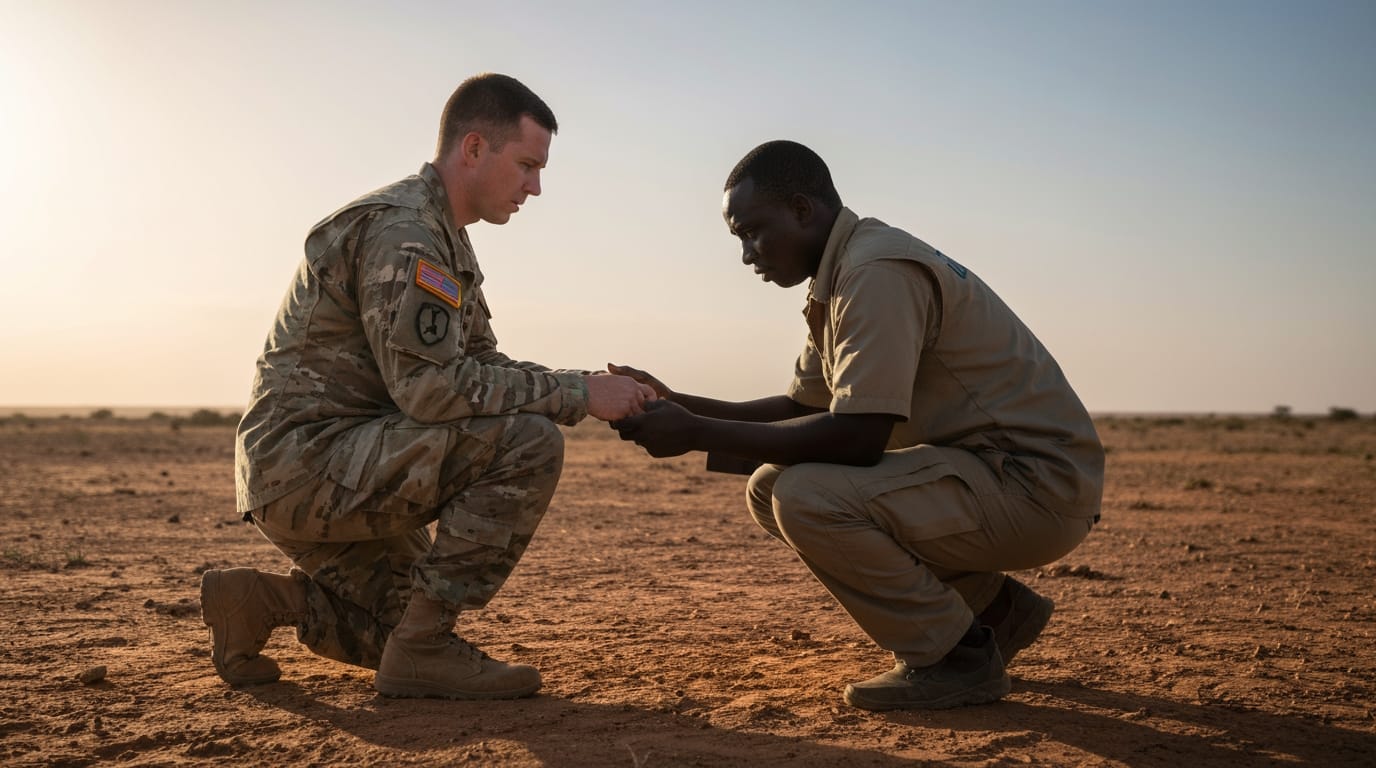
The United States is undertaking a significant strategic recalibration in Africa's Sahel region, shifting away from long-held foreign policy tenets as it grapples with deepening instability, a proliferation of military coups, and escalating geopolitical competition from Russia and China. This pragmatic adjustment signals a departure from an approach that once heavily prioritized democracy promotion and counterterrorism partnerships, now embracing a more flexible engagement with military-led governments in a volatile region considered the global epicenter of terrorism. The move reflects a critical reassessment of past strategies that have struggled to curb extremist violence and foster durable stability across the vast semi-arid belt.
The Sahel's Evolving Crisis
For decades, the Sahel, stretching across countries such as Mali, Burkina Faso, and Niger, has contended with a complex web of challenges. It remains one of the world's poorest regions, marked by extreme poverty, the severe impacts of climate change, persistent food crises, rapid population growth, and fragile governance. These underlying vulnerabilities have provided fertile ground for the dramatic rise of extremist groups. Organizations like Jama'at Nusrat al-Islam wal Muslimeen (JNIM), Islamic State in the Greater Sahara (ISGS), and Islamic State in the West African Province (ISWAP) have expanded their reach, contributing to a more than 1,000% increase in terrorism-related deaths between 2007 and 2021. In 2024, the region tragically accounted for nearly half of all terrorism-related fatalities globally.
The humanitarian consequences have been devastating, with over 33 million people across the Sahelian nations requiring life-saving assistance in 2022, a 25% increase over five years. This crisis is compounded by mass displacement, widespread human rights violations, and food insecurity affecting millions. Historically, the United States responded to these threats primarily through counterterrorism initiatives following the 9/11 attacks, establishing military training programs, intelligence cooperation, and even a drone base in Niger to target extremist networks. Approximately 1,500 U.S. troops were deployed to the region to support these efforts.
The Tipping Point: Coups, Withdrawals, and Waning Influence
A confluence of factors has necessitated the current strategic overhaul. A wave of military coups that swept across Mali, Burkina Faso, and Niger since 2020 profoundly altered the regional political landscape. These seizures of power often led to immediate diplomatic freezes and sanctions from Western nations, including the United States, effectively dismantling established security partnerships. The military juntas, often capitalizing on popular discontent with insecurity and perceived foreign interference, moved to sever ties with traditional Western allies.
Simultaneously, the French military, a longstanding security partner in the region, began drawing down its presence. Operation Barkhane concluded in 2022, with French and European forces withdrawing from Mali, and France relinquishing its last military base in Chad in January. This created a significant security vacuum. The U.S. military, which had invested over $3.3 billion in Sahel security assistance over the years, found its counterterrorism programs increasingly ineffective as violence continued to rise despite these efforts. The lesson learned was that "overly securitized approaches" of the past decade had not yielded desired results.
Compounding this challenging environment is the accelerating erosion of U.S. influence, particularly on military and diplomatic fronts. Suspended cooperation with post-coup regimes and reduced development aid created openings that rival global powers swiftly exploited.
The New Geopolitical Chessboard
The decline of Western influence has coincided with a robust expansion of engagement by Russia and China in the Sahel. These nations have capitalized on the fractured relationships between Sahelian governments and Western powers, offering transactional alternatives often devoid of democratic or human rights preconditions. Russia, through entities like the Wagner Group, now rebranded as Africa Corps, has entrenched its presence by offering security cooperation and military advisers, sometimes in exchange for mining concessions and direct access to ruling juntas. China, meanwhile, has steadily deepened economic ties through infrastructure development, mining contracts, and long-term financing, consistently avoiding political conditionalities.
This shift presents a direct challenge to U.S. interests, particularly regarding access to critical minerals such as gold, lithium, and uranium, which are abundant in Mali and Niger and vital for global supply chains and the energy transition. The rapid, integrated aid packages offered by Russia and China contrast sharply with the often slow and fragmented U.S. foreign assistance architecture, which is spread across numerous agencies and requires extensive approvals. This bureaucratic dispersion limits America's ability to respond swiftly and coherently to evolving crises.
Pillars of the Recalibrated Approach
Washington's recalibrated strategy reflects a pragmatic shift towards "geopolitical realism," moving beyond an exclusive focus on democracy promotion to one that acknowledges the complex realities on the ground. This involves quietly reopening diplomatic channels with military-led governments, as evidenced by a recent visit by a top U.S. State Department official to Mali, signaling a desire to chart "a new course" in bilateral relations and emphasize respect for national sovereignty.
A key component of this revised approach is a strategic pivot towards coastal West African nations like Benin, Côte d'Ivoire, Ghana, Guinea, and Togo. In April 2022, President Biden announced that the U.S. government would prioritize partnerships with these countries to advance the U.S. Strategy to Prevent Conflict and Promote Stability (SPCPS). This 10-year plan aims to incorporate lessons learned from the Sahel, focusing on a more holistic approach that strengthens social cohesion, improves government responsiveness, and enhances security force accountability.
While direct military intervention and large-scale deployments are being re-evaluated, the U.S. continues to provide intelligence support and may consider limited arms transfers to these nations. General Michael Langley, head of U.S. Africa Command (AFRICOM), has emphasized the need for "independent operations" and "burden sharing" by African allies, suggesting a shift toward encouraging greater self-reliance in security provision.
Challenges and the Road Ahead
The path forward for the U.S. in the Sahel is fraught with challenges. The fundamental trade-off between promoting democratic governance and addressing immediate counterterrorism concerns remains. Critics question whether re-engaging with military juntas, even pragmatically, undermines long-term democratic aspirations. The deep-seated issues of weak governance, economic decline, and climate change, which fuel extremist recruitment, require comprehensive, long-term solutions that extend beyond security interventions.
Furthermore, the persistent influence of Russia and China complicates Washington's efforts. The ability of these competitors to offer no-strings-attached aid and security assistance creates a difficult environment for the U.S., which often ties its support to conditions of human rights and democratic progress. The fragmented nature of U.S. foreign assistance also puts it at a disadvantage in a rapidly evolving geopolitical arena.
Ultimately, the success of this recalibrated strategy will hinge on its ability to effectively balance immediate security imperatives with a renewed commitment to addressing the root causes of instability. Washington faces the delicate task of regaining influence and fostering credible partnerships in a region where past approaches have faltered, ensuring that its pragmatic shifts lead to sustainable peace and development rather than merely reactive engagement.


