Geopolitical Storm Clouds Gather Over 2026 World Cup as Europe Weighs Boycott
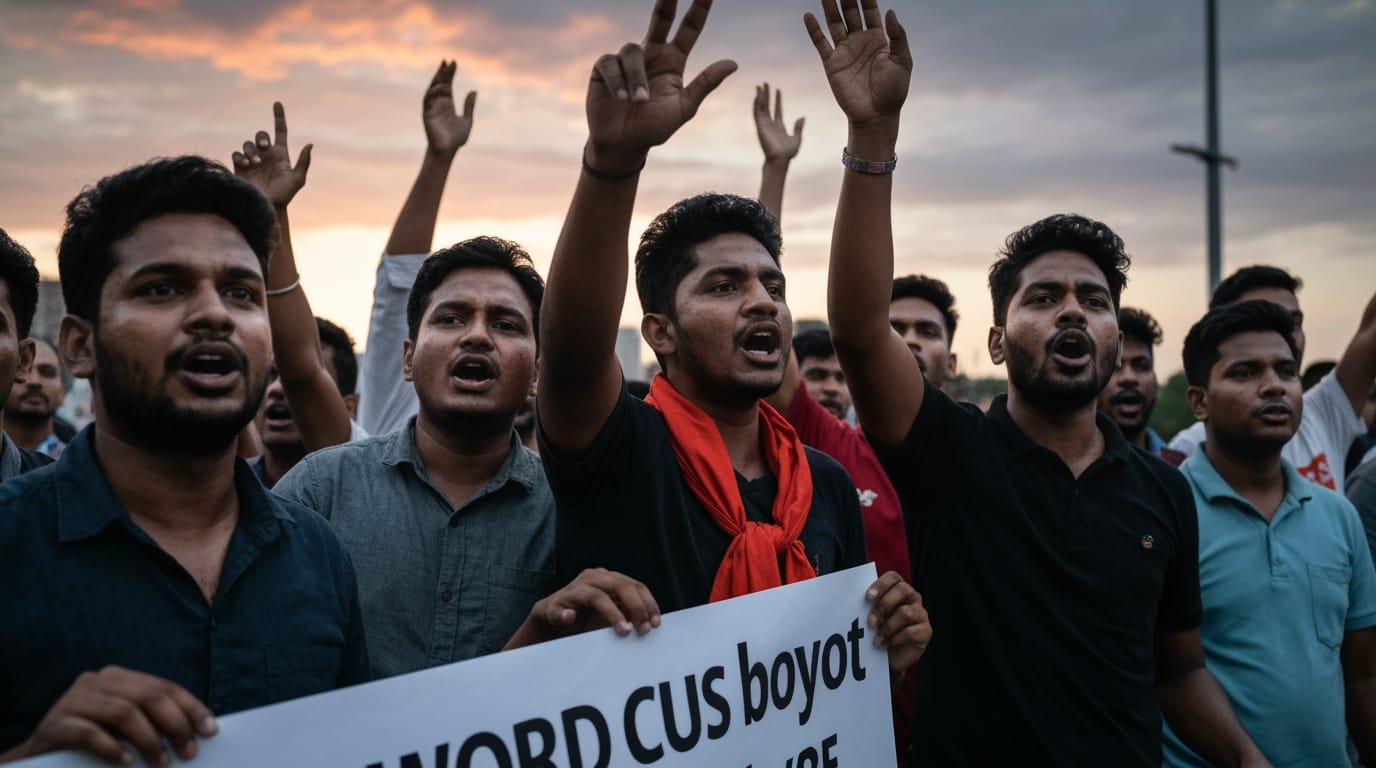
As the 2026 FIFA World Cup in North America draws nearer, a growing chorus of voices across Europe is debating a potential boycott, driven by escalating geopolitical tensions stemming from U.S. President Donald Trump's controversial attempts to acquire Greenland and his subsequent tariff threats against European allies. With just months until the tournament kicks off in the United States, Canada, and Mexico, the prospect of major European footballing nations withdrawing casts a significant shadow over what is intended to be a global celebration of sport.
The Greenland Gambit: A Geopolitical Flashpoint
The primary catalyst for the current boycott discussions is U.S. President Donald Trump's intensified efforts to purchase Greenland, an autonomous territory of Denmark. These efforts have been met with staunch opposition from Denmark, a NATO member, triggering a diplomatic crisis. In response, President Trump has reportedly threatened to impose a 10% tariff on goods imported into the U.S. from eight European countries: the United Kingdom, France, Germany, Denmark, Norway, Sweden, the Netherlands, and Finland – nations that have opposed his Greenland ambitions. Many European leaders and commentators view these actions as an attack on European sovereignty and international law, pushing political tensions to an unprecedented level for a major sporting event. The U.S. stance views the mineral-rich territory as a "strategic imperative" for national security and missile defense capabilities.
This diplomatic friction has transformed what was anticipated to be a straightforward lead-up to the World Cup into a complex geopolitical dilemma. The U.S. is scheduled to host the majority of the tournament's 104 games, including all knockout matches from the quarter-finals onward, making any potential European withdrawal particularly impactful.
European Football Divisions: Calls for Action and Official Caution
Across Europe, the response to the escalating tensions has been varied, highlighting a divide between public sentiment, some football figures, and official government positions. In the Netherlands, a petition initiated by journalist Teun van de Keuken calling for a boycott of the tournament has amassed over 114,000 signatures, urging the country's national team, Oranje, to take a principled stand. While the Royal Netherlands Football Association (KNVB) has stated it has no immediate plans to withdraw, it confirmed it is closely monitoring geopolitical developments and remains in consultation with the Dutch government.
Germany, a four-time World Cup winner, has also seen significant debate. Jürgen Hardt, a German politician, suggested that a boycott could be a "last resort" to pressure President Trump on the Greenland issue. Oke Goettlich, president of German club FC St. Pauli and a board member of the German Football Federation, publicly questioned whether European nations should participate in a competition hosted by a country "indirectly, and possibly soon directly, attacking Europe". A recent poll in Germany indicated that 47% of Germans would support a boycott if the U.S. were to annex Greenland. However, the German state minister for sports, Christiane Schenderlein, clarified that decisions on participation in major sporting events rest solely with the competent sports associations, not politicians.
France's sports minister, Marina Ferrari, has also weighed in, stating that the French government is not currently considering a boycott, emphasizing the importance of keeping sports separate from politics. Despite this, a senior far-left French politician, Éric Coquerel, called for the U.S. to be stripped of its co-hosting duties, questioning France's participation in a country that "attacks its 'neighbours,' threatens to invade Greenland and rides rough shod over international law". European football leaders held informal discussions in Budapest, where around 20 heads of football associations expressed deep concern over President Trump's actions, recognizing the potential need for a unified European response.
Adding to the complexity, European champions Spain had previously threatened to withdraw from the World Cup over unrelated issues concerning Israel, suggesting a precedent for such considerations among top footballing nations.
Broader Human Rights Concerns and Fan Safety
Beyond the immediate geopolitical tensions, concerns over human rights and fan safety in the host countries, particularly the United States, have also contributed to the calls for reconsideration. England's official LGBTQ+ fans group, Three Lions Pride (3LP), announced it would not have a visible presence at the World Cup in the U.S., citing serious concerns over fan safety and a "dangerous rollback of human rights" in the country. The group highlighted particular risks for trans and gender non-conforming individuals, stating it could not guarantee the security of its members.
Human rights organizations, including the Sport & Rights Alliance, have warned of "escalating attacks on human rights and civil freedoms" in the U.S., Canada, and Mexico that threaten FIFA's human rights commitments. They point to discriminatory laws and a hostile political climate around LGBTIQ+ rights in the U.S., as well as violence against LGBTIQ+ individuals in Mexico, as direct threats to the security and inclusion of fans, players, and workers. Concerns have also been raised regarding the U.S. administration's immigration policies, which include "travel ban" lists and visa restrictions, potentially affecting supporters from qualified nations. FIFA itself has issued warnings to fans, clarifying that a valid match ticket does not guarantee entry into the host nations. These broader issues amplify the debate over whether the tournament can truly be inclusive and safe for all participants and spectators.
The Stakes for FIFA and the Global Game
A European boycott would undoubtedly send shockwaves through the global football landscape. European teams are set to occupy 16 of the 48 expanded World Cup slots, and their absence would severely diminish the tournament's sporting integrity, commercial appeal, and global viewership. This would present a major embarrassment for FIFA, whose leadership, particularly President Gianni Infantino, has forged close ties with the Trump administration. Notably, FIFA awarded President Trump a "Peace Prize," a move that drew significant criticism and fueled accusations of the organization prioritizing political alliances over ethical conduct.
Historically, FIFA has shown reluctance to remove host nations or support boycotts, often citing the separation of sport and politics. However, the current situation, where the host nation's actions directly target participating federations' home countries, is unprecedented. The economic implications for national federations could also be immense, as FIFA would likely impose severe penalties, including bans from future competitions, for any boycotting nation. The financial lure of participation and the risk of exclusion often outweigh political grievances for individual federations.
Despite the complexities, some football figures and fans have speculated about alternative scenarios, such as European and South American nations organizing their own parallel tournament if a boycott materializes, though this remains highly hypothetical.
A Precarious Balance
As the 2026 World Cup approaches, the football world finds itself at a precarious crossroads. The debate over a European boycott underscores the increasing difficulty of separating sports from the broader geopolitical context. While strong moral and political arguments are being made for a stand against the actions of the U.S. administration, the immense financial implications and the logistical challenges of a unified boycott remain significant obstacles. The coming months will determine whether the spirit of global football can overcome these profound geopolitical divisions, or if the tournament will proceed under an unprecedented cloud of controversy and fractured participation.