Georg Baselitz, Artistic Titan Who Upended the Canvas, Dies at 88
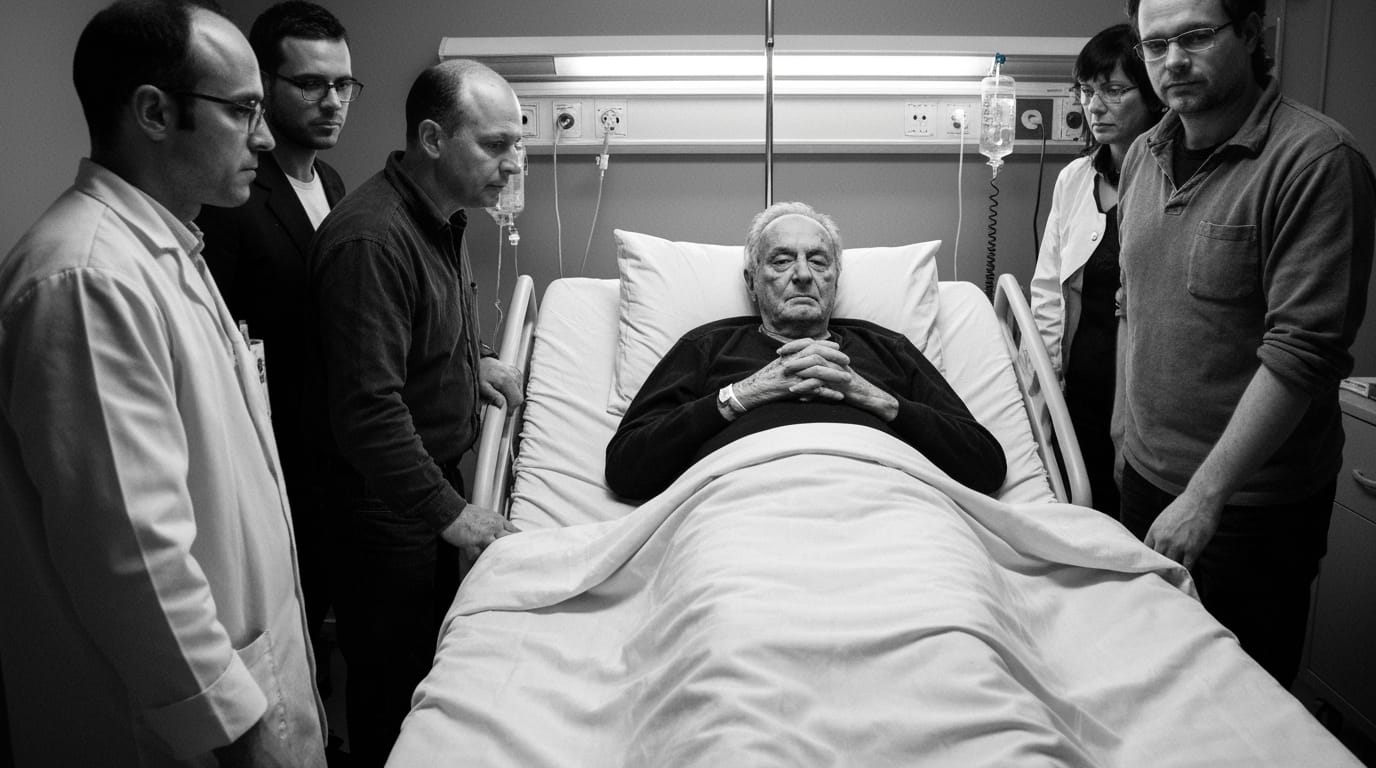
Georg Baselitz, the groundbreaking German artist renowned for his provocative, upside-down paintings and raw, expressive sculptures, died peacefully on April 30, 2026, at the age of 88. His passing marks the end of an era defined by his relentless questioning of artistic conventions and profound engagement with Germany's fraught post-war identity. Baselitz, a titan of contemporary art, consistently challenged viewers to reconsider perception and meaning, leaving an indelible mark on the global art landscape.
Born Hans-Georg Kern on January 23, 1938, in Deutschbaselitz, Saxony, a village in what would become East Germany, Baselitz adopted his artistic surname as a tribute to his birthplace. His formative years were shaped by the devastation of World War II and the subsequent division of Germany. He witnessed the bombing of Dresden in 1945, an experience that deeply informed his artistic philosophy. Baselitz often described his childhood as being "born into a destroyed order, a destroyed landscape, a destroyed people, a destroyed society," a sentiment that underscored his artistic drive to confront rather than rebuild, to disrupt rather than conform.
Rejection and Rebellion: Forging a Path in Post-War Germany
Baselitz's artistic journey began in a divided Germany that presented starkly different ideological landscapes for art. He was expelled from the Academy of Fine and Applied Art in East Berlin in 1957 for "sociopolitical immaturity," a charge reflecting his early defiance of socialist realism. This expulsion prompted his move to West Berlin, where he completed his studies and plunged into the vibrant, yet complex, currents of Western modernism. Initially drawn to American Abstract Expressionists like Jackson Pollock and Philip Guston, Baselitz ultimately carved out his own distinct path, one deeply rooted in German Expressionist traditions while simultaneously pushing against prevailing abstract trends.
His early exhibitions were marked by controversy. In 1963, his first solo show in Berlin resulted in the confiscation of two paintings, "Die Grosse Nacht im Eimer" (The Big Night Down the Drain) and "Der nackte Mann" (The Naked Man), by authorities who deemed them obscene. This early brush with censorship, rather than deterring him, cemented his reputation as an unflinching artist unafraid to challenge societal norms and artistic sensibilities. These works, characterized by raw depictions of fragmented figures, were seen as both a provocation and a stark commentary on post-war German life.
The Inverted Image: A Signature of Disruption
A pivotal moment in Baselitz's career arrived in 1969 when he introduced his now-iconic method of painting subjects upside down. With works like "Der Wald auf dem Kopf" (The Wood on Its Head), he began a practice that would become his enduring trademark. This wasn't merely a stylistic gimmick; Baselitz articulated it as a deliberate strategy to "reinvent reality" and emphasize the painting as an object rather than a narrative window. By divorcing the image from its conventional orientation, he forced viewers to engage with the formal qualities of the work—the brushstrokes, colors, and textures—rather than getting lost in the subject matter. German President Frank-Walter Steinmeier noted that Baselitz "did not just turn his paintings upside down; he also turned our thinking routines upside down," highlighting the profound conceptual impact of this approach.
This inversion technique solidified his position as a pioneer of Neo-Expressionism, a movement that brought figuration and emotional intensity back to the forefront of painting. His "Heroes" series from 1965–66, featuring monumental, often tattered figures in desolate landscapes, had already hinted at this expressive power, exploring themes of resilience and vulnerability in a traumatized nation.
Beyond the Canvas: Sculpture and Enduring Influence
While best known for his paintings, Baselitz was also an accomplished sculptor and printmaker. His sculptures, often carved from raw wood using chainsaws and axes, shared the same primal energy and confrontational directness as his paintings. These works, too, occasionally sparked controversy, such as his sculpture presented at the 1980 Venice Biennale, which some interpreted as evoking a Nazi salute. His printmaking, particularly woodcuts, further explored his interest in material and gesture.
Baselitz's work was widely exhibited and acclaimed globally, including representing Germany at the Venice Biennale in 1980 and participating in multiple Documenta exhibitions. Major retrospectives celebrated his six-decade career at prestigious institutions worldwide, including the Guggenheim Museum in New York (1995), the Centre Pompidou in Paris (2021), and the Hirshhorn Museum in Washington, D.C. (2018). In his later years, Baselitz revisited earlier motifs through his "Remix" series and created introspective self-portraits and portraits of his wife, Elke, who survives him along with their two sons, Daniel Blau and Anton Kern. Fittingly, a major exhibition of his latest paintings, "Eroi d'Oro," featuring monumental self-portraits and images of Elke, is scheduled to open just days after his death, on May 6, 2026, at the Fondazione Giorgio Cini in Venice, concurrent with the 61st Venice Biennale.
A Legacy of Questioning
Georg Baselitz remained an active and influential figure until his final days, his work consistently confronting "the visceral reality of history and tragedy of being German in a post World War II era." Despite his global success, he maintained a reputation for outspokenness, at times drawing criticism for controversial remarks. Yet, his artistic integrity remained paramount. His relentless pursuit of a unique visual language, his willingness to disrupt conventional perception, and his profound engagement with the human condition in the aftermath of trauma cemented his place as one of the most significant artists of his generation. Through his inverted figures and raw, emotionally charged canvases, Baselitz didn't just turn subjects upside down; he turned the very act of seeing and interpreting art inside out, compelling generations of artists and viewers to question everything.