Global Weariness Mounts: United States Grapples with Eroding Influence and Trust
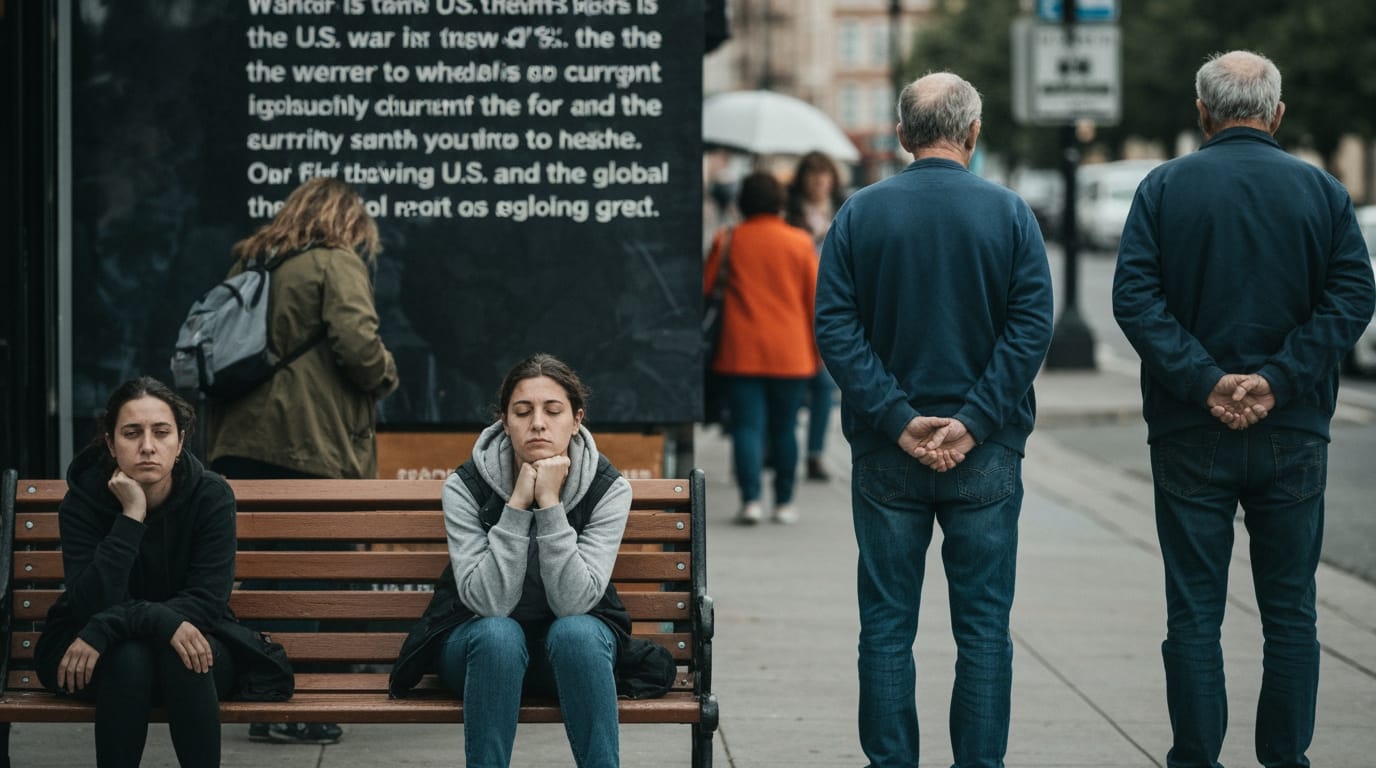
A palpable sense of fatigue with the United States is sweeping across the globe, as recent polling data and international observations indicate a significant decline in America's reputation, influence, and the trust it once commanded among both allies and adversaries. This growing global skepticism marks a profound shift in the international landscape, challenging long-held assumptions about American leadership and raising questions about the future of global power dynamics.
The Fading Beacon: A Global Survey of Shifting Sentiments
Recent extensive surveys paint a stark picture of declining international sentiment towards the United States. An Ipsos poll conducted across 29 countries revealed a significant drop in the proportion of people who believe the U.S. will have a positive influence on world affairs, falling in 26 nations over a six-month period. On average, only 46% of respondents held a positive view, a decrease from 59% recorded just prior to the presidential election. Notably, Canada, a historically staunch ally, experienced the most dramatic downturn, with positive perceptions plummeting by 33 points.
For the first time in a decade of Ipsos tracking, China is now perceived by many as having a more positive role on the international stage than the United States, with an average of 49% across 29 countries viewing China positively, a 10-point increase. The Democracy Perception Index further corroborates this trend, indicating that 55% of surveyed states now hold negative views of the United States. Alarmingly, 44% of respondents in 2021 identified America as a threat to global democracy, surpassing China (38%) and Russia (28%) in this regard. Trust in the United States has also sharply declined across G7 and BRICS countries, with Canada again registering the steepest fall at 52%. Major European allies, including Italy, France, and Germany, have seen trust levels drop between 15% and 21%.
The Erosion of Soft Power: Policy Choices and Their Consequences
This widespread weariness is largely attributed to a perceived erosion of American "soft power"—the ability to influence and attract through culture, political values, and foreign policies rather than coercion. Historically, the U.S. has leveraged its soft power through initiatives like foreign aid and cultural exchange programs. However, recent policy shifts have reportedly undermined these efforts. The implementation of global tariffs, a diminished leadership role in international conflicts such as the war in Ukraine, and an inconsistent rhetoric regarding alliance commitments are cited as key factors.
A focus on transactional, short-term gains, often characterized as an "America First" approach, has led to wavering commitment to international agreements and alliances. Proposed drastic cuts to institutions like the U.S. Agency for International Development (USAID) and the U.S. Agency for Global Media, which includes entities like Voice of America, are seen as further damaging America's reputation for benevolence and credibility. Experts estimate the annual financial cost of this soft power erosion to be substantial, potentially exceeding $70 to $90 billion through reduced cultural exports, lost education revenue, and weakened diplomatic ties. This decline is not merely symbolic but represents a tangible loss in global influence and economic opportunity.
Allies Rethink Dependencies: From Trust to Skepticism
The repercussions of this shift are particularly evident among traditional American allies, who are increasingly reassessing their dependencies on the United States. Countries like Germany have openly criticized U.S. foreign policy, particularly concerning the war in Iran, with Chancellor Friedrich Merz stating concerns about Washington's lack of an exit strategy and the economic distress caused by the conflict, including the closure of the Strait of Hormuz. This growing discomfort has been met with threats from the U.S. of troop reductions in Germany, mirroring similar proposals from previous administrations.
In response to perceived U.S. unreliability, European nations are actively exploring and developing autonomous security architectures, signaling a move towards greater self-sufficiency in defense. Furthermore, there is a visible trend among some allies to reduce their reliance on American technological systems and defense hardware. For instance, European governments are considering switching from U.S. software to local or open-source alternatives, fearing potential denial of access to critical services due to U.S. control. Reports also suggest that some close intelligence allies, part of the "Five Eyes" network, have engaged in discussions about scaling back the sensitive information they share with the United States. This collective reassessment indicates a strategic pivot by allies to insulate themselves from potential U.S. unpredictability and to foster greater regional stability without guaranteed American leadership.
A Divided Nation's Self-Perception
The international perception of declining U.S. influence is mirrored by a growing sentiment within America itself. A significant portion of the U.S. population believes the country has lost global influence and moral authority. A recent Pew Research Center survey revealed that a majority of Americans, 53%, now believe the U.S. does not adequately consider the interests of other nations when formulating its foreign policy decisions. This figure represents a sharp increase from 27% in 2023.
This internal perception, however, is heavily influenced by partisan divides. While Democrats and independents are more likely to express skepticism about America's global standing and moral leadership, Republicans tend to maintain a more optimistic view. Despite these internal differences, a large majority of Americans, 83%, agree that the U.S. interferes in the affairs of other countries to a great or fair extent, with majorities across both major parties holding this view. This internal reflection on America's role highlights a complex domestic landscape that further complicates its international positioning.
Navigating a New Geopolitical Reality
The accumulation of declining trust, eroding soft power, and allies seeking alternatives presents a formidable challenge for the United States on the global stage. The era of unquestioned American preeminence appears to be yielding to a more multipolar or perhaps, in some regions, a non-polar world order where the U.S. must contend with heightened scrutiny and diminished automatic deference. Rebuilding trust and restoring influence will necessitate a consistent, values-driven foreign policy that prioritizes collaboration, respects international norms, and demonstrates reliable partnership. The ability of the United States to adapt to this evolving geopolitical reality, mend strained relationships, and reassert its attractiveness will be crucial in shaping its role and the stability of the international system for decades to come.