The Eulenburg Affair: A 'Gay Scandal' That Rocked Imperial Germany and Reshaped its Destiny
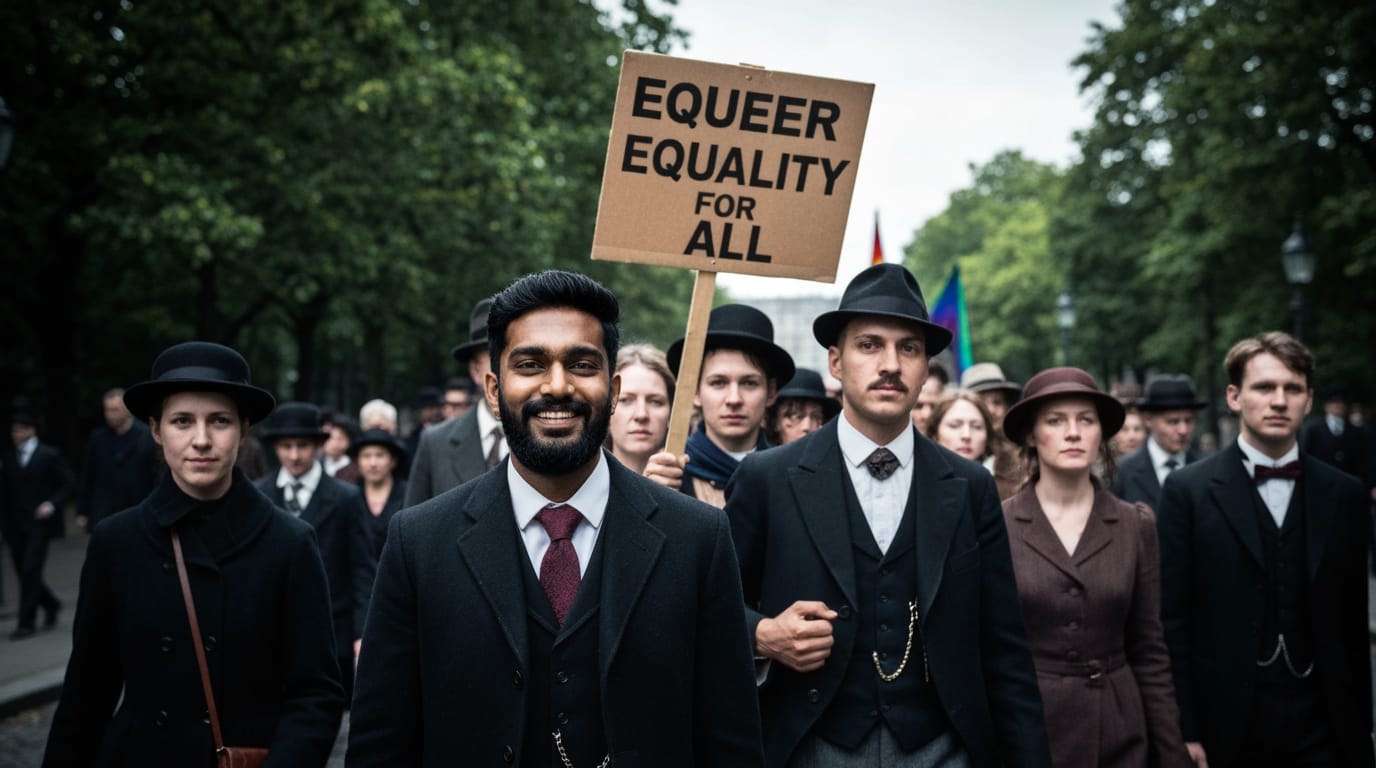
BERLIN – At the dawn of the 20th century, Imperial Germany, a nation striving for global power and deeply entrenched in rigid social norms, was convulsed by a public controversy that would expose the intimate lives of its most powerful figures and send shockwaves through its political and cultural landscape. Known as the Eulenburg Affair, this series of accusations and sensational trials surrounding alleged homosexual conduct among Emperor Wilhelm II's inner circle became the biggest domestic scandal of its time, stripping the Kaiser of trusted advisors and sparking an unprecedented public discourse on sexuality that some historians argue had lasting implications for Germany's path toward World War I.
The Unveiling: A Journalist's Political Gambit
The scandal's genesis lay in the calculated campaign of journalist Maximilian Harden, editor of the influential weekly Die Zukunft. Harden, a vocal critic of Kaiser Wilhelm II's "personal rule" and his perceived shift away from Otto von Bismarck's pragmatic foreign policy, aimed to undermine the so-called "Liebenberg Round Table" – a close-knit group of aristocrats and diplomats surrounding the Emperor. At the heart of Harden's target was Philipp, Prince of Eulenburg-Hertefeld, a diplomat, musician, and the Kaiser's closest friend and confidante. Harden believed Eulenburg wielded undue influence over the Kaiser, steering Germany's foreign policy towards what he considered a dangerous and misguided path.
Beginning in late 1906, Harden published a series of articles in Die Zukunft hinting at widespread homosexual activities within the Kaiser's entourage. These veiled, yet widely understood, accusations directly targeted Eulenburg and General Kuno von Moltke, the military commandant of Berlin and another member of the Kaiser's inner circle. Harden's strategy was not merely moralistic; it was a potent political weapon designed to discredit Eulenburg and his faction by exposing their private lives, which stood in stark contrast to the era's severe legal and social prohibitions against homosexuality.
Paragraph 175: The Legal Sword Hanging Over Accused
The legal backdrop to these revelations was Paragraph 175 of the German Criminal Code, a statute enacted in 1871 that criminalized "unnatural sexual acts" between men. This law, a legacy of earlier Prussian legal codes, carried penalties of imprisonment and could result in the loss of civil rights. While its enforcement varied, the existence of Paragraph 175 provided the legal framework that turned Harden's accusations into actionable offenses, transforming whispers into potential criminal charges. It was a potent tool for character assassination and political maneuvering, particularly against individuals who, despite their high social standing, were vulnerable to such allegations.
The initial accusations quickly escalated into a legal maelstrom. General von Moltke, prompted by the damaging insinuations, sued Harden for libel. The ensuing trials, held between 1907 and 1909, became public spectacles, meticulously covered by the domestic and international press. These proceedings saw a parade of witnesses, some testifying to intimate details of relationships and encounters, while others provided character defenses. The trials, including Moltke v. Harden and a subsequent case of Harden v. Moltke, captivated a society unaccustomed to such open discussion of taboo subjects.
Trials, Testimonies, and a Public Unraveling
As the trials unfolded, the focus intensified on Prince Philipp zu Eulenburg. Despite his denials, accusations mounted, particularly after Harden orchestrated a strategic legal maneuver in Munich, a region outside Prussian jurisdiction. Here, two men of lower social standing, a milkman and a fisherman, testified to having had sexual relations with Eulenburg decades earlier. These testimonies led to Eulenburg being charged with perjury, as he had previously denied any homosexual activity under oath.
The trial against Eulenburg, however, was repeatedly delayed due to his declining health. Accounts suggest his friends even advised him to commit suicide to escape the ordeal. Ultimately, the case against Eulenburg was never completed, and he faded into obscurity, abandoned by most. The sheer volume of salacious details, combined with the involvement of such high-ranking officials, fueled an unprecedented media circus that spanned years and drew international attention. The affair highlighted the stark contrast between the private lives of some elites and the public morality they were expected to uphold.
Political Fallout and Enduring Legacy
The Eulenburg Affair proved to be a political disaster for the German Empire and for Kaiser Wilhelm II personally. The Kaiser, deeply embarrassed by the revelations concerning his closest associates, was forced to distance himself from the very individuals who had often served as moderating influences on his impulsive decisions. Some historians argue that the removal of these figures from the Kaiser's inner circle contributed to a shift in German foreign policy, potentially leading to increased military aggression in the years preceding World War I. The scandal fostered a climate of deep suspicion and distrust within the court and across German society, tarnishing the image of even the monarch himself.
Culturally, the affair forced a reluctant public discussion about homosexuality on an unprecedented scale. It led to the emergence of new euphemisms for homosexuality, such as "le vice allemand" (the German vice), reflecting an international perception that the phenomenon was particularly prevalent in Germany. The scandal also contributed to the solidification of "homosexual" as a medical and legal classification, replacing older, less formal derogatory terms. The public discourse, largely negative, solidified existing prejudices and anxieties surrounding non-normative sexual identities.
The Eulenburg Affair, therefore, stands as a critical juncture in German history. It not only exposed the hidden lives of the Wilhelmine elite but also laid bare the tensions between personal freedom and state-imposed morality, the power of the press to influence political outcomes, and the profound societal impact of sexuality. While the immediate legal consequences for many involved were inconclusive, the scandal's cultural and political repercussions were undeniable, contributing to a volatile atmosphere that would ultimately precede the unraveling of the German Empire.