The Phoenix and the Asbestos: Tracing the Rise and Fall of East Germany's Palace of the Republic
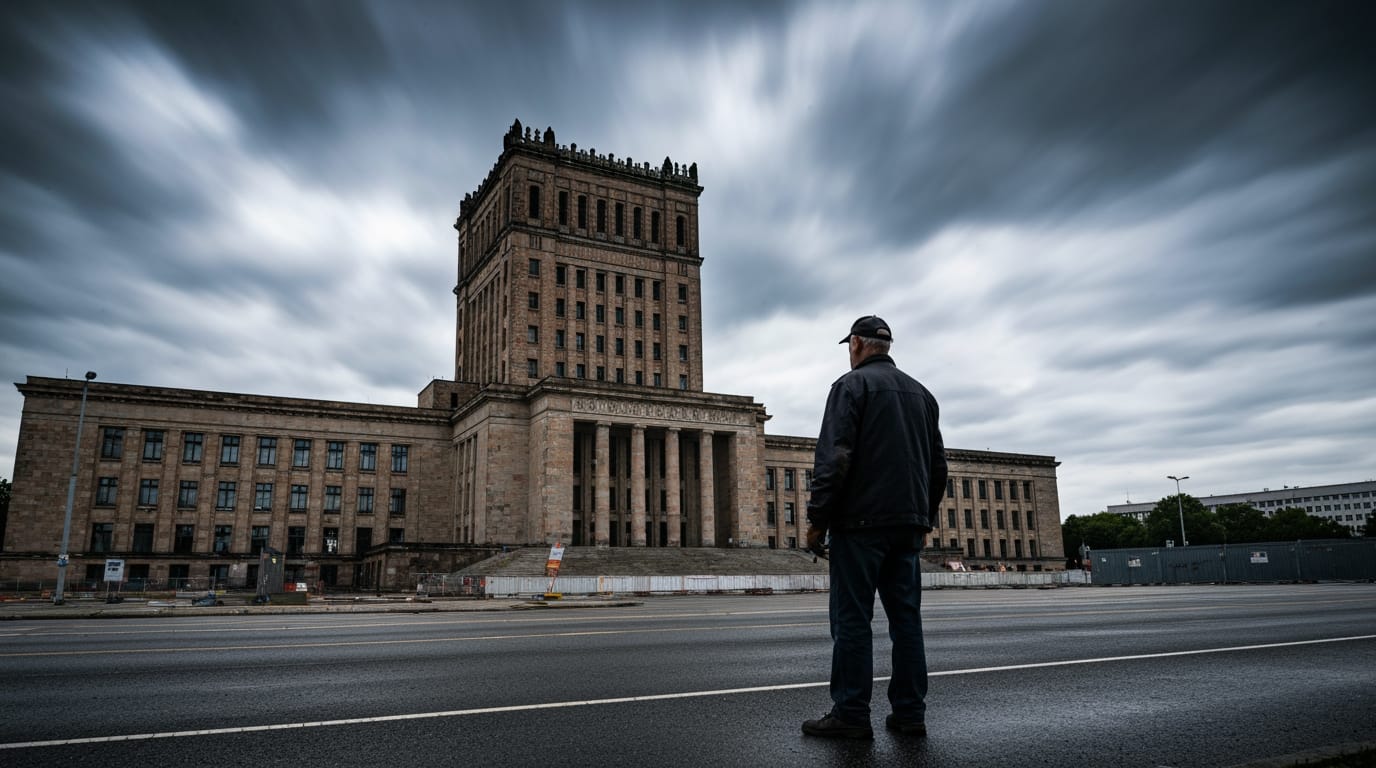
BERLIN – Few structures embody the tumultuous history and contested legacy of a nation quite like East Germany's Palace of the Republic (Palast der Republik). From its grand opening in 1976 as a symbol of socialist pride and a hub of public life, to its ignominious closure due to asbestos contamination and eventual demolition, the "People's Palace" reflected the aspirations, contradictions, and ultimate demise of the German Democratic Republic (GDR). Its rise from the rubble of a former royal palace and its replacement by a reconstructed historical landmark underscore Germany's ongoing struggle to reconcile with its complex past.
The Palace of the Republic was a building of paradoxes from its inception. Erected on the site of the former Berlin Palace (Stadtschloss), heavily damaged in World War II and controversially demolished by the GDR in 1950 as a symbol of Prussian imperialism, the new building sought to erase a monarchical past and project a modern, socialist future. Construction began in 1973, with East German leader Erich Honecker reportedly keen to finish the project ahead of West Berlin's own ambitious cultural constructions. Designed by Heinz Graffunder and the Building Academy of the GDR, the modernist structure, with its brown mirror-glass facade and white marble accents, opened its doors on April 23, 1976, quickly earning the nickname "Erich's Lamp Shop" due to the more than 1,000 ball-shaped lights in its foyer. The colossal project, estimated to cost between 485 million and 1 billion East German marks, became the most expensive and luxurious building in GDR history.
A Dual Purpose: People's Palace and Political Powerhouse
The Palace was designed to serve a dual function: a vibrant cultural center for the populace and the seat of the Volkskammer, East Germany's parliament. This multi-purpose approach was inspired by the "Volkshäuser" or People's Houses of the German workers' movement, aiming to unite the state and its citizens under one roof. Its public spaces were a revelation in a country often characterized by austerity, offering amenities in short supply elsewhere. The Palace housed 13 restaurants, five beer halls, a bowling alley, billiard rooms, a discotheque, a cinema, two large auditoria, art galleries, a theater, a post office, and even a rooftop ice skating rink and an indoor swimming pool. It quickly became immensely popular, attracting over five million visitors annually, with cultural events, concerts, and shows accounting for more than 90 percent of its usage. International artists like Santana and Harry Belafonte even performed in its Great Hall, which could transform its hexagonal tiered seating into a flat banquet hall with hydraulic lifts.
However, beneath this veneer of public entertainment lay its other, more austere function: the political heart of the GDR. The Volkskammer, often described as a "rubber-stamp parliament," convened in a smaller hall, ratifying decisions already made by the ruling Socialist Unity Party (SED) Politburo. Though ostensibly the highest organ of state power, its sessions were infrequent, with political events occurring on only 46 days during its 14 years of operation. The Palace also hosted significant party congresses and state galas, including the 40th anniversary of the GDR in October 1989, attended by Mikhail Gorbachev. Ironically, it was within these very walls, on August 22-23, 1990, that the first freely elected Volkskammer voted to ratify East Germany's accession to the Federal Republic, effectively dissolving itself and the state it represented.
The Shadow of Asbestos and an Abrupt End
The celebratory atmosphere and political significance of the Palace were dramatically overshadowed shortly after reunification. On September 19, 1990, just two weeks before the official accession date, the Palace was closed to the public by decree of the Volkskammer due to extensive asbestos contamination. Despite asbestos being outlawed in construction in East Germany in 1968, the Palace contained over 5,000 tons of the hazardous material, sprayed onto 175,000 square meters of its steel structural framework for fire protection. This monumental oversight meant that the building, once a symbol of modernity, became a health hazard.
Following its closure, the Palace sat vacant, its future a subject of intense debate in the newly unified Germany. Asbestos removal began in November 1998, a process that entailed stripping the building of its entire interior, leaving only a skeletal frame. This meticulous, costly, and time-consuming decontamination was finally completed in 2003, at which point the gutted shell was briefly opened for cultural events, hosting art shows and concerts, a period where it was sometimes referred to as "Volkspalast". During this interim use, a Norwegian artist installed giant illuminated letters spelling "ZWEIFEL" (doubt) on its roof, reflecting the uncertainty surrounding its fate.
Demolition and the Dawn of a New Era
The debate over the Palace's future underscored deeper tensions within German society regarding its socialist past. Many former East Germans opposed its demolition, viewing it as an integral part of Berlin's culture and a significant piece of their history, often expressing "Ostalgie" (nostalgia for the East). However, a counter-movement, often driven by "wealthy Prussian nostalgists" as described by some critics, advocated for the reconstruction of the historic Berlin Palace that once stood on the site.
In November 2003, the Bundestag, Germany's parliament, voted to demolish the Palace of the Republic and reconstruct the Berlin Palace, a decision re-approved in 2006. Demolition commenced in February 2006 and lasted until 2008, a prolonged process due to the structure's scale and the careful handling of residual hazardous materials. Steel from the Palace was even reportedly shipped to the United Arab Emirates for use in the construction of the Burj Khalifa. The decision was highly controversial, with street protests and political opposition from parties like the Left Party and the Greens. Critics argued that the demolition was an act of "architectural cancel culture" aimed at erasing the memory of the GDR.
In its place now stands the Humboldt Forum, a cultural complex housed within a partial reconstruction of the Berlin Palace. Opened in stages from 2020 to 2021, the Humboldt Forum features replicas of the original Baroque facades on three sides, with a modern fourth side and interior. This new landmark, while aiming to showcase global cultures, continues to stir debate about historical continuity, architectural authenticity, and the very identity of unified Germany.
A Legacy in Flux
The story of the Palace of the Republic is a microcosm of Germany's journey through division and reunification. It rose as a beacon of socialist modernity and cultural accessibility, becoming a cherished space for many citizens despite its political function. Its downfall, hastened by a hidden health hazard and ideological shifts, highlights the complexities of post-reunification memory and urban planning. While the physical structure is gone, replaced by a monument to an earlier, imperial past, the Palace of the Republic remains a powerful, debated symbol in the collective memory, prompting ongoing reflection on what is built, what is destroyed, and what defines a nation's identity. Its presence is still felt, even today, with exhibitions like "Blown Away: The Palace of the Republic" at the Humboldt Forum exploring its layered history and the questions it continues to evoke.