Teenager's Discovery Unearths Berlin's First Ancient Greek Artifact
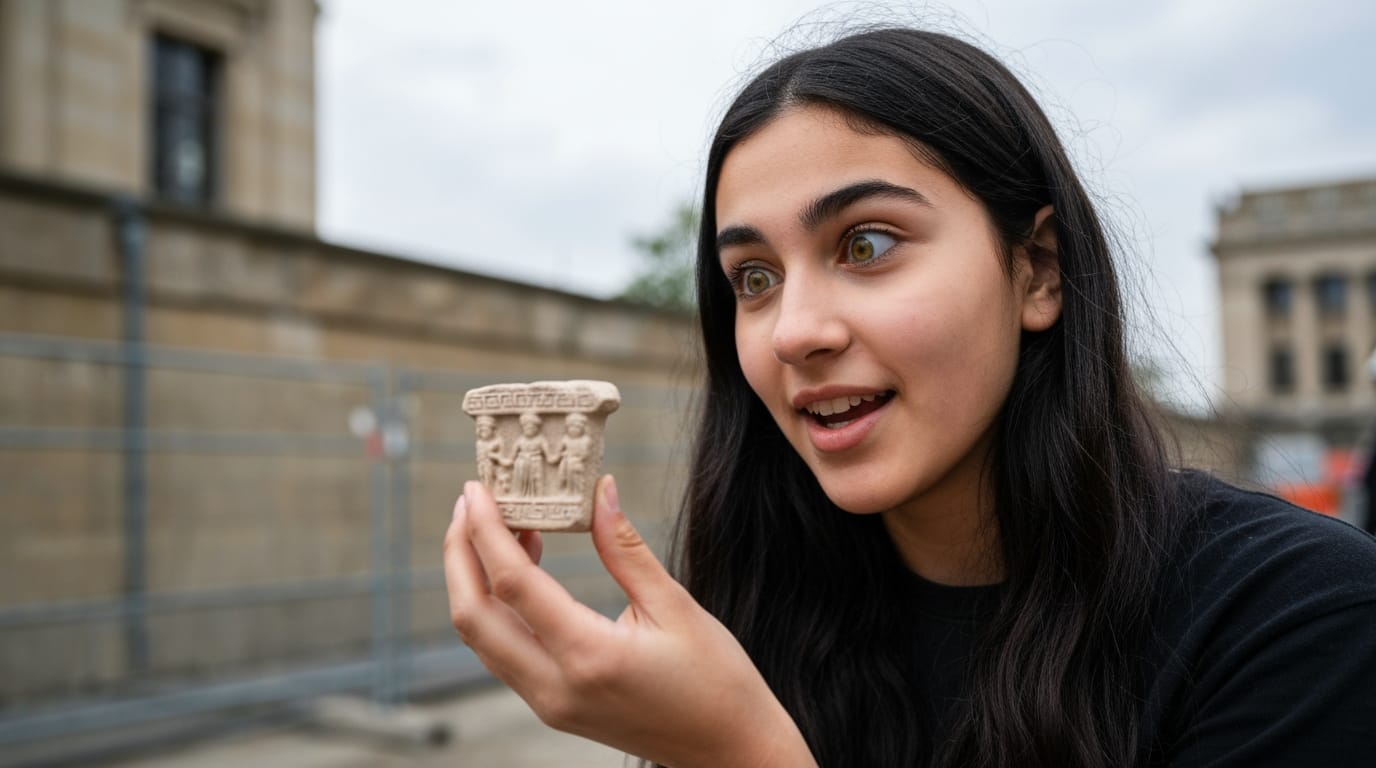
Berlin, Germany – A seemingly ordinary stroll across farmland in Berlin’s Spandau district has unexpectedly rewritten a chapter of the city’s archaeological history. A 13-year-old student has unearthed a 2,300-year-old bronze coin from ancient Troy, marking the first confirmed Greek antiquity ever discovered in situ within Berlin’s city limits. This extraordinary find bridges over two millennia, offering a rare glimpse into ancient connections between the Mediterranean world and Northern Europe.
A Chance Encounter in Spandau
The momentous discovery occurred during a casual outing on agricultural land in Spandau. The 13-year-old, whose name has not been released, came across a small bronze object, no larger than a modern coin. What initially appeared to be a discarded trinket was quickly identified by experts as a rare artifact from the Hellenistic period. The coin measures just 12 millimeters in diameter and weighs approximately seven grams, originating from the ancient mint of Ilion, better known as Troy, located in present-day northwestern Turkey.
Unveiling Troy's Legacy
Dated between 281 and 261 BC, the coin's design distinctly reflects its Greek heritage. The obverse side features the head of the goddess Athena, depicted wearing a Corinthian helmet. The reverse showcases Athena Ilias, adorned with a distinctive headdress known as a kalathos, holding a spear in her raised right hand and a spindle in her left. These intricate details not only highlight the craftsmanship of the period but also underscore the coin's origin from a region rich in culture and mythological significance.
Initial assessments considered whether the coin might have been a recent loss, perhaps from a modern collector. However, a thorough investigation of the discovery site by specialists from Berlin's archaeological institutions quickly confirmed its historical authenticity and significance. The area revealed clear evidence of long-term human activity, including ceramic fragments, cremated remains, and a bronze double button, pointing to a burial ground that dates back to the Bronze Age and early Iron Age. Additional artifacts from the Roman Imperial period, alongside a Slavic knife sheath fitting, further indicated that the site had been utilized across multiple historical eras. This multi-layered context strongly suggests that the coin was an integral part of an older cultural landscape rather than a contemporary intrusion.
A Unique Archaeological Milestone for Berlin
While Roman artifacts have occasionally surfaced in Berlin, verifiable Greek finds have been entirely absent until this discovery. This makes the Spandau coin an unparalleled scientific milestone and a significant addition to the archaeological record of the region. Its presence raises intriguing questions about how a coin from ancient Troy traveled such a considerable distance to Northern Europe.
Historians hypothesize that the coin likely made its journey along established trade networks that linked the Mediterranean and Baltic regions during antiquity. One of the most significant commodities exchanged along these routes was amber, referred to as "elektron" by the Greeks. Due to the coin's composition of bronze rather than gold or silver, its material value was relatively modest. This suggests it may not have been used for a major commercial transaction but rather served a symbolic or ritual purpose, possibly even as a grave offering.
Illuminating Ancient Connections and Future Prospects
The find not only validates the existence of ancient trade and cultural exchanges reaching deep into Northern Europe but also opens a new window into understanding Berlin's pre-Roman past. The "Berlin Trojan," as some experts have dubbed it, has officially become the city’s first documented Greek antiquity found in situ. For those interested in witnessing this tangible link between the ancient Mediterranean and the German plains, the coin is currently on display at PETRI Berlin as part of their "Current Finds" exhibition.
This remarkable discovery underscores the potential for future archaeological revelations within Berlin. It highlights how chance encounters can profoundly reshape our understanding of historical connections, reminding us that layers of untold history often lie just beneath the surface, waiting to be uncovered by the curious and observant. The 13-year-old’s keen eye has not only brought an ancient artifact to light but also ignited new avenues for research into the ancient world's far-reaching influence.