Nueva Germania: A Utopian Dream Crushed by Reality in the Paraguayan Jungle

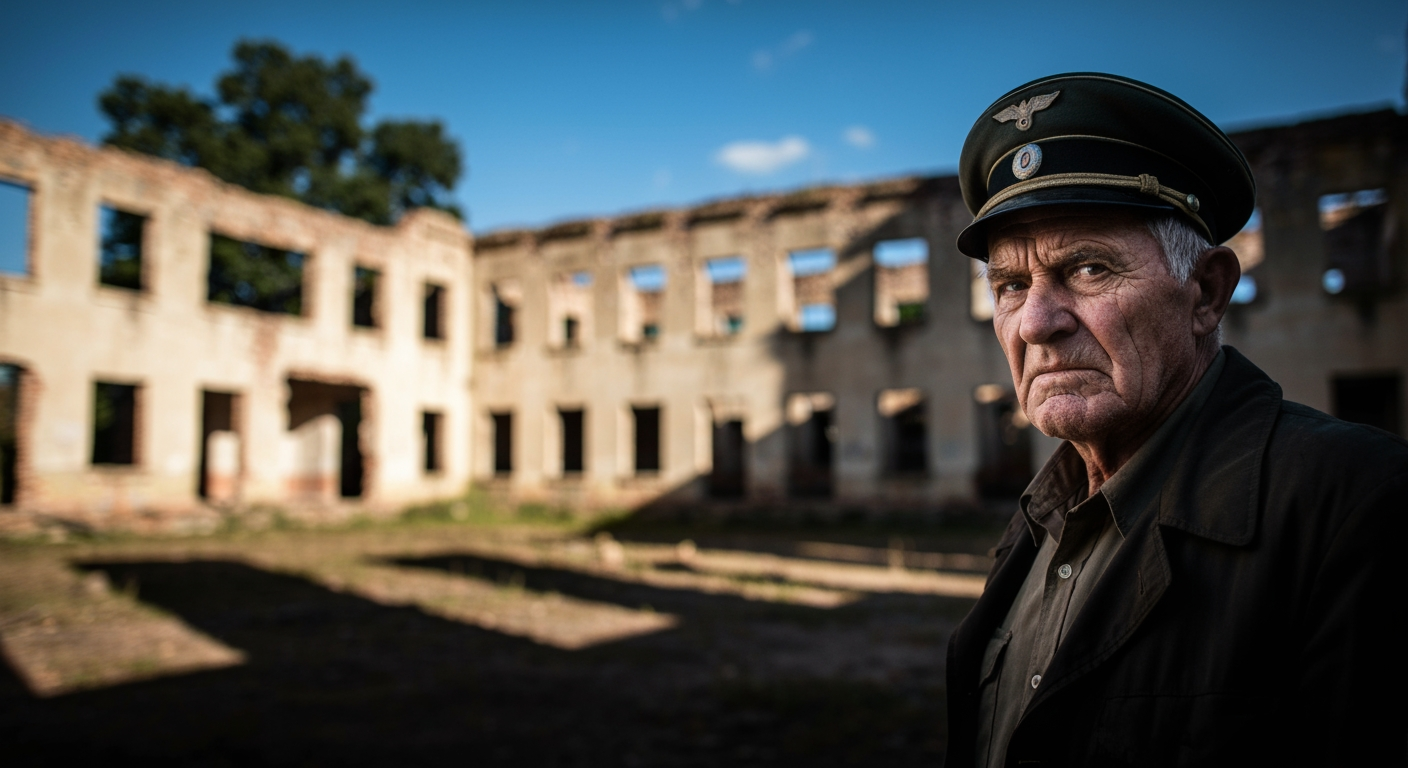
In the heart of Paraguay, nestled amidst dense jungle foliage, lies Nueva Germania, a settlement founded in 1887 by German ultranationalists with a chillingly ambitious goal: to establish a "racially pure" Aryan colony, untainted by Jewish influence and the perceived moral decay of industrialized Europe. Led by the zealous anti-Semitic agitator Bernhard Förster and his wife, Elisabeth Förster-Nietzsche, sister of the renowned philosopher Friedrich Nietzsche, the project was envisioned as a utopian haven where German culture and eugenic ideals would flourish. However, this grand, ideologically driven experiment quickly collided with the harsh realities of the South American wilderness, leading to a spectacular failure that ultimately transformed the settlement into a testament to human adaptability and cultural integration.
The Architects of an Exclusive Utopia
Bernhard Förster, a former high school teacher, was a fervent proponent of Völkisch ideology and a leading figure in Germany's burgeoning antisemitic movement during the late 19th century. He actively campaigned against Jewish immigration and influence, even orchestrating petitions to Chancellor Otto von Bismarck to restrict Jewish rights and presence in Germany. Förster's radical views found a sympathetic ear in Elisabeth Nietzsche, who shared his nationalist and antisemitic convictions. Together, they dreamed of a new German society, far from the perceived contaminations of the old world, where a pure Aryan race could thrive. Influenced by the composer Richard Wagner's vision for a vegetarian community in South America that would foster the German spirit unburdened by Jewish influence, Förster saw Paraguay as an ideal location. The nation, reeling from the devastating War of the Triple Alliance (1864-1869), was selling vast tracts of public land at remarkably low prices, a factor that made Förster's colonial ambitions economically feasible.
In 1886, the Försters embarked on an intensive recruitment drive, luring unsuspecting German families, primarily from Saxony, with promises of affluence and an idyllic, "racially pure" life in the New World. The colonists, many of whom were impoverished artisans seeking a better life, were drawn by the prospect of a self-sufficient community adhering to principles of vegetarianism, teetotalism, and collective self-governance, all aimed at cultivating a robust, unadulterated Aryan stock. On August 23, 1887, Nueva Germania, or "New Germany," was officially founded on the banks of the Aguaray-Guazú River, approximately 297 kilometers from Asunción. Förster had secured a substantial land concession from the Paraguayan government, committing to settle at least 140 families within two years. The vision was clear: to transplant German culture and racial purity onto fertile ground, creating a model community to demonstrate the supremacy of German society.
The Unforgiving Embrace of the Jungle
The utopian dreams of Nueva Germania's founders and its early settlers quickly crumbled upon encountering the stark realities of the Paraguayan rainforest. The European colonists, largely inexperienced in tropical agriculture, were ill-prepared for the unforgiving environment. Crops familiar from their homeland, such as potatoes, rotted in the soil, while the unfamiliar climate, characterized by intense heat and humidity, brought with it a host of tropical diseases including malaria, parasites, and debilitating infections caused by sand flies. A lack of proper supplies further exacerbated their plight.
The colony's isolation proved another significant hurdle. During the dry season, Nueva Germania was often cut off from the rest of the world, making transport of goods and materials exceedingly difficult. The ideological rigidity of the founders, particularly Förster's insistence on maintaining an "Aryan" separation, often prevented colonists from seeking aid or learning survival techniques from the indigenous Paraguayan population. Discord and internal strife quickly brewed among the disillusioned settlers, who soon recognized the grand promises of affluence were an illusion.
Financially, the project was a disaster. Förster had incurred significant debts, and the expected influx of colonists never materialized as promised, with only 26 families settling by 1889 instead of the projected 140. Overwhelmed by mounting failures, accusations of embezzlement, and the collapse of his ideologically-driven dream, Bernhard Förster abandoned the settlement and, on June 3, 1889, committed suicide in San Bernardino, a town near Asunción. His death marked a turning point, signaling the definitive end of Nueva Germania as a purely ideological experiment.
From Ideology to Integration: A Community Transformed
Following Förster's suicide, Elisabeth Förster-Nietzsche initially attempted to sustain the beleaguered colony, even returning to Germany briefly to lobby unsuccessfully for financial aid. However, her efforts were in vain, and she ultimately left Nueva Germania for good in 1893, returning to Germany where she became infamous for manipulating her ailing brother Friedrich Nietzsche's philosophical works to align with her own ultranationalist and antisemitic agenda.
Those colonists who remained in Nueva Germania were largely too impoverished to afford passage back to Germany. Forced to adapt to survive, they gradually abandoned the rigid "Aryan purity" ideals that had brought them to Paraguay. Crucially, they began to learn from the indigenous locals, adopting their agricultural methods, such as cultivating manioc, a staple crop better suited to the tropical climate, in place of the rotting European potatoes. This pragmatic shift marked the beginning of a profound transformation. The boundaries of racial exclusivity blurred as German descendants increasingly intermarried with the local Paraguayan population. The initial dream of a segregated, racially pure society gave way to the realities of necessity, interaction, and ultimately, integration.
Nueva Germania Today: A Blended Legacy
More than a century after its founding, Nueva Germania stands as a quiet, predominantly agricultural community within Paraguay's San Pedro Department. Today, the local economy revolves around the cultivation of yerba mate and soybeans, cattle raising, and brick production. While the community retains traces of its German heritage, evident in some surnames found on tombstones in the Lutheran cemetery and occasional German culinary traditions, it is unmistakably Paraguayan.
Demographically, the strict racial aspirations of the founders have long since dissolved. As of 2002, only about 10% of Nueva Germania's inhabitants were of predominantly German origin, a figure that continues to evolve through intermarriage and cultural exchange. The community is multilingual, with Spanish, Guaraní, and German spoken, though approximately 80% of the population speaks Guaraní. The inhabitants often identify as German, Paraguayan, or "Germanino," embracing a blended identity that celebrates the mixture of cultures rather than rejecting it. Local residents today largely reject sensationalized portrayals of their town's racist past, preferring to see it as a story of adaptation and resilience. Some have even characterized Nueva Germania as the "first failed proto-Nazi experiment," highlighting its ultimate rejection of exclusionary ideologies.
While a small museum attempts to preserve the memory of the first settlers, its contents are modest, reflecting a past that many have moved beyond. Modern amenities like electricity and running water were relatively recent additions to the community, only arriving in the early 1990s. Tourism is an incipient industry, drawing visitors primarily for fishing along the very rivers that witnessed the arrival of Förster and his adventurers.
A Concluding Chapter of Adaptation
The story of Nueva Germania is a powerful historical narrative about the profound disconnect between an ideologically rigid, racially exclusive vision and the pragmatic, often humbling, realities of human settlement and survival. What began as a grand, antisemitic "Aryan" project, conceived in the halls of European nationalism, was utterly dismantled by the forces of nature, economic hardship, and the undeniable human imperative to adapt. The tragic failure of Bernhard Förster's utopian dream and his subsequent suicide underscore the fragility of such exclusionary endeavors.
Ultimately, Nueva Germania did not become the pure, segregated Germanic outpost its founders envisioned. Instead, it evolved into a vibrant, mixed-heritage community where the ideals of racial purity were supplanted by the practicalities of coexistence and the rich tapestry of cultural blending. Its legacy serves as a poignant reminder that while ideologies can inspire migration and ambitious projects, they rarely dictate the final, complex evolution of human societies when confronted with the unyielding forces of environment, economy, and the fundamental human need for connection and adaptation. The town stands today not as a monument to its founders' divisive dreams, but as an enduring testament to the resilience of those who remained and forged a new identity rooted in the Paraguayan soil.
Related Articles


Yayoi Kusama, Visionary Artist Whose Polka Dots and Infinity Rooms Transformed Modern Art, Dies at 97
TOKYO – Yayoi Kusama, the avant-garde Japanese artist whose kaleidoscopic visions of polka dots, immersive "Infinity Mirror Rooms," and profound exploration of mental health captivated global audiences for over six...


Martin Walser: Germany's Acclaimed Author and Enduring Enigma
Martin Walser, a literary titan whose prolific career spanned decades and garnered numerous accolades, carved out a unique and often contentious space within German letters. While celebrated for his keen observations of...