German Authorities Conduct Sweeping Raids Against Far-Right Youth Groups
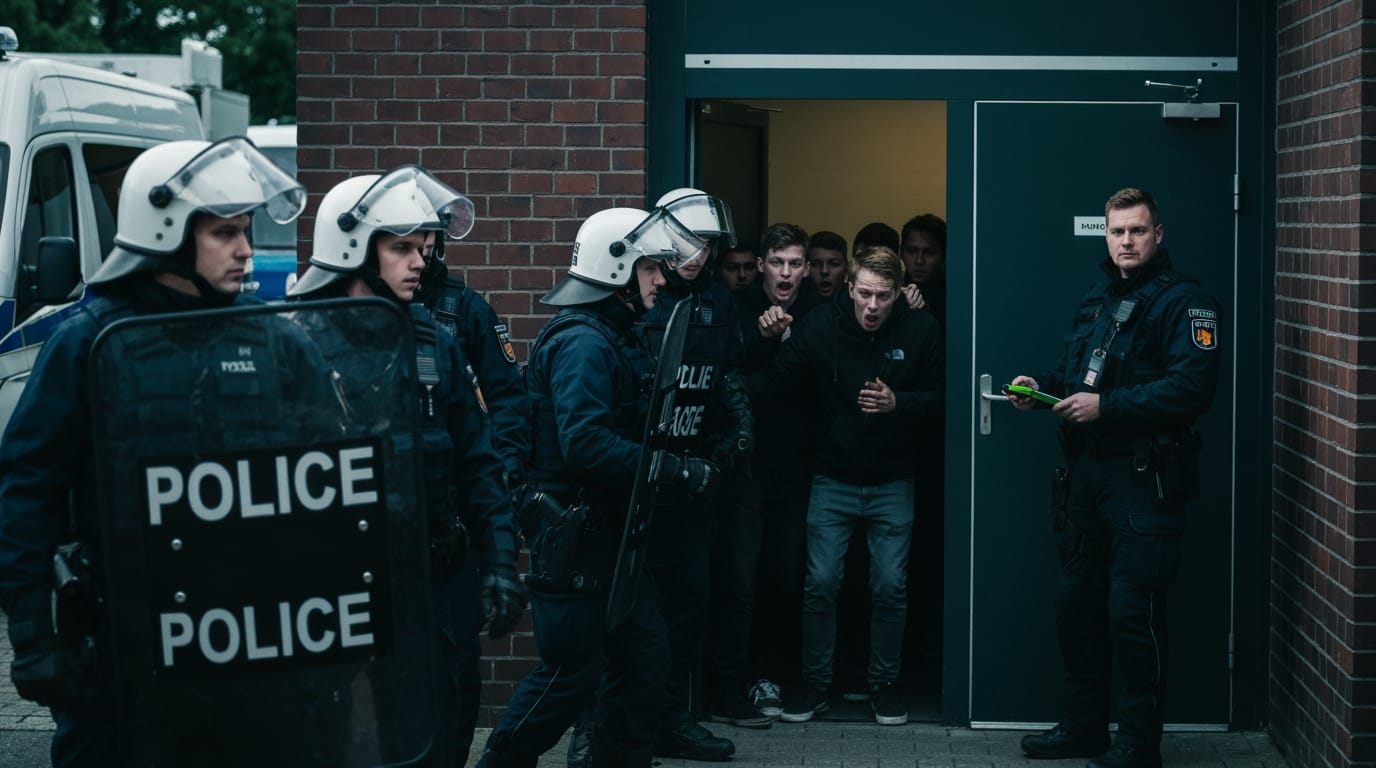
Berlin, Germany – German law enforcement launched a major nationwide operation early Wednesday, targeting two far-right youth organizations suspected of actively promoting violence and spreading extremist ideologies across the country. Over 600 federal and state police officers executed searches at approximately 50 locations in 12 federal states, underscoring Germany's escalating concern over the radicalization of its youth. The raids represent a decisive move by authorities to dismantle networks that allegedly engage in organized violence and pose a direct threat to democratic values.
The Coordinated Crackdown
The extensive police action, coordinated by the Federal Public Prosecutor's Office and the Federal Criminal Police Office, focused on 36 individuals suspected of involvement with the groups "Jung & Stark" (Young and Strong) and "Deutsche Jugend Voran" (Forwards German Youth). The latter organization also reportedly operates under the alias "Neue Deutsche Welle" (New German Wave). Among the suspects are minors, with the youngest identified as 16 years old. While no arrests were made during Wednesday's operation, authorities aimed to gather further evidence against the alleged members.
Investigators accuse the groups of utilizing social media and regular meetings to organize violent activities. Their rhetoric is characterized by aggressive sentiment directed at migrants and various social groups. Law enforcement officials indicate that members have been linked to past violent incidents at public events, and some are suspected of attacking left-wing activists or individuals they falsely perceived as paedophiles. This operation follows previous searches conducted last year by Berlin police targeting suspected members of "Deutsche Jugend Voran," with one leader already serving a prison sentence for aggravated threats and assault.
The scale of the raids reflects the serious nature of the threat, as German security services have consistently warned about the persistent danger posed by right-wing extremism. Justice Minister Stefanie Hubig emphasized the gravity of the intelligence agencies' findings, stating that the threat of right-wing extremism must be taken "very seriously."
Unmasking the Ideologies and Recruitment Tactics
The targeted organizations, "Jung & Stark" and "Deutsche Jugend Voran," are believed to be part of a broader constellation of far-right youth formations under active surveillance by German security services. These groups thrive on propagating extreme nationalist, xenophobic, and anti-democratic views, often cloaked in calls for national identity and strength. Their modus operandi frequently involves exploiting online platforms, particularly social media and encrypted chat groups, to disseminate propaganda, recruit new members, and coordinate actions.
The recruitment of young individuals is a particularly disturbing aspect of these networks. Extremist groups leverage the online sphere to engage with impressionable youth, often preying on feelings of alienation, economic insecurity, or disillusionment with mainstream politics. By presenting a simplified, often distorted, narrative of national decline and scapegoating minorities, they cultivate a sense of belonging and purpose among their adherents. The allegations against "Jung & Stark" and "Deutsche Jugend Voran" – including organizing violence and promoting aggressive rhetoric against migrants – align with the long-standing tactics of such extremist movements to destabilize society and intimidate perceived opponents.
Germany's Alarming Rise in Youth Radicalization
Wednesday's raids occur against a backdrop of deeply concerning trends regarding youth involvement in right-wing extremism in Germany. Security services have observed a significant surge in politically motivated violence, particularly among younger demographics. Data from 2024 revealed a doubling in the number of young individuals suspected of committing far-right motivated crimes compared to the previous year, with the 14-to-17-year-old age group showing a particularly sharp increase. This alarming statistic underscores a growing challenge for German society.
This isn't an isolated phenomenon. Reports from the Federal Office for the Protection of the Constitution (BfV) have consistently highlighted right-wing extremism as the "greatest threat to security in Germany." The radicalization process is increasingly amplified through online channels. Research indicates that social media plays a crucial role in shaping political attitudes among younger generations, with far-right groups heavily investing in these platforms to spread their messages. This digital proliferation of extremist content contributes to a "normalization" of once-taboo ideologies, even among young mainstream Germans.
The recent history of far-right youth groups in Germany illustrates this trajectory. The "Junge Alternative" (Young Alternative), formerly the official youth wing of the Alternative for Germany (AfD) party, was officially classified as a "right-wing extremist entity" by the BfV in 2023 due to its increasingly radical stance. Facing potential legal repercussions and internal pressure, the AfD leadership dissolved the "Junge Alternative" in March 2025, with plans to establish a new youth organization called "Generation Germany." Experts, however, question whether this rebranding will genuinely distance the new group from extremist tendencies, suggesting it might remain a "dynamic and aggressive part" of the AfD.
Beyond groups linked to political parties, other entities have also faced crackdowns. In September 2023, the Interior Ministry banned "Artgemeinschaft," a pseudo-religious far-right group accused of indoctrinating children with Nazi ideology. More recently, in May 2025, teenagers were arrested in connection with the "Letzte Verteidigungswelle" (Last Wave of Defense), a far-right terror group suspected of planning violent acts. These cases collectively illustrate a deeply entrenched and evolving threat, one that actively targets and recruits the nation's youth.
The National Response and Ongoing Challenge
The German government has repeatedly affirmed its commitment to combating right-wing extremism at all levels. Interior Minister Nancy Faeser has previously stated that far-right extremism constitutes the biggest threat to German democracy. The ongoing investigations and raids are part of a broader, multi-faceted strategy that involves intelligence gathering, law enforcement action, and preventative measures aimed at countering radicalization.
However, the fight against youth extremism is complex and not without its challenges. In June 2025, a debate emerged when Interior Minister Alexander Dobrindt warned of rising violence among right-wing extremist youth, yet the government conceded it lacked specific statistical data for young age groups, drawing criticism from the AfD for what they termed "ideological spin." Despite this past data gap, more recent reports from the BfV, such as the 2024 report, document an overall significant increase in right-wing extremist criminal and violent offenses.
The operations against "Jung & Stark" and "Deutsche Jugend Voran" send a clear message that authorities will not tolerate the proliferation of extremist ideologies and the incitement of violence, especially when it targets the younger generation. The collective efforts of intelligence agencies, law enforcement, and civil society remain crucial in identifying, disrupting, and ultimately preventing the radicalization of youth who are increasingly susceptible to extremist narratives in both online and offline spaces.
Conclusion
The extensive raids conducted across Germany Wednesday against far-right youth groups underscore the persistent and evolving challenge of extremism within the nation. By disrupting organizations like "Jung & Stark" and "Deutsche Jugend Voran," authorities aim to curb the spread of hatred and violence at its roots. The involvement of minors in these networks highlights a critical societal vulnerability and the urgent need for comprehensive strategies to protect young people from radicalization. While the legal and societal battles against right-wing extremism are ongoing, these decisive actions affirm Germany's unwavering commitment to defending its democratic principles and ensuring the safety of all its citizens.


