German Auto Industry Faces Unprecedented Job Losses Amidst Electric Shift and Global Competition
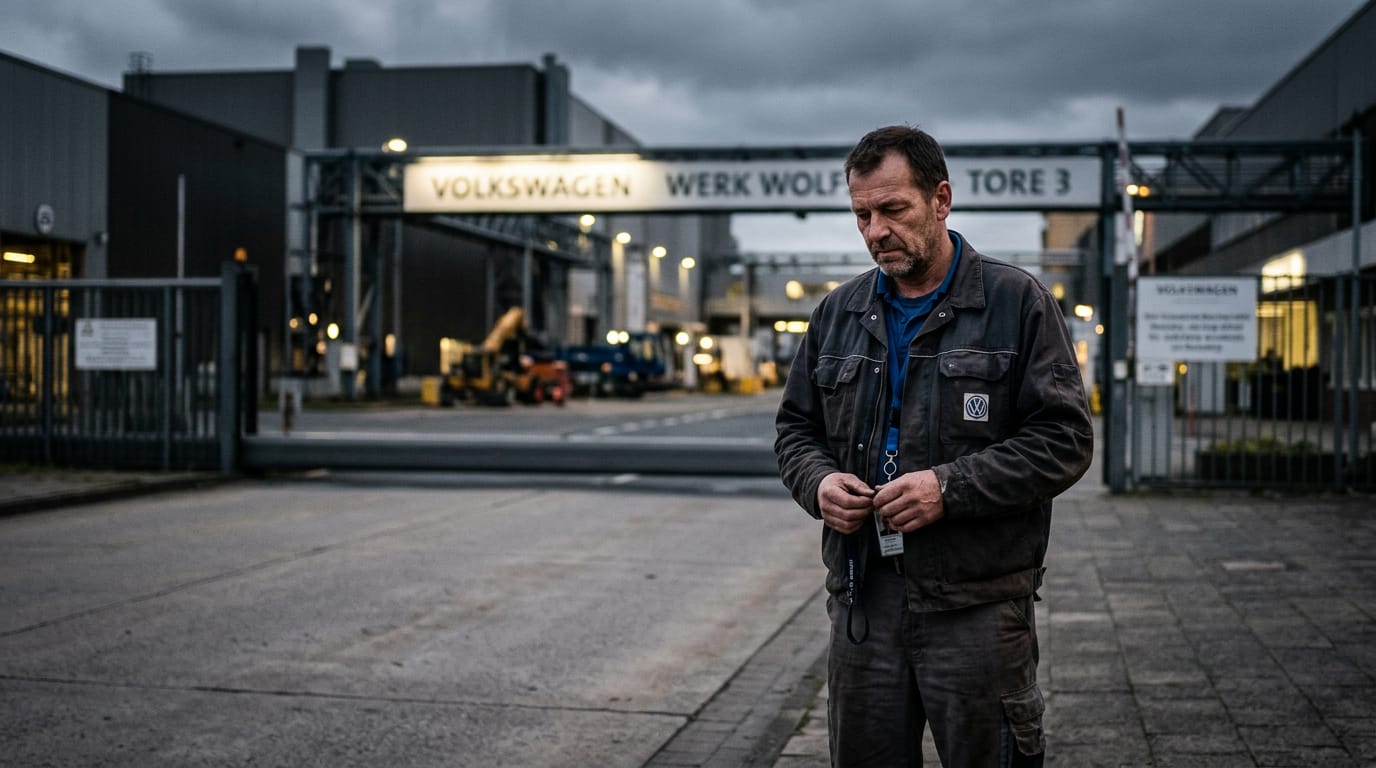
FRANKFURT, Germany – Germany's once-unrivaled automotive sector, a bedrock of its industrial might and economic prosperity, is confronting a profound and accelerating crisis marked by significant job reductions. The industry, grappling with the swift transition to electric vehicles (EVs) and fierce international competition, shed 42,300 jobs in the first half of 2026 alone, marking the steepest decline across any major German industrial sector and pushing employment to its lowest level since 2005. This contraction signals a tumultuous period for a sector that has long been a global benchmark for engineering and manufacturing prowess, with major players like Volkswagen, BMW, and Porsche announcing extensive workforce restructuring.
The Shrinking Workforce: A Staggering Decline
The scale of job losses in the German automotive industry is becoming increasingly stark. In the first six months of 2026, the sector's workforce dwindled to 691,500 people, representing a 5.8% decrease from the previous year. This downturn is not a recent phenomenon; since the pre-pandemic year of 2019, approximately 142,400 positions, or 16% of the auto industry's jobs, have been eliminated. Forecasters paint an even grimmer picture, with the German Association of the Automotive Industry (VDA) anticipating an additional 125,000 job losses by 2035, and some analyses suggesting the total could reach 225,000.
The burden of these cuts is disproportionately falling on automotive suppliers, whose employment figures dropped by a sharper 7.6% compared to the 6.1% reduction seen among vehicle manufacturers. This trend underscores the vulnerability of the intricate supply chain that underpins Germany's complex automotive ecosystem.
Major Automakers Announce Sweeping Cuts
Leading German automotive companies are undertaking significant restructuring efforts, signaling a decisive shift in their operational strategies. Volkswagen, for instance, is preparing to propose as many as 100,000 global job cuts and the potential closure of four German manufacturing plants, which could impact 40,000 workers. This comes after an earlier agreement in December 2024 to cut 35,000 jobs by 2030, a target the company now aims to double.
Other giants are following suit. BMW is reportedly planning to reduce its German workforce by up to 8,000 employees through a voluntary redundancy program by the end of 2027. Luxury sports car manufacturer Porsche, a Volkswagen subsidiary, intends to cut approximately 9,000 jobs, or one in five positions, by 2035. Key suppliers are also making drastic reductions; Bosch plans to cut up to 22,000 supplier-related positions worldwide, while ZF aims to eliminate 14,000 jobs in Germany. Continental, which cut 7,000 jobs globally last year, plans an additional 3,000 reductions in 2026.
The Electric Transition and Global Headwinds
Several converging factors are driving this dramatic transformation. At the forefront is the global pivot to electric vehicles. EV manufacturing generally requires fewer components and different production processes than traditional internal combustion engine (ICE) vehicles, leading to reduced labor demand. This technological shift is fundamentally reshaping the industry's employment landscape.
Compounding this internal transformation is intensified international competition, particularly from Chinese manufacturers offering more affordable EVs. Germany's automotive industry faces a distinct cost disadvantage, characterized by high labor expenses, subdued productivity growth, elevated energy prices, and substantial tax burdens. These factors are making Germany a less attractive location for new automotive investments, with some production capacities shifting to countries like Hungary, Romania, Spain, and Turkey, which offer lower operational costs. The VDA has warned that without "bold decisions" to address competition and regulatory pressures, particularly the EU's stringent CO2 fleet regulations for 2035, the industry faces a "potential collapse of employment."
Broader Economic Implications and the Path Forward
The automotive sector's struggles extend beyond its immediate workforce, casting a long shadow over the broader German economy. While still the country's second-largest industrial employer, behind mechanical engineering, the decline in auto jobs contributes to a wider trend of de-industrialization. Germany's manufacturing sector as a whole saw 144,100 jobs disappear in the first half of 2026, a 2.7% drop.
Industry experts, such as Ferdinand Dudenhöffer, predict that the German automotive industry could shrink to 500,000 jobs or fewer by 2030. The VDA emphasizes that if the automotive sector falters, it will negatively impact numerous suppliers and other industrial sectors, acting "like a brake block on the entire German industrial sector."
The challenges necessitate a multi-faceted response, including efforts to retrain and upskill the workforce for the demands of EV production and digital technologies. Policymakers are urged to foster an environment that encourages technological openness and improves the competitiveness of Germany as a business location. However, the ongoing restructuring highlights the immense pressure on Germany to adapt its core industry to a rapidly evolving global landscape, striving to maintain its leadership while navigating a challenging transition for its workforce and economy.


