German Business and Far-Right Politicians Navigate Geopolitical Tensions at Russia's Economic Forum
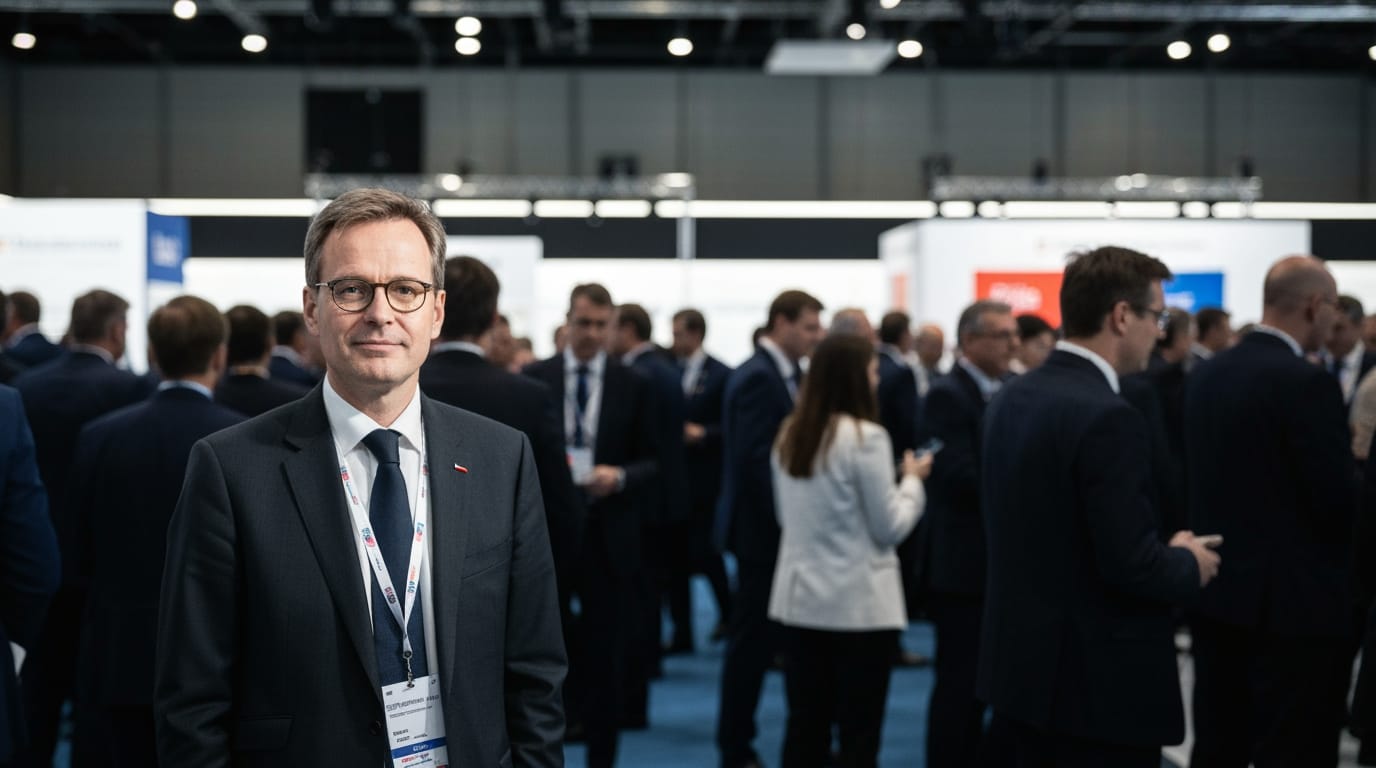
ST. PETERSBURG, RUSSIA – Amidst an international landscape marked by stringent sanctions and diplomatic estrangement, a notable contingent of German business leaders and far-right politicians made its presence felt at the St. Petersburg International Economic Forum (SPIEF) this year. Their attendance signals a complex interplay of economic pragmatism, long-term strategic interests, and political defiance, challenging the unified Western stance against Russia and highlighting internal divisions within Germany.
The St. Petersburg Forum: A Shifting Global Stage
Once dubbed "Russia's Davos," the St. Petersburg International Economic Forum has traditionally served as a key platform for showcasing Russia's economic prospects and fostering international business ties. However, since the full-scale invasion of Ukraine in 2022, SPIEF has profoundly transformed. No longer primarily focused on East-West economic integration, the forum has pivoted to solidify alliances with the Global South, including BRICS nations, Latin American countries, Africa, and the Middle East. This year's forum, held from June 3-6, attracted delegates from over 130 countries, with significant participation from China, the UAE, Zimbabwe, Kazakhstan, India, and Oman. While official state-level representation from Europe was largely absent, the forum has evolved into a crucial instrument for the Kremlin to project an image of international legitimacy and demonstrate that Russia is not isolated on the global stage. Russian President Vladimir Putin typically attends the forum, underscoring its strategic importance for Moscow.
German Contingent: Business Imperatives and Political Defiance
Despite the prevailing political climate, several prominent German figures participated in SPIEF. Among the business representatives were Stefan Dürr, a dairy producer with the EkoNiva Group, and Thomas Bruch, the longstanding managing director of Globus Holding. Matthias Schepp, chairman of the German-Russian Chamber of Commerce, also confirmed German presence, emphasizing the need to protect over €100 billion in German assets still held in Russia. Other German attendees reportedly included conductor Justus Frantz, Berlin publisher Holger Friedrich, and filmmaker and journalist Hubert Seipel.
Their motivations largely revolve around maintaining existing business operations and safeguarding investments in a market where German companies have historically held a significant presence. Schepp underscored the view that the West should not permanently concede the large Russian market and its raw materials to Asian competitors, noting that Chinese companies have established a substantial number of new businesses in Russia recently. This sentiment reflects a perceived economic imperative to retain a foothold in Russia, even in the face of ongoing geopolitical tensions.
A particularly controversial element of the German delegation was the presence of several politicians from the far-right Alternative for Germany (AfD) party. This group included Markus Frohnmaier, a member of parliament and the AfD's chairman in Baden-Württemberg; Jörg Urban, the AfD chairman in Saxony; Steffen Kotré, AfD Bundestag economic policy spokesman; and European Parliament lawmaker Petr Bystron. These politicians explicitly stated their intentions to use the forum to advocate for renewed economic relations with Russia, including the resumption of energy supplies, and to criticize the German government's "militaristic rhetoric" regarding the conflict in Ukraine. Their participation serves to highlight the AfD's distinct pro-Russian stance within the German political landscape, aiming to appeal to segments of the electorate that favor normalized relations with Moscow.
The Persistent German Presence in Russia
The attendance at SPIEF by these German representatives is not an isolated incident but rather a symptom of a broader, more enduring engagement by German businesses in Russia. Approximately 1,600 to 1,800 German companies continue to operate in the country despite the sanctions regime. These companies collectively generated an estimated turnover of around €20 billion last year. A survey conducted by the German-Russian Chamber of Commerce revealed that three-quarters of its members expressed satisfaction with their business development in Russia, despite the financial losses incurred due to sanctions.
However, the economic ties between Germany and Russia have undeniably weakened significantly since 2022. The bilateral trade volume, which peaked at approximately €80 billion in 2012 and stood at €59.7 billion in 2021, fell below €10 billion last year. This drastic reduction underscores the impact of sanctions and the broader deterioration of political relations. Nevertheless, the continued presence of a substantial number of German enterprises, and their expressed satisfaction, indicates a strategic long-term perspective among some business entities that prioritize market access and asset protection over immediate political alignment.
Geopolitical Undercurrents and Domestic Divisions
The participation of German delegates, particularly the AfD politicians, injects a notable geopolitical undercurrent into the forum. Their presence challenges the coherence of the Western sanctions regime and provides Russia with symbolic validation that it is not entirely isolated. For Moscow, securing the attendance of foreign politicians and business leaders, especially from Europe, has become a key objective to project an image of international legitimacy.
The AfD's advocacy for restoring economic relations with Russia and resuming gas imports directly contradicts the German government's official foreign policy, which has been firmly aligned with supporting Ukraine and maintaining sanctions against Russia. This internal discord within Germany reflects broader debates about the efficacy and consequences of sanctions, particularly concerning energy security and economic competitiveness. The AfD leverages events like SPIEF to emphasize its "pragmatic" approach to foreign policy, positioning itself as an alternative to the current government's stance.
Moreover, the attendance of Western business executives, some reportedly registering individually or in closed-door sessions to avoid corporate affiliations, highlights a critical fracture between official policy and corporate reality. This "dual reality" of public isolation and private engagement complicates the Western sanctions posture and raises questions about its long-term effectiveness.
Conclusion: Navigating a Complex Future
The presence of German business leaders and far-right politicians at this year's St. Petersburg International Economic Forum underscores the enduring complexities of international relations in a multipolar world. While the German government maintains a firm stance against Russia's actions in Ukraine, economic imperatives and diverse political viewpoints within the country continue to drive engagement with Moscow. The attendees' motivations, ranging from protecting significant investments to advocating for a re-evaluation of energy policies, reflect a nuanced and often contradictory approach to Russia.
This engagement, even if unofficial or controversial, provides Russia with a narrative of continued international dialogue and undermines efforts to present a united front of isolation. For Germany, it spotlights internal divisions and the delicate balance between geopolitical solidarity and national economic interests. As the geopolitical landscape continues to evolve, the dynamics observed at SPIEF suggest that economic ties, however diminished, will remain a point of contention and a channel for communication, shaping the future trajectory of Germany-Russia relations and the broader international order.