German Chancellor Friedrich Merz Confronts Crisis After Staggering Losses to Far Right
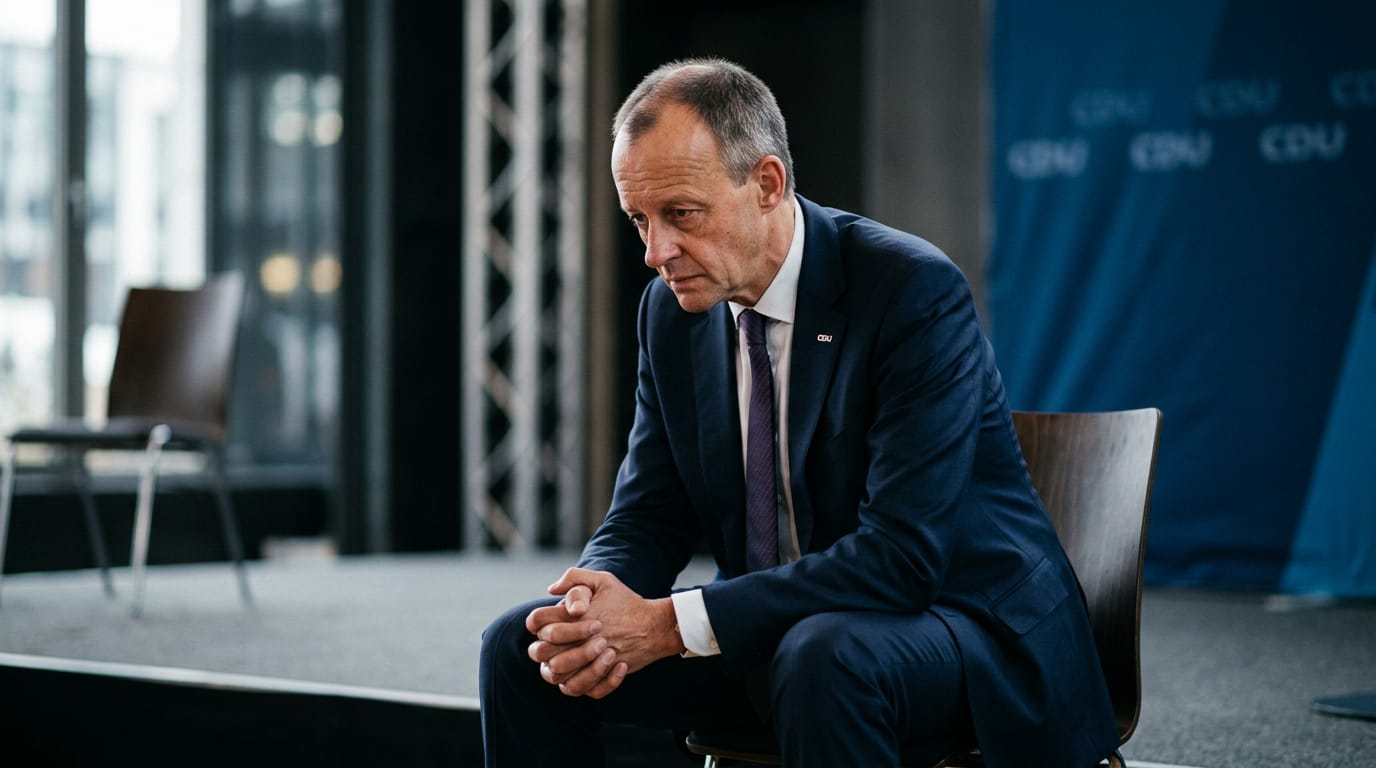
German Chancellor Friedrich Merz faces the most severe political crisis of his tenure following historic defeats for his Christian Democratic Union in regional elections, where the far-right Alternative for Germany delivered unprecedented blows to the governing center-right establishment. The dramatic electoral erosion in eastern Germany has ignited intense debate over the government's economic agenda, its migration strategy, and the long-term viability of the political cordon sanitaire designed to isolate extremist movements.
Historic Collapse in Eastern Strongholds
The latest round of state balloting delivered shockwaves across the German political landscape. In the northeastern coastal state of Mecklenburg-Western Pomerania, the Christian Democratic Union suffered its worst result in modern history, capturing just 4.9 percent of the vote. The outcome left the party below the 5 percent threshold required for parliamentary representation, shutting the conservatives out of a state legislature for the first time.
Meanwhile, Alternative for Germany finished in first place with 38.2 percent, outpacing the center-left Social Democratic Party at 35.5 percent. The defeat arrived just weeks after another historic breakthrough in Saxony-Anhalt, where the far-right surged to roughly 44 percent of the vote, effectively cutting conservative support in half. Combined with a simultaneous surge by the socialist Left Party in Berlin, the regional outcomes reflect an accelerating shift away from Germany’s traditional postwar political center.
The outcomes highlight a widening geographic and social divide between eastern and western states. In former East German regions, voter dissatisfaction with federal governance has deepened rapidly, fueled by rising energy costs, housing shortages, and persistent economic disparities.
Pressure on the Political Firewall
The rising power of Alternative for Germany poses immediate structural challenges to regional governance. Mainstream parties have maintained a strict policy known as the "firewall," an agreement barring any formal coalitions or parliamentary alliances with the far right.
Because the party fell short of an outright majority of legislative seats, traditional parties retain the mathematical potential to block it from executive power through broad alliances. In Mecklenburg-Western Pomerania, the Social Democrats are preparing to negotiate multi-party coalitions to prevent the regional winners from forming a government.
However, the arithmetic required to sustain this isolation has grown increasingly fraught. By capturing more than a third of the assembly seats in multiple states, the far right has obtained a blocking minority on key measures that require two-thirds approval, such as appointing regional judges or passing constitutional amendments. Critics argue that forcing ideologically disparate mainstream parties into awkward governing pacts simply reinforces the anti-establishment argument that traditional politics offers no real choice.
Within conservative ranks, regional party officials face sharp dilemmas. While national leadership insists on total isolation of extremist forces, local administrators point out that routine legislative business has become nearly impossible without acknowledging the presence of the largest parliamentary faction.
Merz’s Domestic and Economic Strategy
Faced with plummeting personal approval ratings and calls to reconsider his political future, the chancellor has publicly ruled out stepping down. Instead, he has framed the electoral debacle as an urgent call to overhaul the federal reform program rather than abandon course.
The administration plans to accelerate domestic economic initiatives aimed at reviving industrial competitiveness. These measures include targeted corporate tax reductions, bureaucratic deregulation, and long-delayed changes to national pension and healthcare financing. Merz has argued that economic insecurity remains the primary catalyst driving working-class voters toward populist factions.
Simultaneously, the federal government faces immense pressure to toughen its approach to immigration and security. The Alternative for Germany campaigned extensively on curbing asylum access, expanding deportations, and establishing localized border enforcement. To regain lost ground among traditional conservative voters, the CDU leadership is preparing to propose stricter nationwide asylum procedures, faster repatriation protocols for rejected applicants, and intensified screening along external borders.
Yet balancing these policies within a fragile federal coalition creates significant governing friction. Merz’s center-left coalition partners, the Social Democrats, remain deeply cautious of adopting conservative rhetoric on migration and welfare reduction. Sharp disagreements over budget allocations and social safety nets threaten to destabilize the national cabinet just when unity is most critical.
Human Impact and Social Polarization
Beyond the corridors of power in Berlin, the electoral realignment reflects acute social friction within local communities. In small towns and industrial hubs across eastern Germany, public discourse has grown increasingly polarized.
Local civic leaders, school administrators, and municipal officials report mounting hostility during public meetings, where debates over public funding, municipal services, and immigrant integration regularly descend into bitter acrimony. Regional business leaders have also raised alarm that rising support for anti-immigrant politics could exacerbate severe skilled labor shortages by discouraging foreign technicians, engineers, and doctors from settling in eastern states.
At the same time, many voters in struggling districts express deep alienation from federal institutions, pointing to shuttered manufacturing plants, decaying infrastructure, and perceived neglect from policymakers in distant administrative centers. This sense of abandonment has created fertile ground for outsider movements promising sweeping disruption.
Conclusion
The historic setbacks across Germany's eastern states have altered the balance of power and placed Chancellor Friedrich Merz in a perilous political position. With the far right commanding historic levels of regional support and the Christian Democrats shut out of a state legislature for the first time, the postwar consensus that long defined German politics is undergoing its severest test.
Merz's pledge to respond through sweeping economic reforms and stricter domestic controls reflects an effort to reclaim the center while maintaining party authority. However, with public frustration mounting and governing coalitions growing more fractured, the administration's ability to bridge the nation’s deep geographic divides will determine not only the fate of his chancellorship, but the long-term stability of Germany’s democratic institutions.


