German Chancellor Merz Charts New Course with Pivotal India State Visit
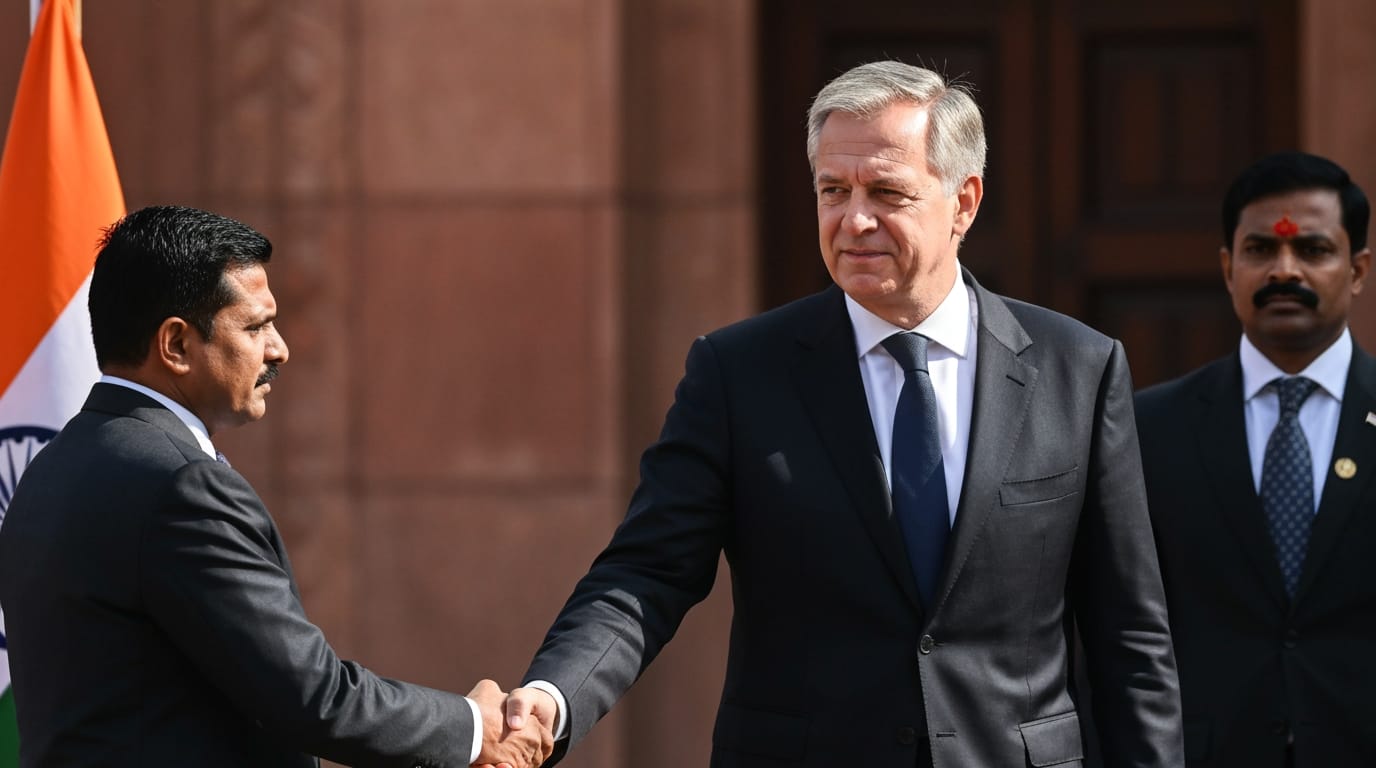
Ahmedabad, India – January 12, 2026 – German Chancellor Friedrich Merz today embarked on a two-day state visit to India, his inaugural bilateral trip outside of the NATO and European Union sphere, underscoring New Delhi's rising strategic importance on the global stage. The high-stakes engagement aims to significantly bolster economic, security, and technological ties between the two nations, setting a forward-looking agenda amidst a turbulent international landscape. Accompanied by a formidable delegation of German business leaders, Chancellor Merz arrived in Ahmedabad, Gujarat, initiating a series of high-level discussions and cultural engagements designed to deepen the already robust India-Germany Strategic Partnership.
A Firm Handshake in a Shifting Global Order
Chancellor Merz's decision to make India his first non-NATO/EU bilateral destination since taking office last May sends a powerful diplomatic signal, affirming India as a crucial strategic partner for Germany. This visit, scheduled from January 12 to 13, arrives at a juncture where both Berlin and New Delhi are actively navigating complex economic and geopolitical pressures stemming from the global influence of the United States and China. The focus on expanding partnerships, particularly in the Indo-Pacific, reflects a mutual desire to diversify supply chains and reduce dependencies, aligning with India's ambition for broader international collaborations. The enduring India-Germany Strategic Partnership, which recently marked 25 years, provides a solid foundation for this renewed impetus, with both leaders having previously met at the G7 and G20 summits to discuss strengthening bilateral ties.
Economic Engines and Digital Frontiers Take Center Stage
Economic diplomacy forms the bedrock of Chancellor Merz's visit, with a significant emphasis on trade, investment, and technological collaboration. He is joined by a large business delegation comprising 25 CEOs, including executives from corporate giants like Siemens and Airbus, highlighting Germany's keen interest in India's burgeoning market. Bilateral trade between the two nations currently stands at nearly €50 billion, presenting substantial growth opportunities for German exporters eyeing India's 1.4 billion inhabitants, especially as sales in other key markets, such as China, have faced recent downturns.
A key discussion point is the ongoing negotiation for a comprehensive EU-India Free Trade Agreement (FTA), an initiative strongly supported by Germany. Indian and German officials view this agreement not merely as a trade deal but as a comprehensive partnership addressing modern economic realities. Talks are also delving into advanced technology, science, innovation, and research, with Chancellor Merz's itinerary including a visit to the Bosch campus and the Centre for Nano Science and Engineering in Bengaluru, India's technology hub, underscoring Germany's interest in India's innovation ecosystem. Green and sustainable development, including clean energy initiatives, are also high on the agenda, recognizing India's immense potential for green technology.
Forging Stronger Security and People-to-People Bonds
Beyond economics, security cooperation is a prominent feature of the discussions. India and Germany are advancing talks on a potential significant defense deal, specifically for Thyssenkrupp Marine Systems to construct six submarines for the Indian Navy in partnership with state-owned Mazagon Dock Shipbuilders. While a contract signing is not anticipated during this visit, the talks are expected to significantly advance negotiations, contributing to India's efforts to modernize its naval fleet and reduce reliance on aging Russian-built submarines. Such a deal would likely include vital technology transfer provisions, bolstering India's domestic defense manufacturing capabilities.
People-to-people ties and mobility also received considerable attention. Germany, facing demographic challenges and chronic labor shortages, particularly in IT and healthcare sectors, views India as a crucial source of skilled professionals. Discussions between Chancellor Merz and Prime Minister Modi are expected to address mobility rules for workers and students, alongside fostering closer cooperation in education and research. German universities remain a popular destination for Indian students, further solidifying these educational links.
The visit also incorporated significant cultural and symbolic gestures. Prime Minister Modi hosted Chancellor Merz in his home state of Gujarat, a gesture of friendship and warm welcome. Their joint itinerary included a visit to the historic Sabarmati Ashram, the spiritual retreat of Mahatma Gandhi, participation in the International Kite Festival, and a stop at the Adalaj Stepwell, showcasing the rich cultural tapestry that underpins the bilateral relationship.
A Catalyst for Broader European Engagement
Chancellor Merz's visit is widely seen as a precursor to a broader engagement between India and the European Union. It comes just two weeks before a planned EU-India summit, and days before European Commission President Ursula von der Leyen and European Council President António Costa are scheduled to attend India's Republic Day celebrations in New Delhi on January 26. This flurry of high-level interactions underscores a concerted European outreach to India, with French President Emmanuel Macron also slated to visit in February for the Artificial Intelligence Impact summit.
This concerted diplomatic push highlights a strategic realignment, recognizing India's pivotal role in global stability and its potential as a counterweight in a multipolar world. The discussions initiated during Chancellor Merz's visit are expected to lay critical groundwork for future collaborations, offering both Germany and India opportunities to navigate complex global challenges and capitalize on shared growth prospects. The outcomes of this visit are poised to deepen the strategic alliance, propelling both nations towards a more interconnected and prosperous future.


