Iran's Dual Crises Deepen: Protests Rage as Regime Issues Stern Warnings to US, Israel
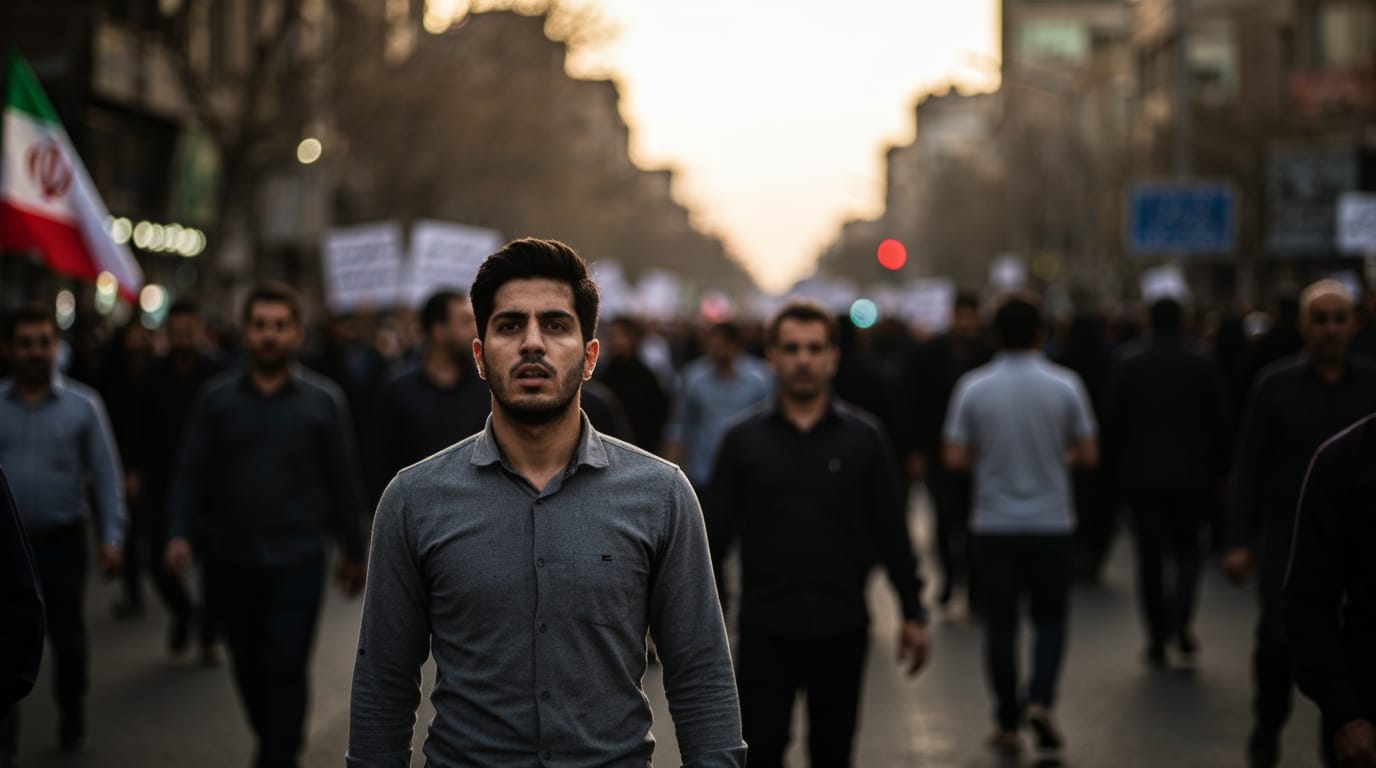
TEHRAN — Iran finds itself at a critical juncture, grappling with extensive anti-government protests sweeping across the nation while simultaneously issuing sharp warnings to the United States and Israel against any perceived interference. The widespread dissent, fueled by a severe economic crisis and deep-seated dissatisfaction with the ruling establishment, has triggered a brutal government crackdown, further escalating tensions both domestically and internationally. As casualties mount and an internet blackout attempts to stifle the flow of information, the Iranian regime has explicitly threatened retaliation against Israeli and U.S. interests should Washington intervene, highlighting the perilous interplay between internal turmoil and external pressures.
A Nation in Tumult: The Deepening Internal Crisis
Since late December 2025, Iran has been engulfed by mass demonstrations that began on December 28 and have persisted into January 2026, marking the most significant wave of unrest since the 2022 Mahsa Amini protests and potentially the largest since the 1979 Islamic Revolution. The initial spark for this widespread discontent was a deepening economic crisis, characterized by inflation soaring to an estimated 42 to 48 percent annually and the national currency, the rial, plummeting to unprecedented lows of approximately 1.5 million to the U.S. dollar. Beyond inflation, rising prices for essential goods, chronic state mismanagement, and critical shortages of water and energy have exacerbated public frustration, with reports of families in Tehran's working-class districts facing dry taps and queuing for hours for bottled water.
The protests, which originated with bazaar merchants and shopkeepers in Tehran's Grand Bazaar before rapidly spreading to university students, have expanded into a nationwide challenge to the Islamic Republic's nearly 50-year rule. Demonstrations have been reported in all 31 provinces, encompassing over 180 cities and 512 locations, including areas traditionally considered loyal to the state. Protesters have adopted defiant chants such as "Death to the Dictator" and even "Long live the Shah," signaling a profound rejection of the current system. In response, the Iranian government has unleashed a deadly crackdown. Security forces, including the Islamic Revolutionary Guard Corps (IRGC) and the police (FARAJA), have been accused of unlawfully using firearms, metal pellets, tear gas, and beatings to disperse and punish demonstrators. An internet blackout, reported to have lasted over 60 hours, has been implemented, severely hindering communication and raising concerns for the safety of those on the ground. Human rights monitors have reported a rising death toll, with figures ranging from 28 to over 100 casualties, and more than 2,000 arrests. The regime's rhetoric has also hardened, with Supreme Leader Ali Khamenei denouncing protesters as "vandals" and "saboteurs" and the government shifting its characterization of demonstrators from "rioters" to "terrorists" to justify intensified repression. The military has formally entered the fray, vowing to protect strategic infrastructure under the command of Khamenei.
Tehran's Red Line: Warnings to Washington and Tel Aviv
Amidst the domestic unrest, the Iranian regime has issued explicit and forceful warnings to the United States and Israel. Iranian Parliament Speaker Mohammad Baqer Qalibaf declared that if the U.S. were to launch a military attack on Iran, both Israel and regional U.S. military bases would become "legitimate targets" for Tehran. Qalibaf's statements, made during a parliamentary session where lawmakers reportedly chanted "Death to America," directly addressed U.S. President Donald Trump, warning against any "miscalculation." He underscored that "in the case of an attack on Iran, the occupied territories (Israel) as well as all US bases and ships will be our legitimate target."
These warnings came in direct response to President Trump's recent public comments expressing support for the Iranian protesters and indicating that the U.S. "stands ready to help." Trump had also cautioned the Iranian government against using force on demonstrators and had previously threatened to "knock down" Iran if it recommenced its nuclear programs. U.S. officials have reportedly held preliminary discussions regarding potential military actions against Iran, including large-scale aerial strikes on various military targets, in response to such threats. Meanwhile, Israel has been placed on high alert for the possibility of U.S. intervention in Iran. Israeli Prime Minister Benjamin Netanyahu reiterated that Israel would not permit Iran to re-establish its missile or nuclear programs, recalling previous joint U.S.-Israeli strikes on Iran's nuclear facilities in 2025 and a "twelve-day war" in June 2025. Iran, however, maintains it has "reconstructed everything that was damaged" from those 2025 attacks.
The Intertwined Destinies of Domestic Dissent and Foreign Policy
The Iranian regime has consistently attributed the domestic protests to foreign instigation, characterizing them as a "foreign conspiracy" orchestrated by its adversaries, particularly Israel and the United States. This narrative serves to deflect attention from the profound internal grievances driving the unrest, which independent analysts and human rights organizations largely conclude are rooted in domestic failures of governance, corruption, and economic mismanagement, exacerbated by international sanctions.
Despite the regime's claims, the interplay between Iran's internal instability and its foreign policy posture is undeniable. The current wave of unrest coincides with what has been described as an "assertive reordering of power by the United States across multiple theatres," creating a complex strategic environment. While the U.S. has expressed vocal support for the protesters, some analyses suggest that the protests are fundamentally indigenous, even if external actors like exiled opposition figures amplify and encourage them. The regime's intensified crackdown internally may be a tactic to project strength and control, both to its own populace and to external adversaries, even as it faces mounting pressure. The warnings issued to the U.S. and Israel could be interpreted as an attempt to deter foreign intervention while simultaneously leveraging external threats to consolidate power domestically against a protesting populace.
International Scrutiny and Calls for Restraint
The escalating situation in Iran has drawn significant attention and concern from the international community. The United States has unequivocally expressed its support for the Iranian people, urging the government to respect citizens' rights and warning against further violence. President Trump's administration has stated it is "locked and loaded" and would "come to their rescue" in the event of severe state violence, though without specifying concrete actions.
European nations, including France, Germany, and the United Kingdom, have released a joint statement condemning the violence, urging restraint from Iranian authorities, and calling for the protection of fundamental freedoms, including freedom of expression and peaceful assembly. Amnesty International and Human Rights Watch have also strongly condemned the crackdown, documenting the unlawful use of force by security forces and calling on UN member states and regional bodies to pressure Iranian authorities to "stop the bloodshed." The United Nations' independent International Fact-Finding Mission on Iran, established in 2022, remains active, continuing to monitor the human rights situation. Beyond governments, Iranian diaspora communities worldwide have held solidarity rallies, amplifying the voices of those facing repression.
A Precarious Future
Iran faces a deeply precarious future. The persistent, widespread protests signify a profound crisis of legitimacy for the ruling establishment, stemming from an unraveling economy and decades of unmet grievances. The regime's response, characterized by brutal repression and an attempt to control information through internet blackouts, underscores its determination to quell dissent at any cost. This internal strife is inextricably linked to heightened external tensions, as Tehran's stern warnings to the U.S. and Israel introduce a dangerous dimension of potential regional conflict. The delicate balance between managing an enraged populace and deterring perceived foreign threats leaves the Iranian leadership navigating a complex and highly volatile landscape, with significant implications for both its own survival and the broader stability of the Middle East.


