German Chancellor Merz Faces Public Backlash Over Austerity Push
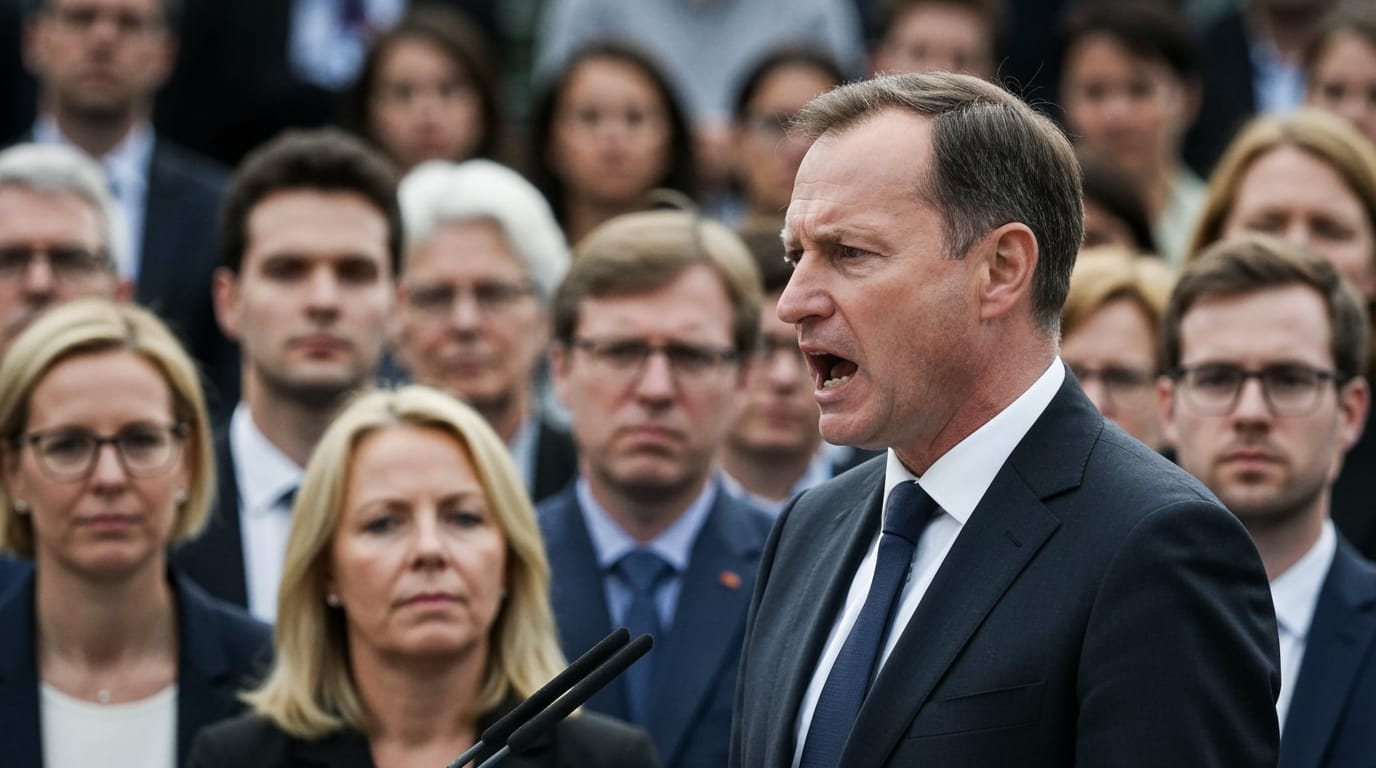
BERLIN – German Chancellor Friedrich Merz was met with jeers, whistles, and boos on Tuesday as he passionately advocated for sweeping economic reforms to a skeptical audience of trade unionists in Berlin. The hostile reception underscores the deep public apprehension surrounding his government's proposals to overhaul Germany's welfare system and labor market, aimed at reigniting the country's flagging economy.
Speaking to the German Trade Union Confederation (DGB), Merz urged the nation to "pull itself together" to avoid being left behind in a rapidly evolving global landscape. However, his calls for significant changes, including a challenging pension overhaul and a relaxation of working time regulations, were met with vocal disapproval from delegates representing industrial, public, and service sector workers. This confrontational encounter highlights the formidable task Merz faces in steering Europe's largest economy through a period of fragile recovery and widespread discontent.
A Nation at an Economic Crossroads
Germany finds itself at a critical juncture, grappling with persistent economic stagnation. After two years of recession, the economy saw a return to growth at the close of 2025, but this recovery remains precarious. Global headwinds, including an energy shock stemming from the war with Iran and new U.S. tariffs targeting German automakers already struggling against Chinese competition, threaten to stifle any sustained upturn. With a projected GDP growth of merely 0.5% for the current year, Merz has warned that this performance is "simply too little to maintain our prosperity."
The Chancellor's diagnosis points to deeper structural issues that he argues have been neglected for too long. He contends that Germany has "failed to modernise our country" and that without bold reforms, the nation risks a long-term economic decline. This stark assessment forms the bedrock of his administration's ambitious, albeit controversial, reform agenda.
Merz's Blueprint for Economic Revival
At the heart of Merz's reform proposals are significant changes across pensions, labor, taxation, and bureaucracy, all designed to enhance competitiveness and stimulate growth.
The most contentious of these is pension reform, which Merz has labeled "undoubtedly the most difficult challenge." He points to Germany's aging population, noting it has the oldest working demographic in the European Union, with a quarter of its workforce aged between 55 and 64. This demographic shift, he argues, means a shrinking pool of younger workers will increasingly bear the burden of supporting a growing number of retirees. His administration advocates for increased private investment in retirement funding to alleviate pressure on the public system. While the CDU's manifesto previously aimed to maintain existing retirement ages and support private provision, the current debate centers on how to make the system sustainable.
Further labor market adjustments are also on the table, notably a push to introduce more flexible working hours by shifting from a daily maximum to a weekly one. This move, intended to provide greater adaptability for both employees and employers, is a point of contention with trade unions, which fear it could erode worker protections.
On the fiscal front, Merz's government is pursuing a strategy of tax relief and deregulation. Plans include reducing the corporate tax rate in stages to approximately 25% over the next four to five years, aiming to boost investment and relieve companies. Other tax measures include easing the burden on low and middle-income earners, increasing the commuter allowance, and exempting overtime pay from tax to incentivize work. To tackle bureaucratic hurdles, the administration seeks to streamline administrative costs, abolish regulations such as the supply chain act, and reduce "overcompliance" with European law, which industry leaders have also called for.
Energy policy also features prominently, with a focus on a more "pragmatic and industry-friendly" approach. This includes plans for new gas power plants, optimizing energy efficiency, and exploring options like bringing back nuclear power and investing in fusion technology research. The aim is to lower electricity taxes and grid fees, making energy more affordable for businesses and consumers.
Political Headwinds and Public Discontent
Merz's year in office has been marked by declining popularity and persistent disputes within his grand coalition government, comprising his conservative Christian Democratic Union (CDU) and the center-left Social Democrats (SPD). The long-promised reforms in areas like pensions, taxation, welfare, and healthcare have often been stalled by disagreements between the coalition partners over spending priorities and the pace of change. The statutory health insurance system, for instance, faces projected deficits of tens of billions of euros, necessitating urgent agreement on reforms.
The skeptical reception from trade unionists reflects a broader struggle for public trust. Merz's approval ratings have plummeted, and polls indicate that the far-right Alternative for Germany (AfD) party has gained significant ground, sometimes even surpassing the CDU. A recent survey revealed that 73% of Germans doubt Merz's economic competence, an area once considered his strength. This declining trust in politics, as acknowledged by Finance Minister and SPD leader Lars Klingbeil, creates an exceptionally challenging environment for implementing unpopular but potentially necessary changes.
Despite the internal wrangling and external pressure, Merz and Vice Chancellor Lars Klingbeil have consistently downplayed suggestions that the coalition could collapse. Merz himself has stated, "No, we want to and we must succeed with this coalition we now have," emphasizing the necessity of working together for Germany's future.
The Road Ahead
Chancellor Merz's confrontation with trade unionists highlights the formidable balancing act his government faces. He must push through reforms he deems essential for long-term prosperity while navigating intense public scrutiny and political opposition, even from within his own coalition. The calls for modernization and fiscal discipline clash with public fears about the erosion of social safety nets and workers' rights.
The urgency for structural reforms is underscored by leading German business associations, which have warned that the nation's economic foundation is crumbling after years of stagnation, demanding "significantly more courage to change" from politicians. As Germany strives to secure its economic future, the ability of Merz's government to forge a consensus, both within its ranks and with the broader public, will be crucial in determining whether his bold agenda can indeed pull the nation "together" or if it will be further fractured by dissent.