German Chancellor Merz in Washington for Critical Talks with President Trump Amid Geopolitical Shifts
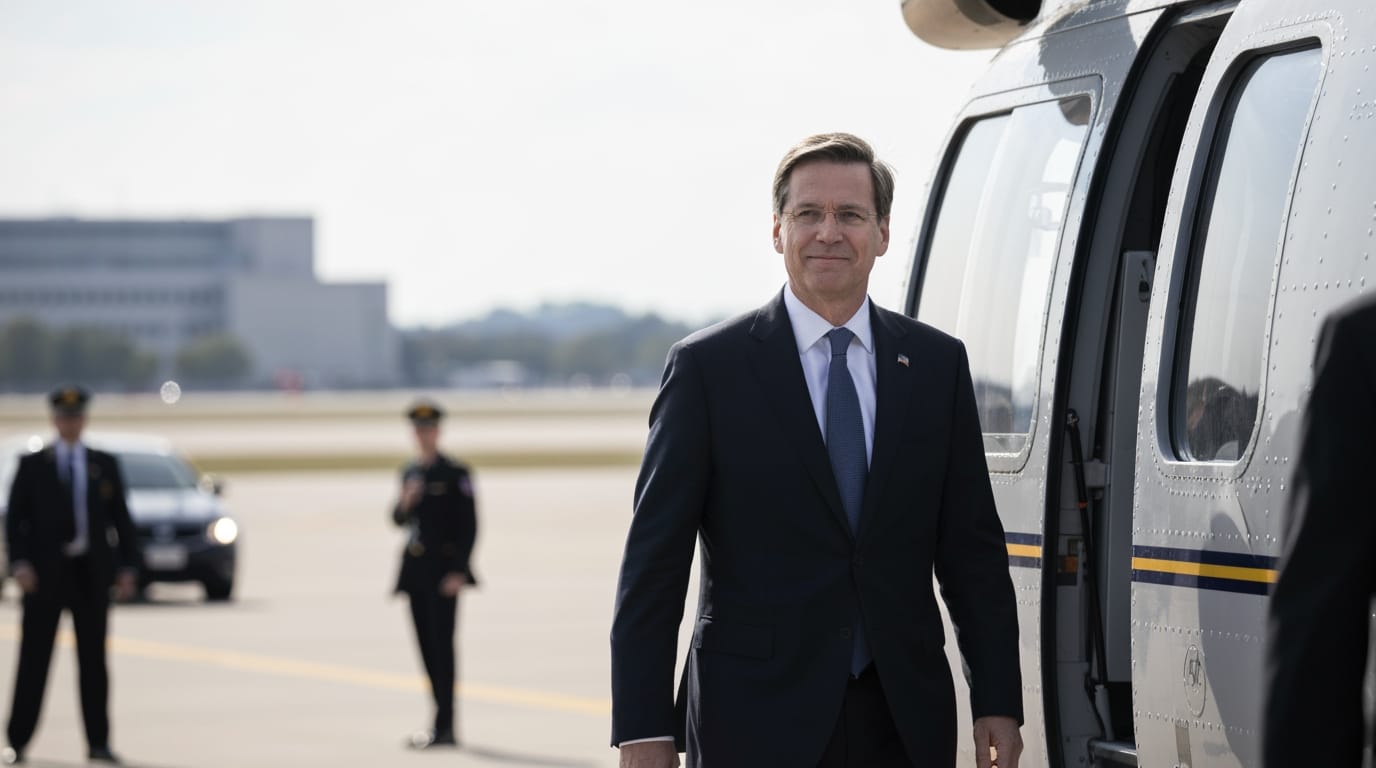
Washington D.C. – German Chancellor Friedrich Merz arrived in Washington D.C. today for high-stakes discussions with United States President Donald Trump, marking a pivotal diplomatic engagement aimed at navigating an increasingly complex transatlantic landscape. The visit, which follows Merz's recent re-election as chairman of Germany's Christian Democratic Union (CDU), underscores the urgent need for direct communication between European leaders and the U.S. administration as concerns over global stability, trade relations, and the future of alliances intensify. Merz is expected to focus on fostering a more "equal footing" in dialogue with President Trump, addressing crucial issues ranging from the ongoing conflict in Ukraine to persistent trade disputes and the strategic future of the NATO alliance.
Proactive Diplomacy in an Uncertain Era
Chancellor Merz's current visit to Washington is a clear demonstration of proactive European diplomacy in the lead-up to and during a potential second Trump presidency. European leaders have been keenly observing the evolving political landscape in the United States, recognizing the significant implications a shift in U.S. foreign policy could have on global affairs. Merz, a seasoned politician with a strong Atlanticist conviction, has made strengthening transatlantic ties a cornerstone of his foreign policy agenda, even while advocating for greater European independence in defense matters. His trip directly follows a diplomatic mission to China, highlighting Germany's multipolar engagement strategy.
This visit is not the first direct engagement between the two leaders since Merz assumed the chancellorship in May 2025. Their initial face-to-face meeting occurred on June 5, 2025, in the Oval Office, described by reports as notably cordial. During that encounter, Merz presented President Trump with a gold-framed copy of his grandfather Friedrich Trump's 1869 birth certificate, a gesture that was reportedly well-received and set a positive tone for the discussions. That meeting laid the groundwork for ongoing dialogue, with both leaders reportedly engaging in phone calls and using first names prior to their initial in-person meeting. Despite the congenial atmosphere, fundamental differences on key policy issues, particularly regarding the war in Ukraine, were apparent and remain central to the current talks.
Ukraine Conflict: A Lingering Divide
The war in Ukraine remains a paramount concern for Germany and its European partners, and it is expected to be a central theme of Merz’s discussions with President Trump. During their previous meeting in June 2025, Chancellor Merz urged President Trump to exert more pressure on Russia to end its aggression against Ukraine. Merz has consistently emphasized America's pivotal role in resolving the conflict, referencing historical instances like D-Day to underscore the U.S.'s capacity for decisive action in Europe.
However, President Trump's perspective on the conflict has presented a stark contrast to European positions. In past statements and during his 2025 meeting with Merz, Trump has likened the Russia-Ukraine conflict to a fight between "two young children" and suggested that it might be "better off letting them fight for a while" before intervening. This approach signals a potential reduction, if not an outright cessation, of U.S. military assistance to Kyiv, a move that would significantly impact Ukraine's ability to defend itself and send reverberations throughout European security structures. Merz has consistently rejected the idea of a "dictated peace" or the "subjugation" of Ukraine, advocating instead for increased pressure on Russia and robust support for Kyiv, including the development of its own long-range missile systems. The divergence in these views highlights the delicate balance Merz must strike in his diplomatic efforts.
Reshaping Transatlantic Trade and Defense
Beyond Ukraine, trade relations and defense spending are critical areas of discussion. The U.S. administration, under President Trump, has pursued an aggressive tariff policy, significantly impacting Germany and the broader European Union. While a recent U.S. Supreme Court ruling struck down aspects of Trump’s previous tariff policies, new tariffs have already been imposed, with threats of further increases. Merz intends to present a "coordinated position" from the European Union on these tariff issues, seeking to achieve greater "stability and predictability" in transatlantic trade, which is vital for Germany's export-driven economy.
On defense, President Trump has consistently pressed NATO allies, including Germany, to significantly increase their defense budgets. Chancellor Merz has shown a willingness to address these concerns, supporting not only the NATO target of 2% of GDP but suggesting an even higher commitment, potentially up to 5% of Germany's economic output, in the future. This stance reflects a growing realization in Germany that Europe must shoulder more responsibility for its own security, especially given the uncertainties surrounding future U.S. commitment to NATO's collective defense principle, Article 5. Merz himself has expressed doubts about NATO's long-term cohesion and has called for Europe to achieve "independence from the USA" in defense matters, emphasizing the need for a stronger, more unified European defense capability.
The Broader Implications for European Security
Merz's diplomatic outreach to President Trump is taking place against a backdrop of European anxiety regarding the stability of the international rules-based order. Many European leaders, including Merz, perceive a shift in U.S. foreign policy towards a more power- and interest-driven approach, potentially moving away from multilateralism. This has prompted calls for Europe to assert itself more strongly on the global stage and foster greater unity among its member states.
The discussions between Merz and Trump carry significant weight for the future of the transatlantic alliance and global geopolitics. A potential second Trump administration is widely expected to prioritize "America First" policies, with implications for climate agreements, relations with China, and alliances in the Indo-Pacific. Merz's efforts are aimed at ensuring that despite these anticipated shifts, fundamental lines of communication remain open, and shared interests, particularly in maintaining European security and economic stability, can be safeguarded. The cordial tone observed in their previous meetings and Merz's direct, yet respectful, approach are critical tools in this delicate diplomatic endeavor.
Conclusion: Sustaining Dialogue in a World of Flux
Chancellor Friedrich Merz's visit to Washington D.C. for talks with President Donald Trump represents a crucial attempt to maintain a constructive dialogue amidst profound international uncertainty. The discussions on Ukraine, trade, and defense spending are not merely bilateral issues but touch upon the foundational elements of transatlantic cooperation and global security. While significant policy differences persist, particularly on the approach to the war in Ukraine, Merz's strategy of direct engagement and his emphasis on a unified European stance aim to mitigate potential disruptions and preserve essential alliances. The outcome of these talks, and the ongoing efforts to bridge geopolitical divides, will undoubtedly shape the trajectory of Germany-U.S. relations and the broader international order in the coming years.