Smoke Billows Near U.S. Embassy in Kuwait Amid Spiraling Regional Conflict
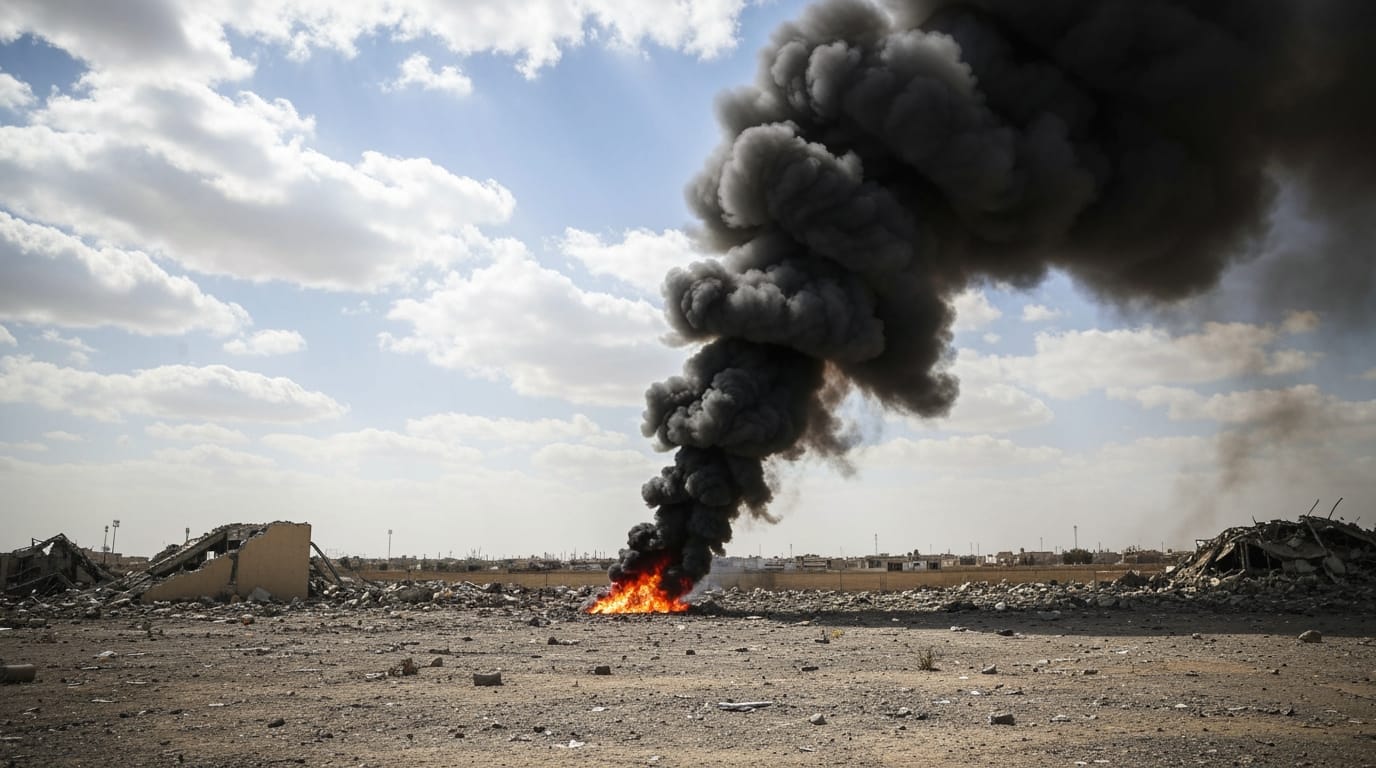
Kuwait City, Kuwait – Black smoke was observed rising near the United States Embassy in Kuwait City on Monday, March 2, 2026, triggering immediate alarm and a security alert from the diplomatic mission as a rapidly escalating conflict between Iran, the U.S., and Israel grips the wider Middle East. The incident underscores the volatile environment in the Gulf, where Iranian retaliatory strikes have spread across several nations following recent U.S. and Israeli military actions against Tehran.
The visible smoke, reported by an AFP correspondent, coincided with sirens sounding across Kuwait City, amplifying fears of a widening conflict that has already claimed lives and caused significant damage in the region. While the U.S. Embassy did not confirm a direct hit on its structures, it issued an urgent security alert advising U.S. citizens to avoid the premises and to "take cover in your residence on the lowest available floor and away from windows," citing a "continuing threat of missile and UAV attacks over Kuwait."
Kuwait on Edge Amidst Iranian Retaliation
The appearance of smoke near the U.S. Embassy marks a tangible sign of the regional conflict reaching Kuwait, a key U.S. ally. Kuwaiti authorities reported intercepting an unspecified number of hostile drones at dawn, part of what they described as the third consecutive day of Iranian retaliatory strikes across neighboring Gulf states. These actions by Tehran are a direct response to a series of coordinated strikes by U.S. and Israeli forces on Iranian military sites, which, according to Iranian state media, resulted in more than 200 fatalities, including dozens at a girls' school. The U.S. State Department had previously issued an urgent warning to Americans in Kuwait to take cover and remain indoors, stating, "Do not come to the Embassy," without further elaboration on the smoke incident itself.
A Broadening Arc of Instability
The situation in Kuwait is part of a larger, rapidly unfolding regional crisis. The U.S. and Israeli strikes, referred to by some U.S. officials as "Operation Epic Fury," targeted key military infrastructure in Tehran and other Iranian cities, with claims of destroying Iranian naval headquarters and multiple warships. Iran's leadership condemned these assaults as severe violations and vowed expansive retaliatory measures.
True to its word, Iran launched missile and drone attacks not only towards Israel but also against Gulf states hosting U.S. assets or allied with the U.S. Explosions and air defense interceptions have been reported across multiple Gulf capitals, including Dubai, Doha, and Manama. Civilian areas and critical infrastructure have been impacted, further widening the conflict's reach and increasing fears of a full-scale regional war. The United States has consequently raised travel advisories for Kuwait, Qatar, and Bahrain to Level 3, urging citizens to reconsider travel due to the heightened risk of armed conflict and missile or drone activity. This advisory also authorized the departure of non-emergency personnel and family members from these countries, although the State Department denied earlier reports of a broader evacuation order for Iraq and Kuwait.
Humanitarian and Diplomatic Repercussions
The intensified conflict carries significant humanitarian and diplomatic repercussions. Reports indicate at least one fatality and 32 injuries in Kuwait as a result of Iran's retaliatory attacks. Across the region, the death toll from the initial U.S.-Israeli strikes and subsequent Iranian retaliation is mounting. U.S. President Donald Trump acknowledged that there would "likely be more" U.S. casualties, confirming that three U.S. service members have been killed and five seriously wounded in operations against Iran.
The targeting of diplomatic missions, or areas near them, is considered exceptionally serious under international law. The U.S. Embassy's warning to stay away underscores the extreme volatility for both diplomats and civilians. International travel has also been significantly disrupted, with major hub airports in the region suspending services. Gulf states, in a joint statement with the U.S. State Department, condemned Iran's retaliatory strikes, calling them "reckless and destabilizing behavior" that targets civilians and countries not directly engaged in hostilities.
A History of Security Challenges
This is not the first time the U.S. Embassy in Kuwait has faced security threats. In a grim precedent, the embassy was targeted in a terrorist attack in December 1983, when a truck bomb exploded at the compound. That incident, which resulted in significant damage to the consulate building, prompted a comprehensive review of overseas security by the U.S. Department of State and led to enhanced protective measures for diplomatic facilities worldwide. While the nature of the current incident involving smoke remains under investigation, the historical context highlights the persistent security challenges faced by diplomatic missions in the region.
Uncertain Future for Regional Stability
As the conflict enters its third day of Iranian retaliatory strikes, the Middle East remains on edge. The immediate future appears fraught with uncertainty, with calls from Iranian officials to the UN Security Council for immediate action in response to what they deem a "breach of international peace and security." Tehran has reiterated its intent to continue retaliation, declaring "all bases, facilities, and assets of the hostile forces in the region shall be regarded as legitimate military objectives." The rising smoke near the U.S. Embassy in Kuwait City serves as a stark reminder of a region teetering on the brink, where every incident has the potential to further inflame an already perilous situation, demanding urgent international attention and de-escalation efforts.


