Middle East Conflict Strands Tens of Thousands of German Travelers as Regional Airspace Shuts Down
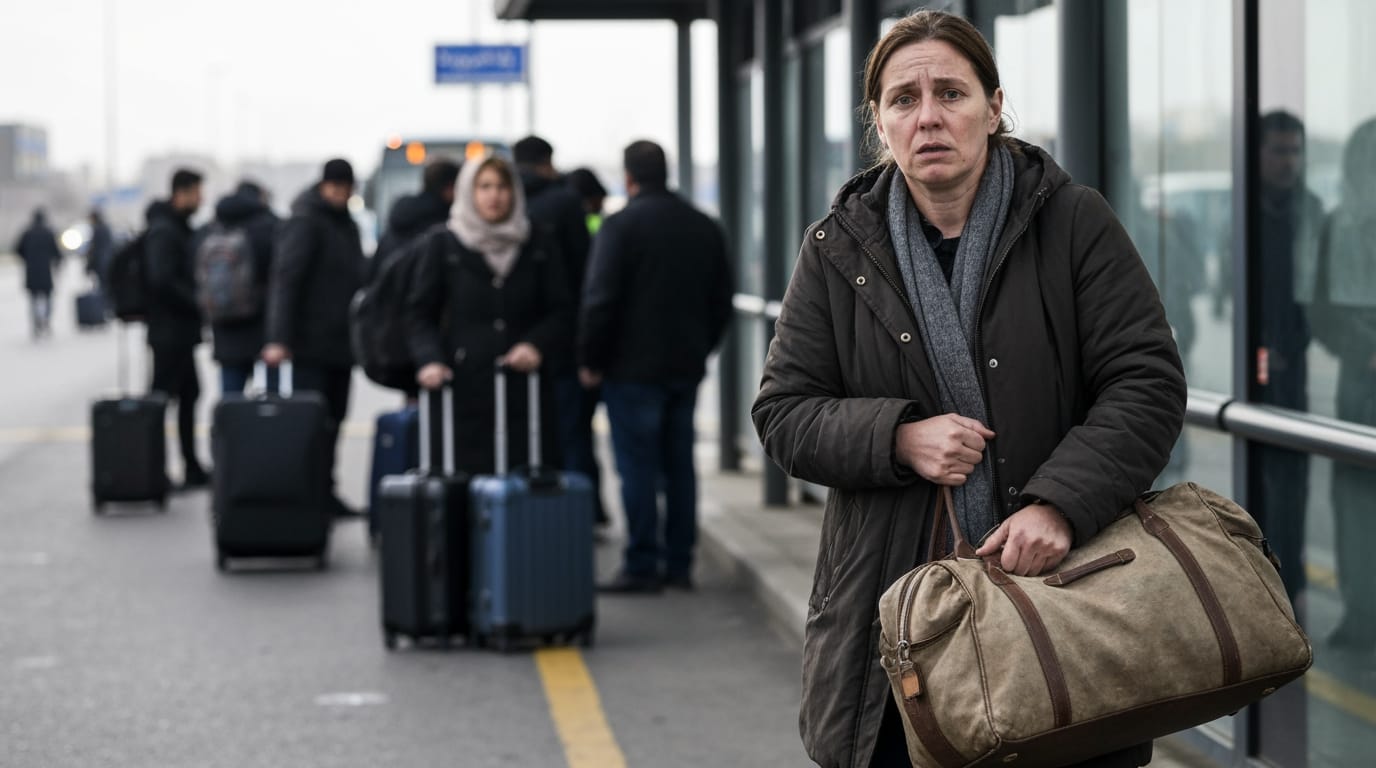
BERLIN, Germany – An escalating military conflict in the Middle East, sparked by US-Israeli strikes on Iran and subsequent Iranian retaliation, has left an estimated 30,000 German tourists stranded across the region, struggling to find a path home amidst widespread airspace closures and flight cancellations. The sudden intensification of hostilities, which commenced around February 28, 2026, has plunged global air travel into chaos, particularly impacting vital transit hubs in the Gulf.
German Foreign Minister Johann Wadephul confirmed Monday that a military evacuation of its citizens is currently not feasible due to the perilous and largely closed airspace. This development comes as Germany's Foreign Office had already issued a travel warning for Iran in 2022 and further tightened its advisories for the entire Middle East region following the recent attacks.
Unfolding Conflict and Regional Instability
The current crisis unfolded rapidly, beginning with US-Israeli air and missile attacks against targets in Iran on Saturday, February 28, 2026. These strikes reportedly targeted various locations, and sources indicate that Iran's supreme leader, Ali Khamenei, was killed in the bombing. Iran swiftly responded with its own barrage of missiles and drones, targeting Israel and US military bases, and extending to locations in the Gulf region, including the United Arab Emirates and Qatar. Explosions were reported in Dubai and Abu Dhabi, with some airports directly hit by strikes. Kuwait's air defenses mistakenly shot down three US F-15 fighter jets involved in Iran-related operations.
The conflict has transformed significant portions of the Middle East into what officials describe as a "war zone," with countries like Iran, Israel, Iraq, Jordan, Qatar, Kuwait, Bahrain, and the United Arab Emirates announcing at least partial or full closures of their airspaces. This unprecedented situation has led to the largest disruption in global air travel since the COVID-19 pandemic.
Germans Stranded Across the Gulf
Among the hundreds of thousands of travelers worldwide caught in the maelstrom, approximately 30,000 German citizens are now stranded. These individuals, a mix of holidaymakers and business travelers, find themselves stuck in hotels, on cruise ships, or at closed airports across the Middle East. Reports from travelers describe chaotic scenes at major aviation hubs like Dubai International Airport, which, along with Abu Dhabi and Doha, remains either fully or partially closed.
A traveler from Hamburg, stranded in Dubai, reported seeing smoke plumes over the city and hearing accounts of debris at the airport. Many are facing immense uncertainty, with no clear timeline for when normal flight operations will resume. The German Travel Association (DRV) has urged tourists on package tours to "remain at their booked hotels as a matter of urgency" and to avoid attempting to reach airports or neighboring countries independently.
Government and Airline Responses
the German Foreign Office has advised all German nationals to leave Iran immediately and to register on the crisis preparedness list (ELEFAND) if they are in the broader affected region. Foreign Minister Wadephul emphasized that while military evacuations are off the table for now, the government is exploring other options to assist its citizens.
Airlines, including Germany's flag carrier Lufthansa, have been significantly impacted. Lufthansa suspended flights to and from Dubai, Tel Aviv, Beirut, and Oman, with cancellations extending at least through March 7. Other major carriers like Emirates, Qatar Airways, flydubai, Air France, and Turkish Airlines have also canceled numerous flights, rerouting services or suspending operations to and through the Middle East. Passengers are advised to directly contact their airlines for the latest flight status and to not proceed to airports without confirmed travel plans.
Broader Economic and Diplomatic Ramifications
The sudden outbreak of hostilities and subsequent travel disruptions have sent shockwaves through the global economy. The travel sector, already reeling from previous global crises, has seen airline and travel company shares plummet. Oil prices have surged, adding further pressure on airlines facing increased operating costs and rerouting expenses.
Diplomatically, the situation remains highly tense. Russia and China have condemned the US-Israeli strikes, calling for a truce, while European leaders, including German Chancellor Friedrich Merz, have condemned Iran's retaliatory attacks and pledged to defend their interests in the region. The international community grapples with the potential for further escalation and the long-term implications for regional stability.
An Uncertain Path Forward
As the conflict continues to unfold, the path forward for stranded German travelers and the broader Middle East remains highly uncertain. With airspaces shut and geopolitical tensions at an all-time high, the immediate priority for governments and airlines is the safety and eventual repatriation of their citizens. The ongoing crisis underscores the fragility of international travel in the face of regional conflicts and highlights the complex challenges in ensuring citizen welfare during such volatile times.