France Boosts Nuclear Arsenal Amid Shifting Global Security Landscape
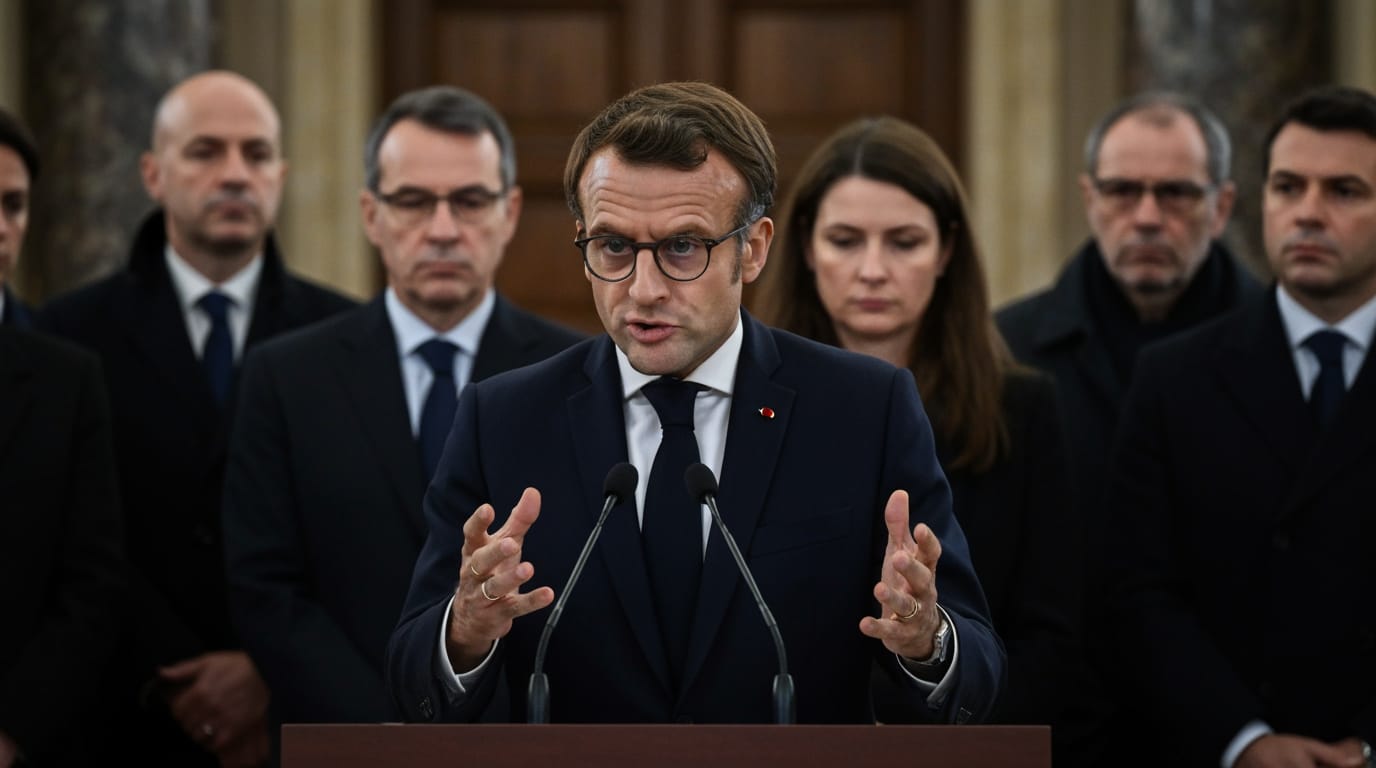
PARIS – In a significant recalibration of its defense posture, French President Emmanuel Macron announced today that France will increase the size of its nuclear arsenal, marking the first such expansion since at least 1992. Speaking from the Île Longue military base in Brittany, a strategic hub for France's ballistic missile submarines, Macron emphasized the necessity of strengthening national deterrence in response to an evolving and increasingly volatile international environment. The decision underscores a growing European unease over global stability, particularly against the backdrop of Russia's prolonged conflict in Ukraine, China's expanding military capabilities, and burgeoning questions regarding the enduring reliability of the United States' nuclear umbrella.
Macron asserted that for France to maintain its freedom and influence, it must be perceived as "feared" and "powerful," directly linking the nation's strength to its deterrence capabilities. As the sole nuclear power within the European Union, France’s updated strategy carries substantial implications for the continent’s defense architecture and its collective security. The announcement signals a departure from decades of nuclear reductions and places France at the forefront of a renewed debate on European strategic autonomy.
A Shifting Doctrine in a Volatile World
President Macron's address, building upon his earlier pronouncements in 2020, outlined a revised nuclear doctrine tailored to current geopolitical realities. He noted that both "competitors" and "partners" have evolved since his last major statement, necessitating a profound adjustment in France's approach to deterrence. The president indicated that the deterrent element must be "strengthened" and "brought forward in a more preventative way," suggesting a more proactive stance in deterring potential threats. The primary objective behind increasing the number of warheads, Macron explained, is to ensure France's "assured destructive power" remains credible and effective.
While France's current nuclear stockpile is estimated to be around 290 warheads, making it the world's fourth-largest nuclear power, the precise figure of the intended increase remains undisclosed. Macron stated that, unlike in the past, France will no longer provide specific numbers on its nuclear arsenal, a move that introduces an element of strategic ambiguity often employed by nuclear states. This strategic shift comes amidst growing concerns over the expansion of other nuclear powers' arsenals, notably China, and the aggressive rhetoric emanating from Russia, which has repeatedly brandished the threat of its own nuclear capabilities following its invasion of Ukraine. The renewed emphasis on nuclear strength reflects a broader recognition within Paris that the international security landscape has fundamentally altered, demanding a robust and adaptable deterrent force.
The European Dimension and Allied Concerns
A central theme of Macron’s revised doctrine is the nuanced integration of France’s nuclear capabilities within the broader European security framework. The French president has long championed the concept of Europe taking greater responsibility for its own defense, particularly given the perceived unreliability of traditional security guarantees, including the U.S. nuclear umbrella. In 2020, Macron invited European partners to engage in a "strategic dialogue" on how France's nuclear deterrence could contribute to collective security.
However, Macron unequivocally reiterated that France's nuclear arsenal will remain under exclusive national control. French officials and former advisors have consistently underscored that any shared European command or launch authority is not feasible, citing concerns about decision-making efficacy. A former presidential military advisor notably remarked, "I can't see us having 27 buttons," referring to the number of European Union member states. This firm stance reflects France's historical commitment to an independent nuclear deterrent, a cornerstone of its sovereignty since the days of Charles de Gaulle.
Despite the insistence on national control, Macron outlined several avenues for enhanced cooperation with European allies. These include inviting partners to participate in deterrence exercises and allowing for the temporary deployment of French nuclear-capable aircraft to allied countries. Discussions regarding such arrangements are reportedly underway with nations including Germany, the United Kingdom, Poland, the Netherlands, Belgium, Greece, Sweden, and Denmark. Germany, in particular, has engaged in initial talks with France concerning the potential for a European nuclear deterrent, indicating a growing willingness among some European states to explore new defense paradigms. This cooperative yet nationally controlled approach seeks to offer reassurance to allies while maintaining the credibility and independence of the French deterrent.
France's Nuclear Capabilities and Modernization Efforts
France's nuclear force, known as the Force de dissuasion, operates on a "strictly defensive strategy" designed to safeguard the nation's "vital interests" and prevent major conflicts. The country's deterrence relies on a combination of sea-based and air-based components. The Strategic Oceanic Force (FOST) comprises four Triomphant-class nuclear-powered ballistic missile submarines (SSBNs), each capable of carrying 16 M51 ballistic missiles. These M51 missiles boast an estimated range of 8,000 to 10,000 kilometers and are equipped with multiple independently targetable nuclear warheads, providing France with a formidable second-strike capability.
The airborne component of the French deterrent involves Rafale fighter jets, which are capable of deploying ASMPA (Air-Sol Moyenne Portée-Améliorée) air-launched cruise missiles. These missiles have an estimated range of approximately 500 kilometers and are intended to serve as a final warning before any potential escalation to a large-scale nuclear conflict. The Strategic Air Forces (FAS), established in 1964, operate these jets from several bases across France, with some also capable of being launched from the aircraft carrier Charles de Gaulle.
France is engaged in extensive modernization programs to ensure the long-term effectiveness and credibility of its nuclear arsenal. This includes plans for a new generation of nuclear-powered aircraft carriers to replace the Charles de Gaulle by 2038. Furthermore, the country is developing next-generation hypersonic ASN4G nuclear missiles, which are expected to be operational by 2035, and is upgrading air bases to host nuclear-capable Rafale jets equipped with these advanced missiles. These modernization efforts represent a substantial financial commitment, with annual expenditure on nuclear deterrence projected to increase significantly, potentially reaching €6 billion or more by 2025.
Redefining Security in a New Era
President Macron's announcement marks a pivotal moment in France's defense policy and underscores its resolve to assert strategic autonomy in an increasingly complex global landscape. The decision to increase the nuclear arsenal, a reversal of post-Cold War trends, reflects a deep-seated concern within Paris about the erosion of international security norms and the rise of new threats. By enhancing its nuclear capabilities, France aims to reinforce its position as a credible deterrent force, ensuring its security and sovereignty while also seeking to contribute to broader European stability.
The move also serves as a potent signal to both allies and potential adversaries that France is prepared to adapt its defense strategies to a "new nuclear reality." While maintaining strict national control over its weapons, France's offers of increased cooperation and dialogue with European partners highlight a desire to forge a more unified and self-reliant European defense posture. This strategic reorientation positions France at the heart of ongoing debates about how Europe can best secure its interests in a world where traditional alliances and security assurances are under increasing strain. The implications of this shift will reverberate across Europe and beyond, influencing defense planning, alliance dynamics, and arms control discussions for years to come.


