German Chancellor Merz Pitches 'Associate' EU Membership for Ukraine Amidst Accession Debates
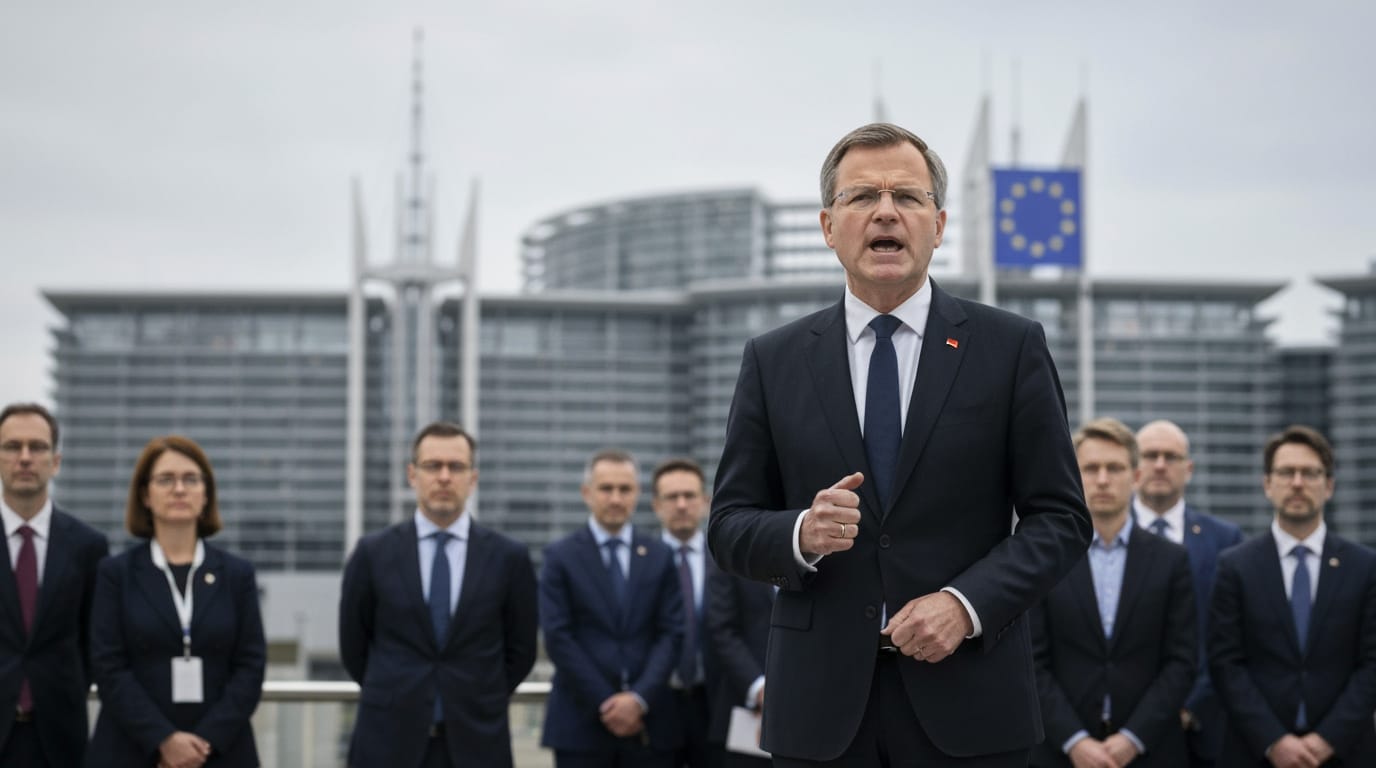
Brussels, Belgium – German Chancellor Friedrich Merz has put forward a novel proposal for Ukraine to become an "associate member" of the European Union, an interim status designed to deepen Kyiv's integration with the bloc without immediate full accession. The initiative, outlined in a letter to EU leaders, aims to provide Ukraine with closer ties and security guarantees during its ongoing war with Russia and while it continues its extensive reform process.
Merz's proposition comes at a pivotal time, as Ukraine, a candidate for full EU membership since 2022, pushes for accelerated integration, while European officials acknowledge that full entry is a complex, long-term endeavor. The German Chancellor's plan seeks to bridge this gap, offering a structured path for Ukraine to participate in key European institutions and discussions, thereby injecting new momentum into the enlargement debate and potentially aiding efforts towards a lasting peace settlement.
A New Framework for European Engagement
The core of Merz's proposal envisions a bespoke "associate" status that would grant Ukrainian officials non-voting representation in several critical EU bodies. This would include participation in EU summits, ministerial meetings, and potentially a non-voting commissioner within the European Commission, as well as non-voting representatives in the European Parliament. Such an arrangement would provide Ukraine with an unprecedented level of involvement in EU policy-making and strategic discussions, far exceeding the scope of current cooperation agreements.
A key component of the proposal also includes a commitment from EU members to apply the bloc's mutual assistance clause to Ukraine, intending to create a substantial security guarantee. Merz emphasized that this model is not a "membership light" but rather a strategic interim step aimed at fostering a "strategic gradual rapprochement" towards eventual full membership. To ensure adherence to democratic principles, the proposal suggests a "snap-back mechanism or sunset clause" to address any potential backsliding on rule-of-law standards or reform commitments by Ukraine. Merz intends to discuss these ideas with fellow European leaders and advocates for the swift establishment of a dedicated task force to work out the finer details.
Ukraine's Ambitious Path to Full Membership
Ukraine formally applied for EU membership on February 28, 2022, shortly after Russia's full-scale invasion, and was granted official candidate status by the European Council on June 23, 2022. Since then, Kyiv has demonstrated significant determination in pursuing reforms despite the ongoing conflict. The European Commission noted Ukraine's substantial progress, particularly in implementing necessary reforms, and highlighted that the country successfully completed its screening process in September 2025. Accession negotiations formally commenced on June 25, 2024.
The Ukrainian government has set an ambitious goal to provisionally close accession negotiations by the end of 2028. However, this accelerated timeline requires an even faster pace of reforms, especially in foundational areas such as the rule of law. While Ukraine views EU membership as a crucial security guarantee and a definitive departure from Moscow's influence, it has also expressed reservations about any "ersatz membership" or "partial" formats, insisting on full integration with all associated rights and obligations. President Volodymyr Zelenskyy has reportedly pushed for full EU membership as early as 2027.
Navigating the Complexities of Enlargement
Merz's proposal emerges from a broader recognition within European capitals that while Ukraine's eventual full membership is a strategic imperative, the traditional accession process is inherently lengthy and complex. The process demands extensive legal reforms and detailed negotiations to align with the EU's democratic and economic standards. Many European officials deem immediate full membership for Ukraine unrealistic within the next few years, highlighting the sheer scale of the country and the challenges of integrating a nation at war.
The German Chancellor's initiative is also seen as an attempt to re-energize a stagnant enlargement debate, which also involves other long-standing candidate countries, particularly those in the Western Balkans. Merz has indicated that his proposal for Ukraine would not negatively impact other candidate countries, suggesting the bloc should explore innovative solutions for all nations working towards EU membership. This approach aims to prevent further delays in Ukraine's integration while simultaneously addressing concerns about managing an ever-expanding Union.
Reactions and Future Outlook
Initial reactions to Merz's associate membership concept have been mixed. While the proposal reportedly garnered positive feedback from some EU member states, Ukraine's Foreign Minister Andriy Sybiha has reiterated Kyiv's stance against any partial forms of membership, emphasizing the nation's aspiration for full integration. The German government, however, views this "middle way" as a pragmatic response to the unique circumstances of a country at war, offering concrete benefits and a clearer trajectory toward full membership.
The proposal underscores a crucial difference in perception between Kyiv and Brussels: Ukraine views EU membership as a vital security guarantee, while many European officials primarily see it as a reform-driven administrative process. Finding common ground on these differing perspectives will be essential for the success of Merz's initiative. Should the associate membership gain traction, it could set a precedent for a more flexible and multi-tiered approach to EU enlargement, particularly for countries facing extraordinary geopolitical challenges. The coming months will likely see intensive diplomatic efforts to iron out the details and gauge the collective appetite of EU member states for this innovative pathway to deeper European integration.


