Trump Lifts Decades-Old Ban, Restoring Direct U.S. Flights to Lebanon
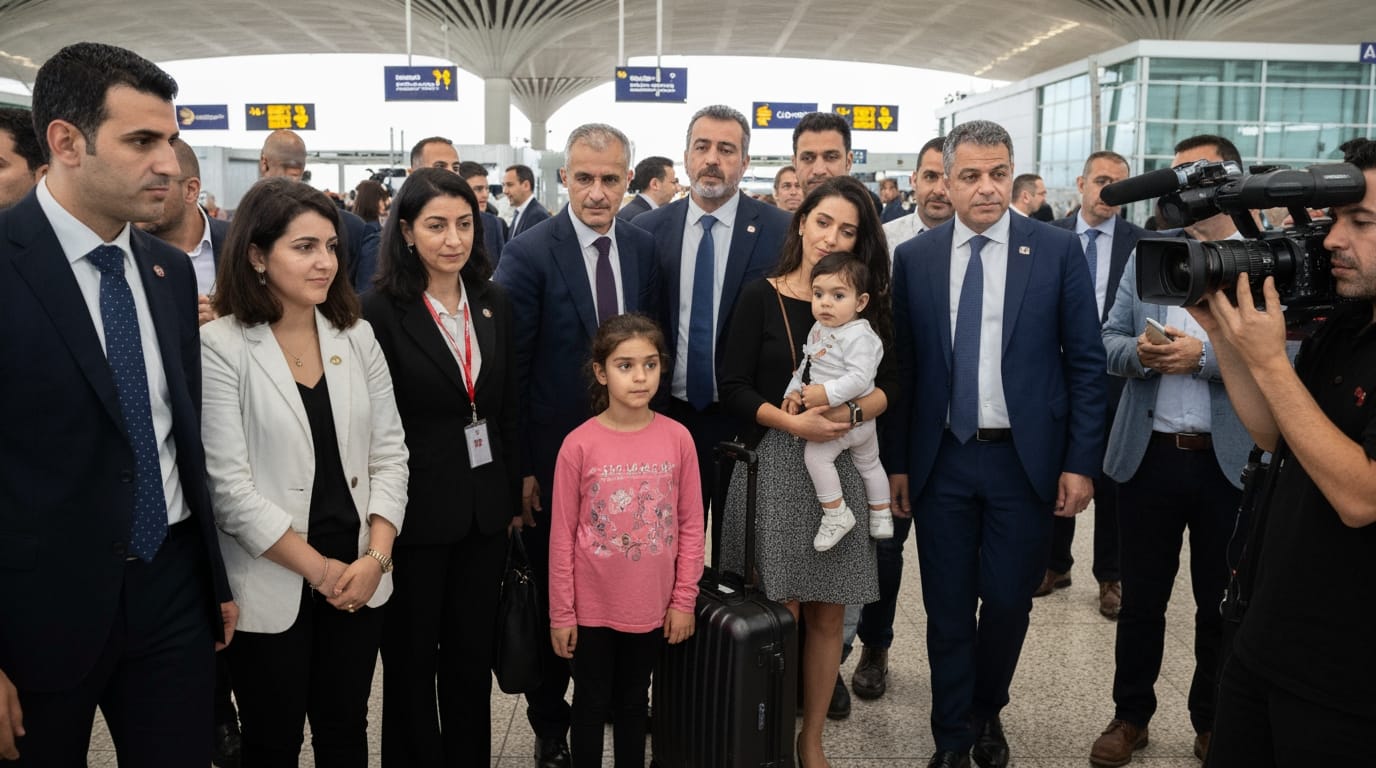
WASHINGTON, D.C. — In a significant policy shift, President Donald Trump announced Tuesday the immediate authorization for U.S. air carriers to resume direct flights to Lebanon, overturning a ban that has been in place for over 40 years. The historic directive, issued via Truth Social following a White House meeting with Lebanese President Joseph Aoun, marks a notable diplomatic gesture aimed at strengthening bilateral ties and fostering greater connectivity between the two nations.
The decision effectively ends a suspension initiated by the Reagan administration in 1985, a measure enacted amidst profound security concerns following a series of high-profile hijackings and acts of terrorism. While hailed by the Trump administration as a move to allow Americans to "easily visit this beautiful land" and a testament to President Aoun's efforts in "transforming his country," the announcement arrives against a backdrop of ongoing security advisories that caution against travel to Lebanon due to persistent risks.
A Decades-Long Hiatus Ends
The prohibition on direct commercial flights between the United States and Lebanon dates back to 1985, a tumultuous period for the Middle East and global aviation. The ban was a direct consequence of the hijacking of Trans World Airlines (TWA) Flight 847. In June 1985, the flight, en route from Athens to Rome, was seized by Hezbollah members shortly after takeoff, eventually diverting to Beirut International Airport. The harrowing 17-day ordeal resulted in a hostage crisis and the tragic murder of U.S. Navy diver Robert Stethem, prompting the U.S. Federal Aviation Administration (FAA) to suspend direct air service due to instability and security threats in the region. Lebanon's national carrier, Middle East Airlines, was also affected by the ban on direct flights to the U.S. For over four decades, this prohibition severed a critical direct link, forcing travelers to transit through third countries, adding significant time and complexity to journeys for business, tourism, and family visits. The long-standing ban became a symbol of strained relations and lingering security anxieties.
Diplomacy Paves the Way
President Trump's announcement on July 21, 2026, came shortly after a landmark meeting with Lebanese President Joseph Aoun at the White House. This visit marked the first time a Lebanese head of state had been received in the Oval Office since 2009, underscoring the diplomatic significance of the occasion. On his Truth Social platform, Trump stated, "After meeting with the President of Lebanon, Joseph Aoun, who has done a remarkable job working to transform his Country, I am hereby directing my Administration to allow all US airline carriers to fly directly to Lebanon so that Americans can easily visit this beautiful land." He also expressed hope that "other Countries will do the same."
During the meeting, Trump conveyed a message of support, remarking that Lebanon had been "a very badly treated place and country, and we're going to have it properly treated, and treated with respect that it deserves." While concrete details on how this "help" would manifest were not immediately provided, the lifting of the flight ban itself represents a tangible step toward bolstering ties. President Aoun's agenda for his Washington visit extended beyond air travel, reportedly focusing on securing sustained U.S. support for the Lebanese Armed Forces (LAF) in their efforts to disarm Hezbollah and advocating for Israel's withdrawal from southern Lebanon. Although Trump's flight announcement did not directly address these specific security and territorial concerns, the overall tone of the meeting suggested a renewed commitment to engagement with Beirut.
Economic Promise and Human Connection
The restoration of direct flights holds considerable promise for Lebanon's economy, which has grappled with significant challenges in recent years. Increased accessibility is expected to stimulate tourism, a vital sector for the Mediterranean nation, and boost business travel. Lebanese Prime Minister Nawaf Salam welcomed the decision, calling it a "major opening" and highlighting its potential to "enhance travel and connectivity between Lebanon and the United States, and to support the Lebanese economy." For Lebanon, the symbolic weight of reconnecting directly with the American aviation network signifies a crucial step toward international recognition of its stability.
Beyond economic figures, the move carries immense human interest implications, particularly for the large Lebanese-American diaspora in the United States. Estimates of this community range from 500,000 to over a million, with some figures suggesting it could be even larger. For generations, these individuals have maintained deep cultural, familial, and economic ties to their ancestral homeland. The new direct routes will drastically reduce travel times and alleviate the burden of multi-leg journeys, making visits to family and friends, as well as heritage tourism, significantly more feasible. This eased connection is expected to foster stronger bonds and facilitate remittances and investments, further benefiting Lebanon.
Navigating Persistent Security Concerns
Despite the enthusiastic reception in some quarters, the implementation of direct flights faces a critical hurdle: the stark reality of ongoing security concerns. Concurrently with President Trump's announcement, the U.S. State Department maintained its "Do Not Travel" advisory for Lebanon. The advisory explicitly warns against travel "for any reason due to the risk of crime, terrorism, unrest, kidnapping, landmines, and armed conflict." This enduring cautionary stance underscores the complex security landscape in Lebanon, where regional tensions, the influence of groups like Hezbollah, and the spillover effects of conflicts in neighboring areas remain significant factors.
Airlines considering direct routes will need to meticulously evaluate these risks. Operational considerations will include securing adequate insurance, implementing stringent security protocols at Beirut-Rafic Hariri International Airport, and navigating potentially volatile airspace. The timing of the flights' commencement remains uncertain, as carriers like American Airlines, while identified as a potential beneficiary, will need to assess not only the security environment but also the commercial viability and passenger demand for such routes. The stability of the broader Middle East, particularly in light of ongoing conflicts involving Iran and tensions with Israel, will undeniably influence airline decisions and passenger willingness to travel. The success of these flights hinges not just on political directives but on a sustained improvement in regional security and robust assurances for travelers.
A Path Forward
The decision to lift the decades-old ban on direct U.S. flights to Lebanon represents a significant diplomatic and symbolic overture. It signals a renewed commitment from the United States to engage with Lebanon and offers a tangible boost to the nation's struggling economy and its diaspora. However, the enthusiasm surrounding the announcement is tempered by the enduring security challenges in the region, as highlighted by continued U.S. State Department warnings. For these direct flights to become a sustainable reality, more than just a presidential directive will be required; a sustained effort towards regional stability, robust security measures, and a clear demonstration of passenger safety will be paramount in transforming this historic move into a lasting bridge between the two countries.


