German Coalition Grapples with Divisive MP Pay Hike Amid Economic Pressures
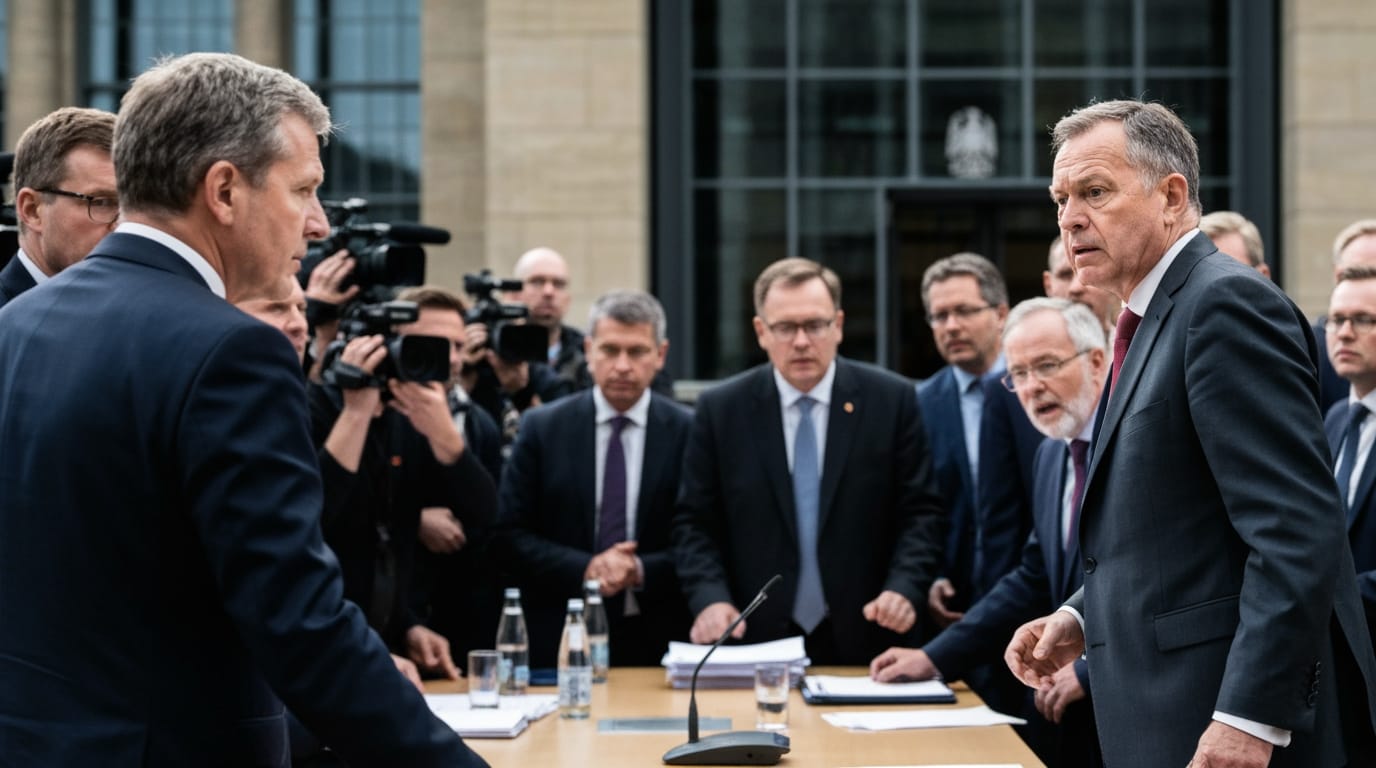
Berlin finds itself navigating a familiar, yet increasingly sensitive, political minefield as the governing coalition faces internal dissent over a proposed pay increase for Members of Parliament (MPs). The contentious debate, unfolding against a backdrop of persistent inflation and economic uncertainty, threatens to further strain the already delicate alliance and ignite public dissatisfaction. At the heart of the matter lies a fundamental disagreement between coalition partners regarding the appropriateness and timing of such a raise when many citizens continue to grapple with rising living costs.
The discussion surrounding parliamentary remuneration is a recurring feature of democratic governance, often pitting the perceived necessity of adequate compensation for public service against the optics of self-enrichment. In Germany, the current disagreement highlights deeper fault lines within the coalition, composed of the Social Democratic Party (SPD), the Greens, and the Free Democratic Party (FDP), each with distinct ideological approaches to fiscal policy and public spending. While proponents argue the raise is a necessary adjustment to account for inflation and the increasing demands of parliamentary work, critics within and outside the government caution against a move that could be seen as tone-deaf during challenging economic times, potentially eroding public trust in democratic institutions.
The Mechanics of Parliamentary Remuneration and the Current Proposal
The remuneration for Members of the Bundestag, Germany's federal parliament, is governed by specific legal frameworks designed to ensure transparency and independence. Historically, MP salaries, known as "Diäten," are set by law and are intended to cover living expenses, administrative costs, and the general professional expenses associated with their mandate. These salaries are typically adjusted periodically, often linked to broader economic indicators or public sector wage developments. The current debate centers on a proposal, or at least an ongoing discussion, to implement a significant increase, the exact percentage of which remains a point of contention and negotiation within the coalition. Proponents of the raise often cite the principle of automatic adjustment, which seeks to keep parliamentary salaries in line with average wage developments in the broader economy. This mechanism is intended to depoliticize the discussion around pay by making adjustments less discretionary and more formulaic. However, even with such a mechanism, the timing and extent of an increase can still become a political flashpoint, especially when the economic climate is unfavorable for the general populace.
Furthermore, the responsibilities and workload of German MPs are considerable. Beyond legislative duties in Berlin, they maintain constituency offices, engage in extensive travel, and represent their constituents' interests at various levels. Advocates for the pay rise often emphasize that the remuneration must be competitive enough to attract and retain highly qualified individuals from diverse professional backgrounds, ensuring the parliament effectively reflects society and performs its functions without financial disincentives. They argue that underpaying MPs could lead to a parliament dominated by individuals with independent wealth or those susceptible to external influences, undermining the democratic process. Maintaining a competitive salary, therefore, is framed as an investment in the quality and integrity of the legislative body itself, crucial for a functioning democracy.
Public Perception and Economic Realities
The backdrop against which this debate unfolds is Germany's current economic climate, characterized by elevated inflation rates that have squeezed household budgets across the country. While inflation has shown signs of moderation, its cumulative effect over recent years has led to a noticeable decline in purchasing power for many German citizens. Energy costs, food prices, and housing expenses have all seen substantial increases, prompting calls for wage restraint in some sectors and significant pay raises in others, often leading to protracted industrial disputes. In this environment, any discussion of increased parliamentary salaries is met with intense public scrutiny and often outright disapproval.
Opinion polls consistently show that the public views such increases with skepticism, particularly when they perceive that politicians are not sharing the same economic burdens as ordinary citizens. The notion of public service often carries an expectation of personal sacrifice or at least a high degree of empathy with the electorate's financial struggles. Critics argue that a substantial pay hike for MPs would send the wrong message, fueling cynicism about the political class and widening the gap between elected representatives and their constituents. This sentiment is amplified by historical instances where parliamentary salary adjustments have been perceived as self-serving, even if legally justified. The challenge for the coalition, therefore, is not merely to justify the raise on technical or functional grounds, but to navigate the powerful currents of public opinion and maintain a semblance of solidarity with the broader population.
Political Implications and Coalition Stability
The disagreement over MP pay is more than just a fiscal debate; it is a test of cohesion for the ruling "Ampel" (traffic light) coalition. The three parties, each with their own voter base and policy priorities, have often found common ground challenging to achieve on contentious issues. The SPD, traditionally aligned with labor interests, might be sensitive to public perception of wealth disparity. The Greens, often advocating for social justice, could face pressure to prioritize the needs of vulnerable populations. The FDP, championing fiscal responsibility, might argue for an efficient and appropriately compensated civil service, but also has to consider the broader economic context. This particular issue, touching upon both financial prudence and public trust, has the potential to expose and exacerbate existing tensions within the alliance.
A failure to reach a consensual and publicly acceptable resolution could undermine the coalition's authority and its ability to govern effectively on other critical issues. Dissension on such a visible matter can create an impression of disunity, distracting from the government's legislative agenda and potentially eroding its mandate. Furthermore, political opponents, both from the established opposition and the fringes, are quick to capitalize on such controversies, using them to highlight perceived disconnects between the government and the electorate. The long-term implications could include decreased voter turnout, increased support for populist movements, and a general decline in confidence in democratic processes if citizens feel their representatives are out of touch with their everyday struggles.
Navigating the Ethical and Practical Dilemma
The debate over MP pay encapsulates a perennial dilemma in democratic governance: how to ensure fair and adequate compensation for legislative work without alienating the electorate or creating an impression of privilege. On one hand, maintaining a parliament composed of diverse and competent individuals requires remuneration that reflects the demanding nature of the role and prevents financial barriers to public service. On the other, the principle of public service itself implies a degree of responsibility to the citizens who bear the financial burden of government. This delicate balance requires thoughtful consideration of economic realities, public sentiment, and the long-term health of democratic institutions.
Ultimately, the German coalition faces the complex task of reconciling these competing demands. Any decision on MP remuneration will require a careful calibration of legal entitlements, economic necessities, and political sensitivities. The path forward will likely involve robust internal discussions, potentially exploring alternative models for salary adjustments or coupling any increases with tangible gestures of solidarity with the broader public. The outcome of this debate will not only determine the financial future of Germany's parliamentarians but also offer a significant indicator of the current government's ability to navigate internal divisions and maintain public confidence amidst ongoing economic challenges.


