German Components Fuel Russian Drones, Exposing Sanctions Gaps in Ukraine War
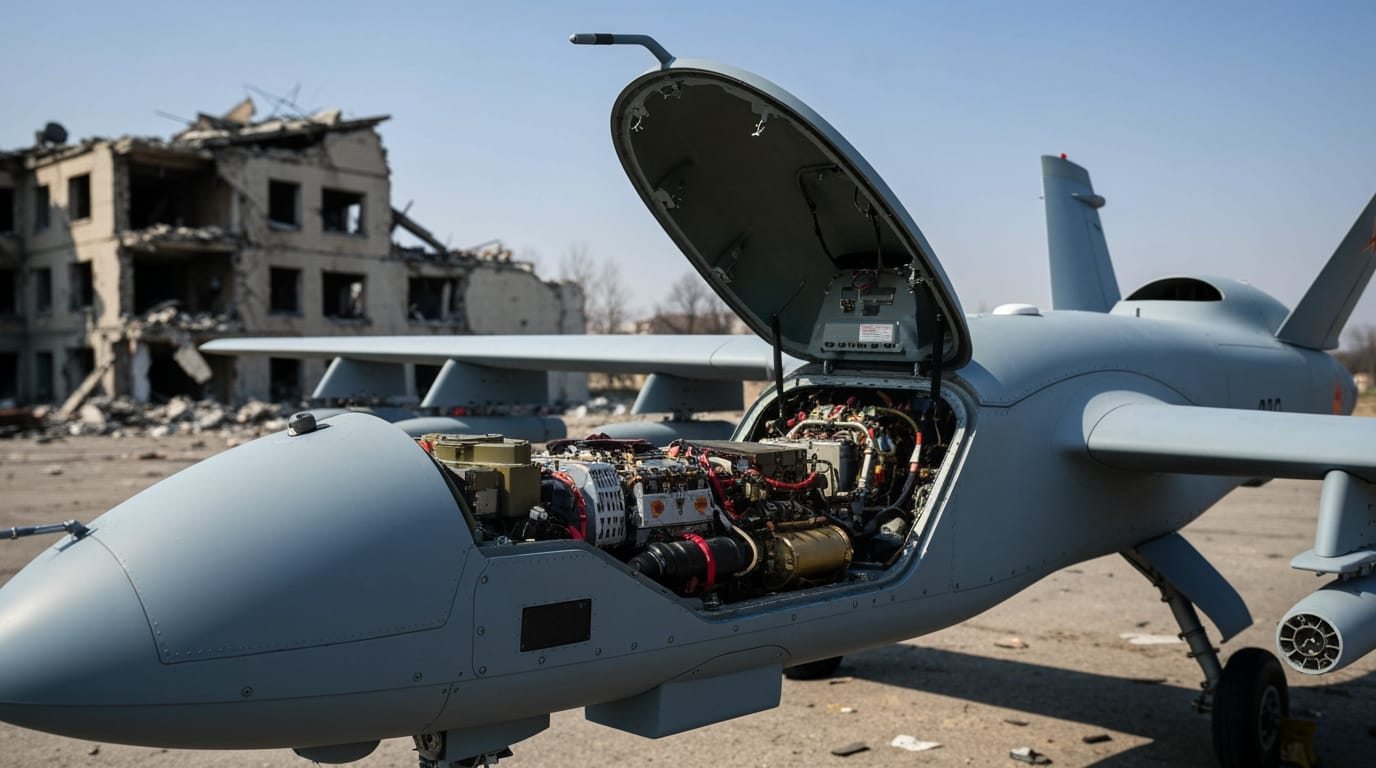
Despite extensive international sanctions designed to cripple Moscow's war machine, German-manufactured components continue to be found in Russian drones deployed against Ukraine, raising serious questions about the efficacy of global export controls and the sophisticated methods employed to circumvent them. Investigations by Ukrainian military intelligence and independent reports have consistently identified a range of critical parts, from advanced semiconductors to pumps and switches, originating from German companies within downed Russian unmanned aerial vehicles (UAVs). This persistent flow of vital technology underscores a complex and evolving challenge for Western allies striving to isolate Russia economically and militarily.
The Unsettling Discovery: German Tech on the Battlefield
The presence of German components in Russian military hardware is not a new phenomenon, but its scale and persistence remain a stark concern. Ukrainian Defense Intelligence (HUR/DIU) has meticulously documented 137 German-made components across various Russian weapons systems, with more than half specifically identified in drones, missiles, radar systems, military vehicles, and helicopters. The issue gained renewed prominence in January 2026, following the analysis of a new Russian jet-powered drone, the Geran-5, which revealed further evidence of German parts.
Among the most frequently identified components are transistors, with approximately 50 different types documented. Bavarian semiconductor giant Infineon Technologies accounts for a significant portion, with 58 of the 137 recorded German components attributed to the company, predominantly transistors used in UAVs. Beyond microelectronics, other German firms like Pierburg, a subsidiary of Rheinmetall, have had their pumps discovered in Geran-2 drones, while Bosch components, including push-button switches and fuel pumps, have also been identified in various UAV models. Ukrainian intelligence estimates that each Geran-series drone contains between eight and twelve German-made transistors in its onboard control system. With Russia reportedly planning to produce 40,000 Geran-2 drones in 2025, the annual demand could translate to nearly half a million German transistors, indicating a systematic and large-scale reliance. The original markings on these components are often left intact, further indicating their direct origin.
The Intricate Web of Circumvention
The primary challenge in stemming this flow lies in the sophisticated and often illicit networks Russia employs to bypass sanctions. Components rarely travel directly from German manufacturers to Russian military factories. Instead, they are routed through a labyrinth of intermediaries in third countries such as Turkey, the United Arab Emirates, China, and various Central Asian nations. These “gray logistics chains” often involve shell companies, some reportedly established directly in Germany, designed to obscure the ultimate destination of the goods.
A key factor facilitating this circumvention is the dual-use nature of many components. Transistors, for instance, are ubiquitous in civilian electronics and household appliances, making their procurement in large quantities ostensibly for non-military purposes relatively easy. This allows Russia to leverage existing commercial supply chains, complicating efforts to distinguish legitimate trade from illicit military procurement. The problem is not entirely new; a German-made engine from 3W Modellmotoren was found in a Russian reconnaissance drone in Donbas as far back as 2017, with the company stating it had sold the part to a Czech partner years earlier, unaware of its eventual military use. More recently, two German companies were reported to have supplied epoxy resin, a material critical for Shahed drone production, to a Russian firm closely linked to the military-industrial complex, even after the full-scale invasion. This material was allegedly routed through an entity that traded almost exclusively with Russia. Beyond drone parts, German industrial machinery, particularly computer numerically controlled (CNC) machines crucial for manufacturing precision metal parts and ammunition, has also reached Russia via third countries like Turkey, with some experts estimating 80% of Russia's CNC machines are used in military production.
Germany's Dilemma and International Response
The revelations place Germany in a difficult position, as it remains one of Ukraine's staunchest supporters while its products inadvertently bolster Russia's military capabilities. German manufacturers implicated in these reports typically assert compliance with all sanctions regulations. Companies like Infineon, Rheinmetall (parent of Pierburg), and Würth Elektronik have stated they do not trade with Russia and adhere to re-export bans included in contracts with international partners. Some suggest that discovered parts could be fakes, remnants from pre-sanction stock, or products acquired through parallel imports from countries not enforcing sanctions.
However, German authorities are taking action. In March 2024, German prosecutors filed charges against two individuals for illegally delivering electronic parts for drones, including components for the Orlan-10, to Russia, accusing them of sanctions circumvention. A 59-year-old man with dual German-Russian citizenship was sentenced to nearly seven years in prison in July 2024 for selling approximately 120,000 components to Russia, which were routed through Turkey, China, and the UAE after sanctions tightened. These cases highlight the active efforts to prosecute those facilitating illegal trade. Domestically, Germany is also enhancing its counter-drone capabilities, including giving its military authority to intercept and neutralize drones over German territory, a reflection of increased security concerns.
At the broader European Union level, efforts are underway to strengthen sanctions enforcement. The EU has introduced measures to prevent circumvention, including an obligation for EU economic operators to contractually prohibit their third-country business partners from re-exporting certain goods to Russia or for use in Russia. This "no Russia clause" aims to tighten control over dual-use items. Despite these initiatives, reports indicate that Germany has, at times, delayed the passage of new EU sanctions packages, reportedly due to internal disagreements over the scope and enforcement of such clauses, particularly concerning their application to subsidiaries in third countries.
The Sanctions Battleground: Challenges and Future Outlook
The continuous discovery of Western, and specifically German, components in Russian drones highlights the inherent difficulties in enforcing comprehensive sanctions against a determined adversary. Russia has demonstrated a clear ability to adapt its procurement strategies, including reducing its reliance on U.S.-made components in favor of Chinese alternatives, while maintaining a steady supply of readily available and reliable German transistors. Ukraine's intelligence services continue to gather data and advocate for stronger, more coordinated international action to plug these loopholes.
Effectively combating sanctions circumvention requires a multi-faceted approach. This includes enhanced intelligence sharing among allied nations, stricter export controls, robust due diligence by companies, and aggressive prosecution of individuals and entities involved in illicit trade. The challenge extends beyond simply banning exports; it necessitates tracking supply chains, identifying shell companies, and compelling third-party nations to enforce re-export prohibitions. The ongoing presence of these components serves as a powerful reminder that while sanctions impose significant costs on Russia, their full impact depends on a relentless commitment to enforcement and adaptation by the international community. The battle to choke off Russia's military-industrial complex is far from over, demanding continuous vigilance and increased cooperation to truly stem the flow of critical technology.