German Economy Grinds to a Halt in 2025, Government Blames Trump Tariffs
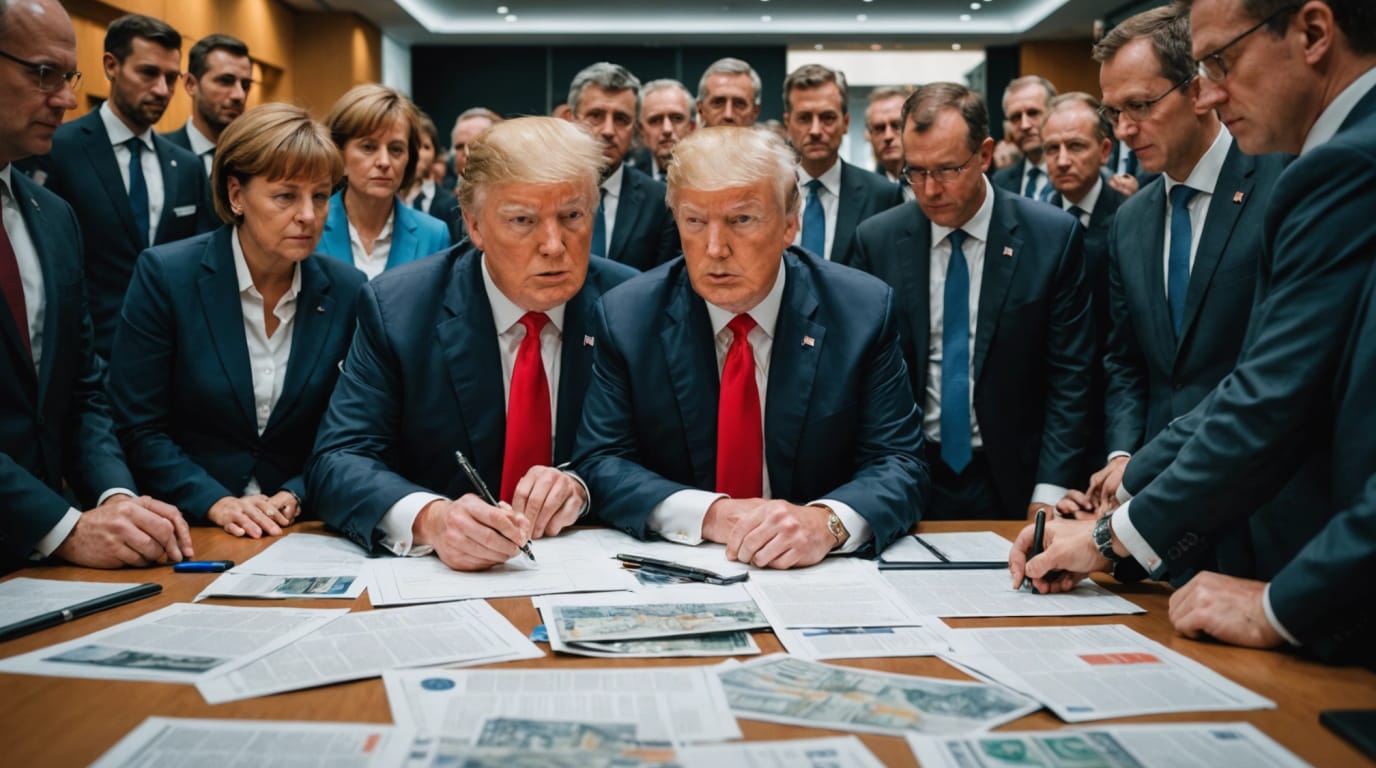
BERLIN – The German government sharply downgraded its economic forecast for 2025, predicting zero growth for Europe's largest economy. Outgoing Economy Minister Robert Habeck attributed the bleak outlook primarily to the trade policies of U.S. President Donald Trump, specifically citing the impact of tariffs and trade threats. The announcement comes after months of political uncertainty in Germany and raises concerns about the country's economic future.
Revised Forecast and Rationale
The German government's revised forecast marks a significant downturn from earlier projections. As recently as late January, officials had anticipated a modest growth of 0.3% for 2025. The forecast for 2026 was also adjusted downward, from 1.1% to 1%. Habeck stated that "Donald Trump's trade policy and the effects of the trade policy on Germany" were the primary drivers behind the revised outlook. He emphasized Germany's reliance on open and functioning global markets, noting that the U.S. trade policies are hitting the German economy harder than other nations.
Impact of Trump's Trade Policies
Trump's administration has implemented a series of tariffs on goods imported into the United States, including those from the European Union. These tariffs, coupled with threats of further trade restrictions, have created uncertainty and disrupted established trade relationships. The United States currently levies a 10% tariff on European Union exports. The ifo Institute estimates that reciprocal tariffs could reduce German exports to the United States by 2.4%. While seemingly small, the tariffs add further pressure to an already struggling economy.
The tariffs impact Germany in three ways: Germany exports less to the US, Germany exports less to China due to China's lower competitiveness, and countries like China will switch to other export markets, increasing pressure on German companies.
Germany's Economic Struggles
Germany has faced economic headwinds for several years. The economy contracted in both 2023 and 2024, with GDP shrinking by 0.3% and 0.2% respectively. Several factors contributed to this decline, including increased competition from Chinese companies, high energy prices following Russia's invasion of Ukraine, and structural weaknesses such as labor shortages and bureaucratic hurdles. The German economy has not seen significant economic growth in five years. For years, the country expanded exports and dominated world trade in engineered products like industrial machinery and luxury cars.
Government Response and Future Outlook
The German government is taking steps to address the economic challenges. Parliament is scheduled to meet on May 6 to elect Friedrich Merz as the country's next leader. Merz's new government seeks to unleash a bumper fiscal package and potentially reform Germany's approach to public spending. Plans are underway to increase defense spending by loosening strict rules on incurring debt and to establish a large infrastructure fund to stimulate the economy. The government has reformed its stringent debt brake (Schuldenbremse) and has decided to increase public spending, particularly in defence, infrastructure and climate projects.
Despite these efforts, the near-term outlook remains uncertain. Leading economic research institutes forecast a GDP increase of just 0.1% for 2025, followed by 1.3% in 2026. The US tariffs on aluminum, steel and vehicle imports are likely to reduce GDP growth this year and next year by 0.1 percentage points each. Additional tariffs announced in April 2025 could double the negative effects.
Trade Relationship Between Germany and the U.S.
Despite the current trade tensions, the United States remains a crucial economic partner for Germany. In 2024, the U.S. became Germany's most important trading partner, surpassing China for the first time since 2015. Bilateral foreign trade between the two countries totaled 252.8 billion euros in 2024, with the U.S. being the primary destination for German exports. In January 2025, Germany exported €12B to United States, marking a 1.02% increase from January 2024.
Germany and the United States are bound by a close friendship based on historical ties, shared experiences, values and interests. The transatlantic security community within the framework of NATO and the approximately 35,200 US military personnel permanently stationed in Germany help to ensure the security of Germany and of Europe.
The German economy faces a challenging year ahead, with zero growth projected for 2025. While the government is implementing measures to stimulate the economy and address structural weaknesses, the impact of U.S. trade policies remains a significant concern. The future of the German economy hinges on navigating these challenges and fostering strong trade relationships in a changing global landscape.


