German Election Results Marred by Seat Losses Despite Victories
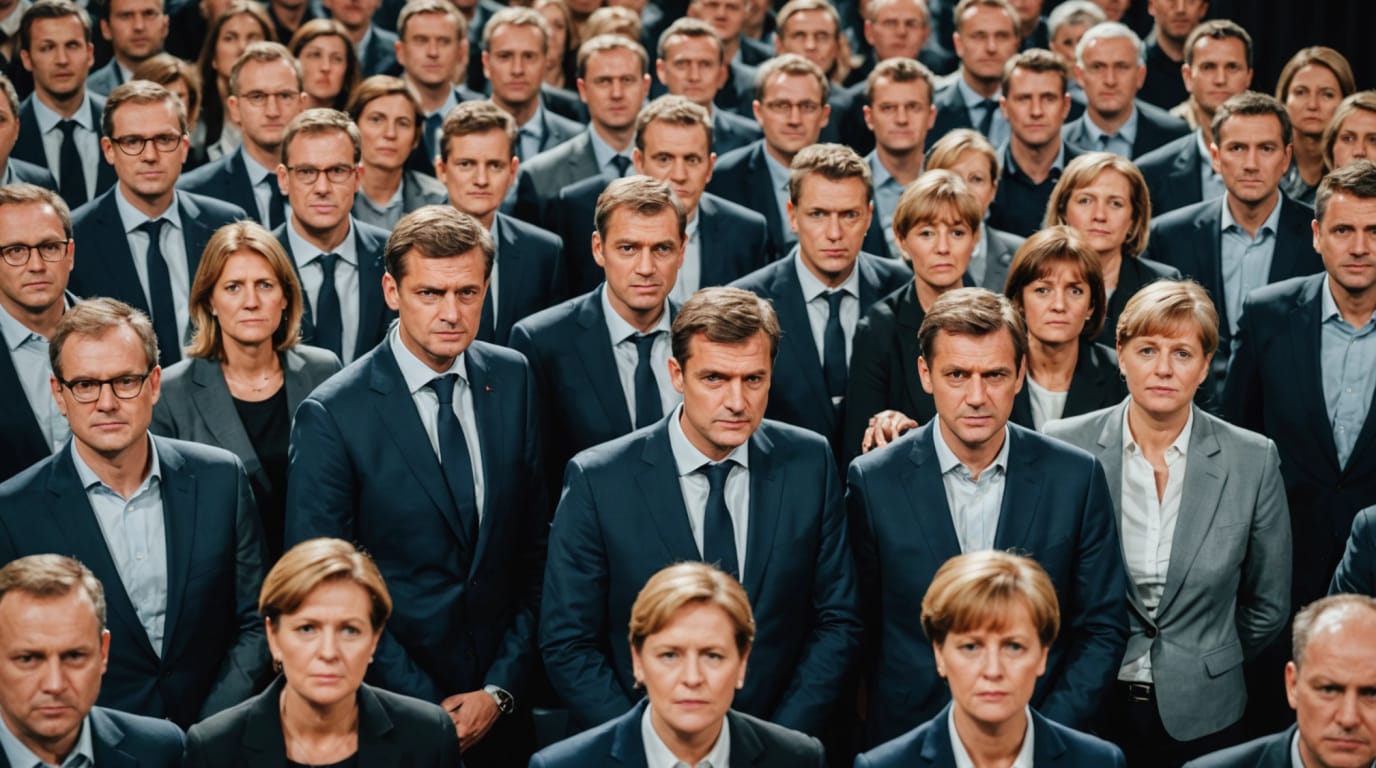
BERLIN — Germany's recent federal election has produced a complex and somewhat paradoxical outcome: while mainstream parties like the Christian Democratic Union (CDU) and Christian Social Union (CSU) secured a victory, and the far-right Alternative for Germany (AfD) experienced a surge in support, several winning parties are grappling with the sting of lost seats in the Bundestag, the German parliament. This unexpected twist has injected a dose of anger and frustration into the post-election landscape, raising questions about the stability and direction of the next German government.
The CDU/CSU emerged as the leading force, garnering 28.6 percent of the vote and a projected 208 seats in the Bundestag. This result positions CDU leader Friedrich Merz as the likely successor to outgoing Chancellor Olaf Scholz. However, even as Merz prepares to navigate the complexities of forming a coalition government, the CDU/CSU is not immune to the widespread discontent over seat losses.
The Social Democratic Party (SPD), formerly the leading party in the now-dissolved coalition, suffered a significant setback, plummeting to 16.4 percent of the vote and a projected 120 seats. This nearly 10-point drop from their 2021 first-place finish has been described as a "bitter" defeat by Scholz, who acknowledged his responsibility for the poor showing. The SPD's diminished presence in the Bundestag underscores the challenges facing the party as it seeks to rebuild its base and regain its political footing.
The Green party also experienced a decline in support, securing 11.6 percent of the vote and 85 seats, a 3 percent decrease from the previous election. This outcome has prompted Robert Habeck, the party's chancellor candidate, to step down from a leading role within the party. The Greens' losses reflect a broader trend of fragmentation within the German political landscape, as voters increasingly gravitate towards parties on the fringes of the political spectrum.
The Free Democratic Party (FDP), which triggered the snap election by withdrawing from the previous coalition over a budget dispute, suffered the most devastating blow. The party failed to reach the 5 percent threshold required to secure seats in the Bundestag, garnering only 4.3 percent of the vote. As a result, the FDP is projected to lose all 91 seats it held since 2021, marking its worst historical result and its first absence from the Bundestag since 2013. This outcome represents a stunning reversal of fortune for the FDP, which had hoped to capitalize on its role as a fiscal watchdog.
While mainstream parties grappled with losses, the far-right AfD celebrated a surge in support, securing 20.8 percent of the vote and a projected 152 seats. This result solidifies the AfD's position as the second-largest party in the Bundestag, raising concerns about the normalization of far-right politics in Germany. The AfD's success reflects a growing sense of unease among some segments of the population regarding immigration, national identity, and the perceived failures of mainstream political parties.
The Left party managed to exceed the 5 percent threshold, securing 8.8 percent of the vote and 64 seats. However, the newly formed Sahra Wagenknecht Alliance (BSW), a populist splinter from the Left, narrowly failed to enter the Bundestag, garnering 4.97 percent of the vote. The BSW's near-miss underscores the fragmentation of the left-wing political landscape in Germany, as voters grapple with competing visions for social and economic justice.
Despite the widespread frustration over seat losses, the election also produced some notable success stories. The South Schleswig Voters' Association (SSW), a minority party representing the Danish minority in Schleswig-Holstein, retained its single seat in the Bundestag, as it is exempt from the 5 percent threshold. This outcome highlights the importance of protecting the rights of minority groups within the German political system.
The high voter turnout of 82.5 percent, the highest since German reunification, underscores the significance of this election for the German people. However, the complex and often contradictory results have left many voters feeling uncertain about the future. As the winning parties navigate the challenges of forming a coalition government, they will need to address the underlying concerns that fueled the surge in support for the AfD and the widespread discontent over seat losses.
The German election results reflect a broader trend of political fragmentation and polarization in Europe. As mainstream parties struggle to maintain their dominance, far-right and populist movements are gaining ground, fueled by anxieties over immigration, economic inequality, and cultural change. The challenge for Germany's next government will be to bridge these divides and forge a path towards greater social cohesion and economic prosperity. The coming months will be critical in determining whether Germany can overcome these challenges and reaffirm its commitment to democratic values.


