German Foreign Minister Stands with Ukraine Amid Escalating Russian Attacks
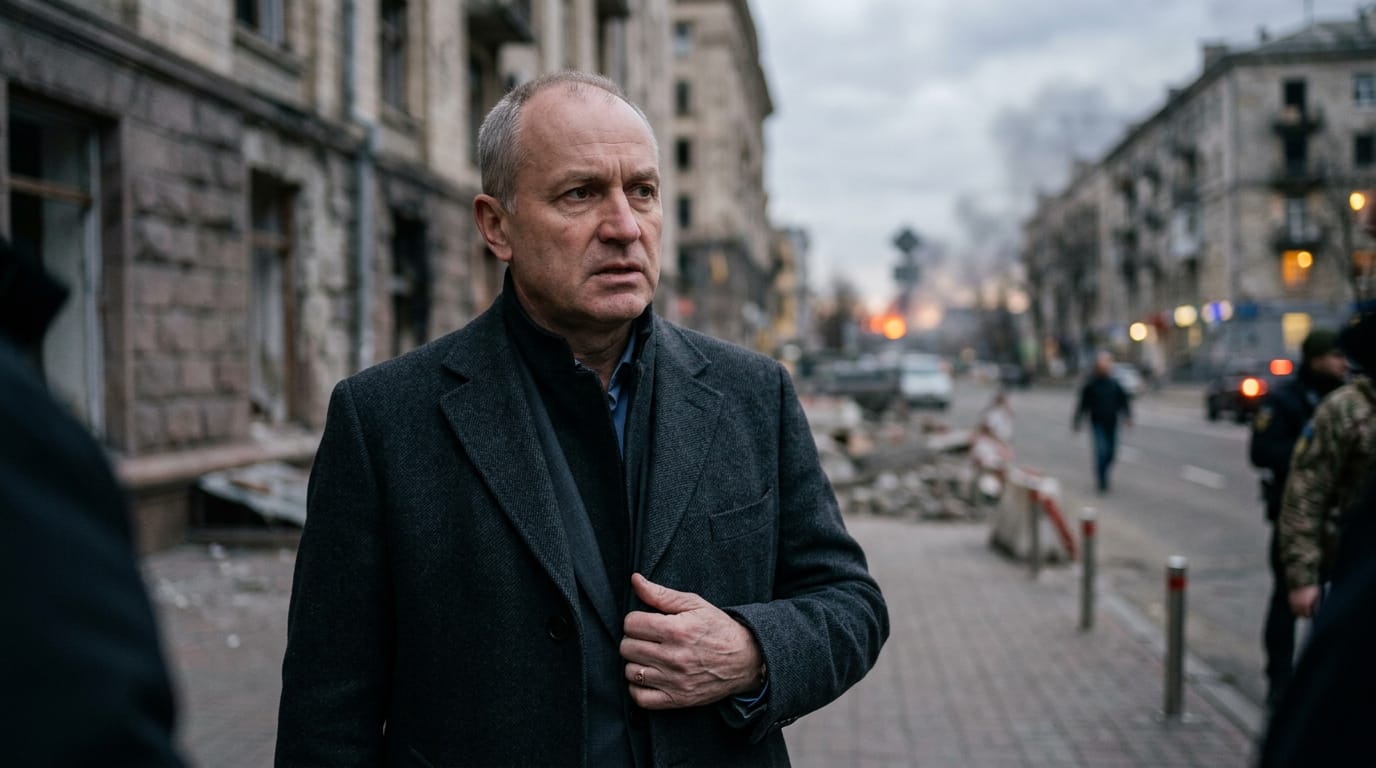
Kyiv, Ukraine – German Foreign Minister Johann Wadephul arrived in Kyiv Saturday for an unannounced solidarity visit, reaffirming Germany's steadfast support for Ukraine as Russia significantly escalates its missile and drone assaults across the nation. The visit, occurring just days before Ukraine marks its 35th anniversary of independence, underscores Berlin's commitment to its Eastern European partner amidst what Wadephul described as the deadliest period for Ukrainian civilians in over four years.
The German foreign minister's arrival comes as Ukraine grapples with a brutal resurgence of Russian aggression, particularly targeting its civilian population and critical infrastructure. Wadephul's discussions with Ukrainian leadership are expected to center on immediate and long-term assistance, with a critical focus on preparing Ukraine's energy infrastructure for the coming winter months.
A Visit Under Fire: Germany's Unwavering Resolve
Minister Wadephul arrived in the Ukrainian capital by special train on the morning of August 22, directly condemning the intensified Russian attacks as "indiscriminate killings of civilians" and a deliberate campaign to dismantle Ukraine's energy infrastructure. He emphasized that while many in Europe enjoy holidays, Ukraine endures daily suffering from relentless Russian strikes aimed primarily at its civilian population. Wadephul stated that he deliberately chose to visit Kyiv ahead of Ukraine's 35th Independence Day on August 24 to visibly demonstrate Germany's unwavering support.
This marks Wadephul's fourth visit to Ukraine since assuming office 16 months prior, a testament to the deepening ties between Berlin and Kyiv. The visit also serves as a precursor to broader international gatherings expected in Kyiv for Independence Day, where around 10 foreign leaders are anticipated to discuss ongoing support for Ukraine. The Coalition of the Willing, a group coordinating international aid, is also scheduled to meet, co-chaired by German Chancellor Friedrich Merz, British Prime Minister Andy Burnham, and French President Emmanuel Macron.
Russia Intensifies Aerial Campaign Against Civilian Targets
The timing of Wadephul's visit highlights the severe escalation in Russian hostilities. Just days before his arrival, on the night of August 19-20, Russian forces launched a massive combined drone and missile strike against Ukraine, primarily impacting Kyiv and its surrounding region. These attacks resulted in widespread destruction and significant casualties, with 16 people killed and 38 wounded in Kyiv alone. Residential buildings, a children's hospital, a school, industrial facilities, and fuel infrastructure were among the targets hit, demonstrating a clear focus on civilian and critical civilian infrastructure.
Furthermore, the preceding day, August 21, witnessed a deadly attack on a shopping center in Kryvyi Rih. A Russian ballistic strike also impacted a railway facility in Kyiv's Darnytsia district overnight on August 21-22, claiming the life of a railway worker. Reports indicate that Russia is increasingly relying on ballistic missiles, glide bombs, and faster drones to bypass Ukrainian air defenses. Ukrainian officials have also expressed concerns about depleted stocks of air defense interceptors, making the country more vulnerable to these escalating aerial assaults. Commander of Ukraine's Unmanned Systems Forces, Robert “Madyar” Brovdi, warned on August 20 that Russia intends to step up attacks on civilians, urging Ukrainians to remain vigilant against intensified Russian terror tactics and psychological warfare. Wadephul underscored this severity, noting that the summer months of July and August have been the deadliest for Ukraine's civilian population in over four years, with an unprecedented number of Russian missiles launched.
Strategic Partnership and Winter Preparedness
A central theme of Minister Wadephul's agenda in Kyiv is bolstering Ukraine's resilience, particularly against Russia's persistent targeting of energy infrastructure. He emphasized the urgent need to prepare Ukrainian infrastructure for the upcoming heating season, drawing lessons from last winter's attacks. Germany, alongside France, has actively petitioned other nations for assistance to protect Ukraine's critical infrastructure, including the provision of generators, spare parts, and other essential energy technologies.
Germany has significantly amplified its support for Ukraine, elevating bilateral relations to a strategic partnership in April 2026. This partnership recognizes Ukraine's crucial role in European security and aims to strengthen political, security, and economic ties. Germany has emerged as Ukraine's most important bilateral partner in 2026, providing an unprecedented level of political, diplomatic, military, economic, financial, and humanitarian aid. This extensive support includes advanced air defense systems, winter relief programs, energy assistance, humanitarian aid, and mine clearance operations. Furthermore, Germany is actively supporting Ukraine's accession process to the European Union.
Geopolitical Implications and a Call for Unity
The continued diplomatic engagement and substantial aid from Germany highlight the broader European commitment to Ukraine's sovereignty and territorial integrity. Wadephul stressed the importance of a common European position against Russia's aggression, reiterating that Europe must demonstrate Russia will not achieve its objectives in Ukraine. The German foreign minister expressed hope that Russia could eventually be brought to the negotiating table, despite diplomatic efforts having stalled in recent months.
The conflict continues to reshape regional security dynamics. Reports indicate that North Korea has deployed drone operators to Russia's Kursk Oblast to support the war effort, providing valuable tactical and technological skills. Meanwhile, Ukrainian forces are seeking authorization to use Starlink-equipped drones to strike Russian ballistic missile launchers within Russia, a move that would enhance their counter-strike capabilities without requiring additional interceptors from allies. Germany's firm stance and continued material support are seen as integral to Ukraine's ability to resist and eventually achieve a comprehensive, just, and lasting peace, underwritten by robust security guarantees. The solidarity visit reinforces the message that despite the ongoing challenges and sacrifices, Ukraine does not stand alone in its struggle.