Iran Issues Stern Warning: Allies of US 'Economic War' to Be Deemed Enemies Amid Escalating Tensions
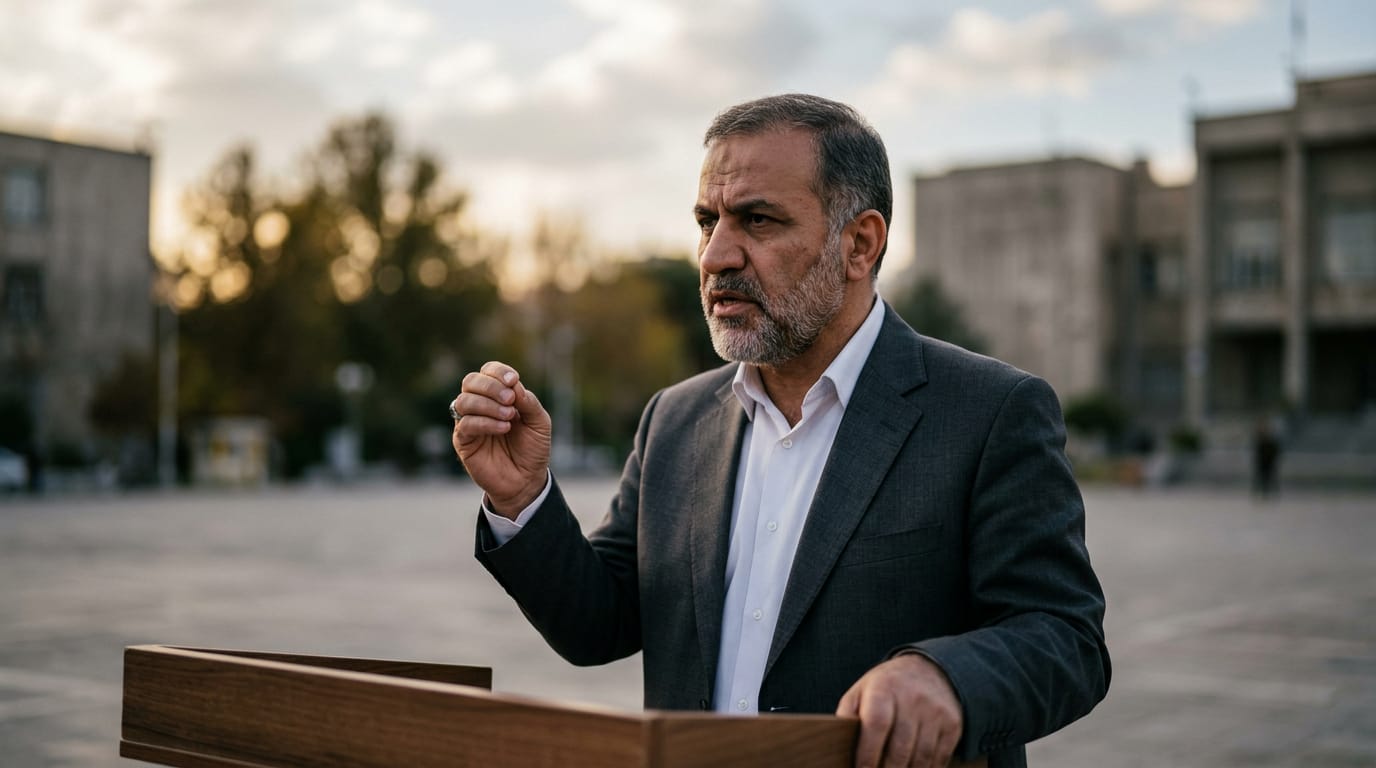
Tehran, Iran – Iran has issued a stark warning to nations globally, asserting that any country participating in the United States' intensifying "economic war" against the Islamic Republic will be considered an adversary. The declaration comes as the US prepares to announce a new wave of stringent sanctions, further straining Iran's already beleaguered economy and ratcheting up geopolitical tensions in a region still reeling from months of armed conflict.
The cautionary message, delivered by high-ranking Iranian officials, underscores the perilous trajectory of the ongoing standoff between Tehran and Washington. It explicitly threatens punitive measures against the interests of any state that aligns with the American economic offensive, emphasizing the profound and potentially destabilizing implications for international trade and regional stability.
Iran's Ultimatum: A Line in the Sand
Mohsen Rezai, head of Iran's Supreme National Security Council, unequivocally stated on state television Saturday that "Any country participating in the imposition of economic restrictions against us is considered an enemy." This declaration serves as a direct challenge to the United States' efforts to isolate Iran economically, particularly as US Treasury Secretary Scott Bessent prepares to unveil what he has described as "the toughest sanctions in history" on Monday.
Iran's Foreign Ministry spokesman, Esmaeil Baghaei, echoed this sentiment, condemning the impending US sanctions as an "assertion of extraterritorial sovereignty over every independent member state of the United Nations." Baghaei contended that such "secondary sanctions" lack foundation in international law, arguing against any nation's right to compel foreign entities to cease lawful trade with a third country. This highlights Tehran's view of the US actions as an infringement on national sovereignty and international legal norms.
Six Months of Conflict and Economic Siege
The current warnings are set against a backdrop of nearly six months of heightened hostilities between Iran, the United States, and Israel. The period since US and Israeli airstrikes against Iran commenced on February 28, 2026, has seen military engagements give way to a tense, non-firing stalemate, yet with no clear path toward peace negotiations.
The economic pressure on Iran has intensified dramatically during this period. Oil shipments through the critical Strait of Hormuz are reported to be at a virtual standstill, with Tehran having threatened to target any unauthorized oil tankers attempting to transit the vital waterway. Mohsen Rezai explicitly warned that if neighboring countries cooperated with the US economic campaign, "not a single drop of oil will leave the Persian Gulf or the Strait of Hormuz." He further asserted that the Strait of Hormuz remains closed despite US claims and would not reopen until Washington "corrects its behavior," claiming Iran's management rights over the strait due to its extensive coastline.
US Treasury Secretary Bessent has been actively urging cooperation from countries like China, which purchased over 80 percent of Iran's shipped oil in 2025, according to analytics firm Kpler. This underlines the strategic importance of China in Washington's pressure campaign, even as Beijing has consistently advocated for diplomatic solutions to the conflict.
A History of Sanctions and Economic Strain
Sanctions have been a consistent feature of US policy towards Iran for decades, dating back to the 1979 hostage crisis, with measures progressively expanding over time in response to various Iranian actions, including its nuclear program, alleged support for terrorism, and military activities. The US has often imposed unilateral or "secondary" sanctions, which target non-US entities engaging in trade with Iran, leveraging access to US markets as a tool.
The withdrawal of the United States from the Joint Comprehensive Plan of Action (JCPOA) in 2018 and the subsequent re-imposition and expansion of American sanctions significantly escalated economic pressure. This was followed by the triggering of the JCPOA's "snapback" mechanism by France, Germany, and the UK in August 2025, leading to the reimposition of UN sanctions in September 2025. By March 2026, over 1,200 US sanctions were actively burdening Iran's economy.
These measures have had a profound impact on Iran's economy, leading to currency depreciation, high inflation, and declining oil revenues. They have also complicated the import of humanitarian goods, despite formal exemptions, raising concerns about the human impact of the sanctions. The Iranian economy has grappled with these challenges, compounded by internal mismanagement.
Geopolitical Ramifications and Shifting Alliances
The heightened rhetoric from Tehran and the impending US sanctions pose significant challenges for countries navigating their relationships with both powers. The United Arab Emirates (UAE), a key regional player and trading partner for Iran, already announced in August 2026 the suspension of all trade and financial transactions with Iran until further notice. This move demonstrates the tangible impact of the US pressure campaign on regional economies and highlights the difficult choices faced by nations caught between the competing demands of Washington and Tehran.
China's stance remains crucial, given its substantial energy purchases from Iran. While Beijing has called for diplomacy, it remains to be seen how it will respond to the specific directives from Treasury Secretary Bessent and Iran's reciprocal threats. The risk of Iran striking US economic interests or oil companies near its borders, as Mohsen Rezai threatened, further adds to the volatile geopolitical landscape.
Conclusion
Iran's declaration to consider any nation aiding the US "economic war" as an enemy marks a dangerous escalation in a prolonged and complex standoff. With new US sanctions imminent and the Strait of Hormuz remaining a flashpoint, the international community faces increasing pressure to choose sides or navigate an increasingly precarious middle ground. The warnings from Tehran, coupled with the existing military tensions and profound economic challenges, paint a picture of a region on edge, where the economic battlefield could easily ignite broader confrontations and redraw geopolitical alliances.