German Industry's Enduring Tug-of-War: The Irresistible Pull of China Amidst Calls for 'De-risking'
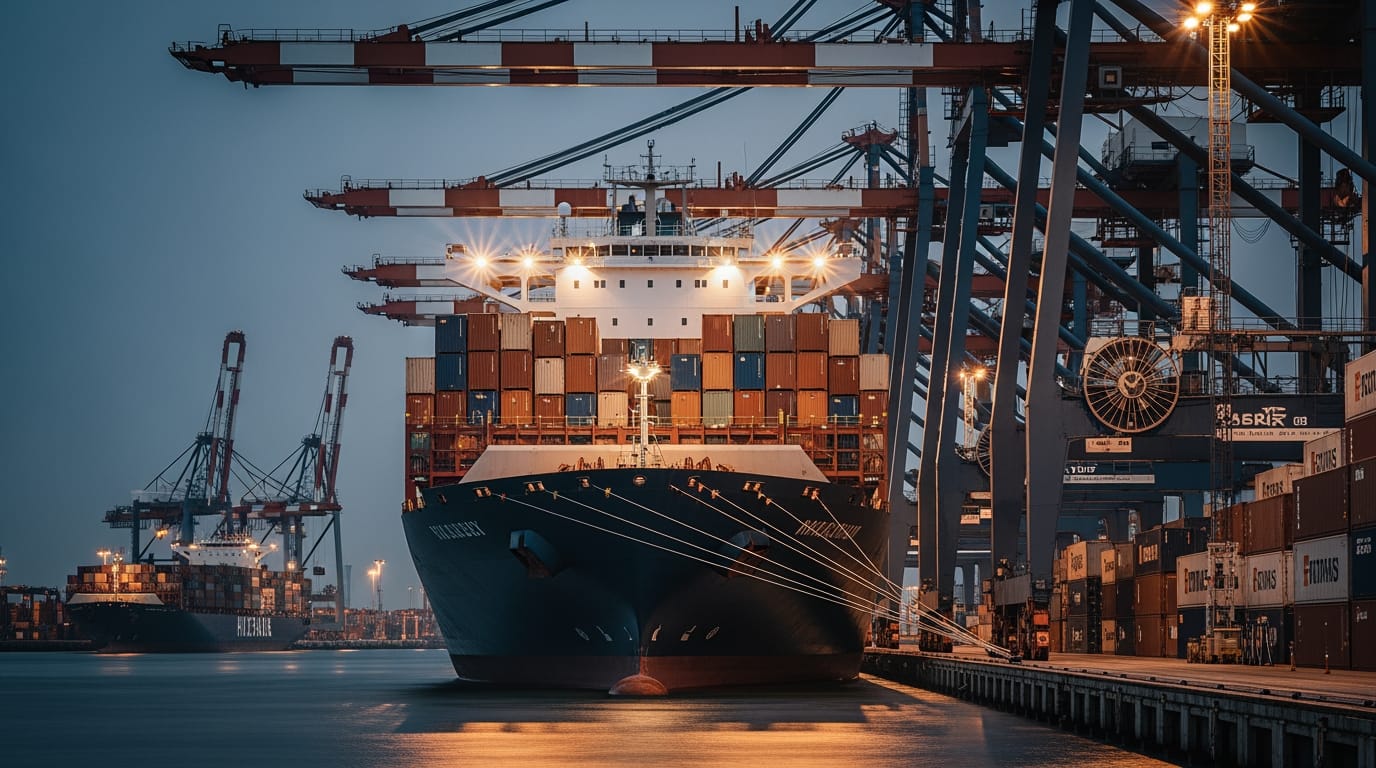
Berlin, Germany – German industry finds itself in a profound dilemma, navigating the turbulent waters between compelling economic imperatives and mounting geopolitical pressures. Despite persistent calls from Berlin and Brussels to "de-risk" from China, German companies are deepening their engagement with the Asian economic powerhouse, demonstrating a stubborn reliance that highlights the immense challenges of disentanglement. This complex dance underscores not only China's indispensable role in global commerce but also the deeply integrated ties that have developed over decades, making a swift pivot virtually impossible for Europe's largest economy.
An Indispensable Market and Investment Hub
For German businesses, China is far more than just another market; it is an economic cornerstone. The automotive sector, a pillar of German industry, starkly illustrates this dependency. Annually, one out of every three cars produced by German corporations worldwide finds a buyer in China, with 4.3 million units manufactured there in 2021. This makes China the most crucial destination for German automotive products, contributing significantly to a substantial trade surplus for Germany in vehicles and parts. Overall, over 5,000 German companies have established operations in China, collectively creating approximately one million jobs within the country.
Recent trends indicate that this economic gravity well continues to pull German firms closer. Despite geopolitical tensions, German direct investment in China surged dramatically in the first half of 2024, reaching €7.3 billion, an amount that already surpasses the total investment for the entirety of 2023. This influx is largely spearheaded by automotive giants like Mercedes-Benz, Volkswagen, and BMW, alongside chemical behemoth BASF. These corporations are increasingly adopting an "In China, for China" strategy, channeling reinvested profits into localizing production, research, and development to cater directly to the immense Chinese market and its burgeoning innovation ecosystem. Volkswagen, for instance, is investing €2.5 billion in Hefei to establish its largest research and development center outside of Germany, while Mercedes-Benz plans a $2 billion investment for new electric vehicle models tailored for China starting in 2025.
The Tangled Web of Integrated Supply Chains
Beyond its function as a vast consumer market, China's role as a global manufacturing hub has woven it inextricably into German supply chains. Nearly half of German manufacturing companies rely on key inputs sourced from China. As Germany's largest supplier, China accounted for 12% of its total imports in 2022, a figure encompassing everything from machinery and commodities to critical raw materials.
The dependence on specific raw materials presents a particularly acute challenge. Germany procures approximately 95% of its rare earth elements from China, materials vital for the production of advanced electronics, electric vehicles, and defense technologies. The process of identifying and developing alternative sources for these essential inputs, followed by the complete reorganization of logistics and contractual agreements, could span decades and incur prohibitive costs. This reality recently manifested as China increased its control over rare earth exports, compelling German companies to divulge sensitive proprietary information, including production schemes and customer lists, to secure import licenses. The inherent difficulty and expense of re-shoring or diversifying these foundational supply chains mean that for many companies, continuing with their established Chinese partners remains the only viable short-term option.
China as a Partner in Innovation and Future Growth
For German industry, China is not merely a production site or a sales territory; it has rapidly evolved into a significant hub for innovation, particularly in areas critical to future economic competitiveness. The Chinese automotive industry, for example, has become a global leader in electric vehicle (EV) technology. German carmakers like Volkswagen, BMW, and Mercedes-Benz are actively increasing their investments in China to integrate their EV production and research and development processes into local innovation networks. Collaborations with Chinese firms are seen as crucial for accessing advanced software expertise and accelerating product development cycles.
This strategic engagement in China's innovation ecosystem is driven by the clear recognition that failing to participate in this dynamic environment risks falling behind globally. The massive scale and rapid pace of technological advancement in China offer German companies an opportunity to remain at the forefront of emerging industries. Moreover, the sheer potential for continued growth within China's expanding middle class, with its increasing demand for mobility and high-tech goods, makes it an almost irresistible market for long-term investment.
The 'De-risking' Dilemma and Geopolitical Headwinds
Despite the deep economic ties, Germany's political landscape has shifted, with both the German government and the European Union advocating for "de-risking" – a strategy aimed at reducing critical dependencies on China without pursuing outright "decoupling." Germany's 2023 China Strategy explicitly calls for this reduction in vulnerabilities, acknowledging China's shift towards more authoritarianism and its growing alignment with Moscow. Chancellor Olaf Scholz and EU Commission President Ursula von der Leyen have championed this approach, urging companies to diversify supply chains and re-evaluate their exposure to geopolitical risks. Chancellor Friedrich Merz has even cautioned German firms that they bear the sole risk if their Chinese ventures falter.
However, the practical implementation of de-risking faces significant internal resistance. Corporate lobbying has slowed this strategic pivot, as businesses argue that access to the world's second-largest economy remains vital for competitiveness and jobs. A study by the Kiel Institute estimated that a severe decoupling, involving a 97% reduction in trade with China, could cost the German economy €131 billion annually in the long term. Furthermore, the challenges extend beyond market access to concerns over fair competition, intellectual property protection, arbitrary regulatory practices, and China's cybersecurity and anti-espionage laws, which pose risks to sensitive company data. Many German companies acknowledge the risks but find the cost and complexity of a rapid exit or significant reorientation to be prohibitively high, with some executives predicting that reducing reliance on China will take "decades."
Balancing Pragmatism with Prudence
The current landscape for German companies in China is one of complex calculations, where economic pragmatism frequently trumps geopolitical caution. While the German government signals a desire for reduced reliance, German companies continue to pump significant investments into the Chinese market, driven by the immediate allure of growth, profitability, and an advanced industrial ecosystem. This situation creates an inherent tension, as German industry simultaneously seeks to mitigate risks while doubling down on a market deemed indispensable for its global competitiveness.
The struggle to balance these competing interests will likely define Germany's economic policy towards China for years to come. For the foreseeable future, German firms appear set on a path of continued, albeit increasingly cautious, engagement, navigating geopolitical headwinds with an eye firmly fixed on the substantial opportunities and entrenched realities that China presents. The narrative is not one of easy answers or swift departures, but rather a prolonged and intricate process of adaptation in an increasingly multipolar world.