German Political Parties Commence Preliminary Coalition Talks
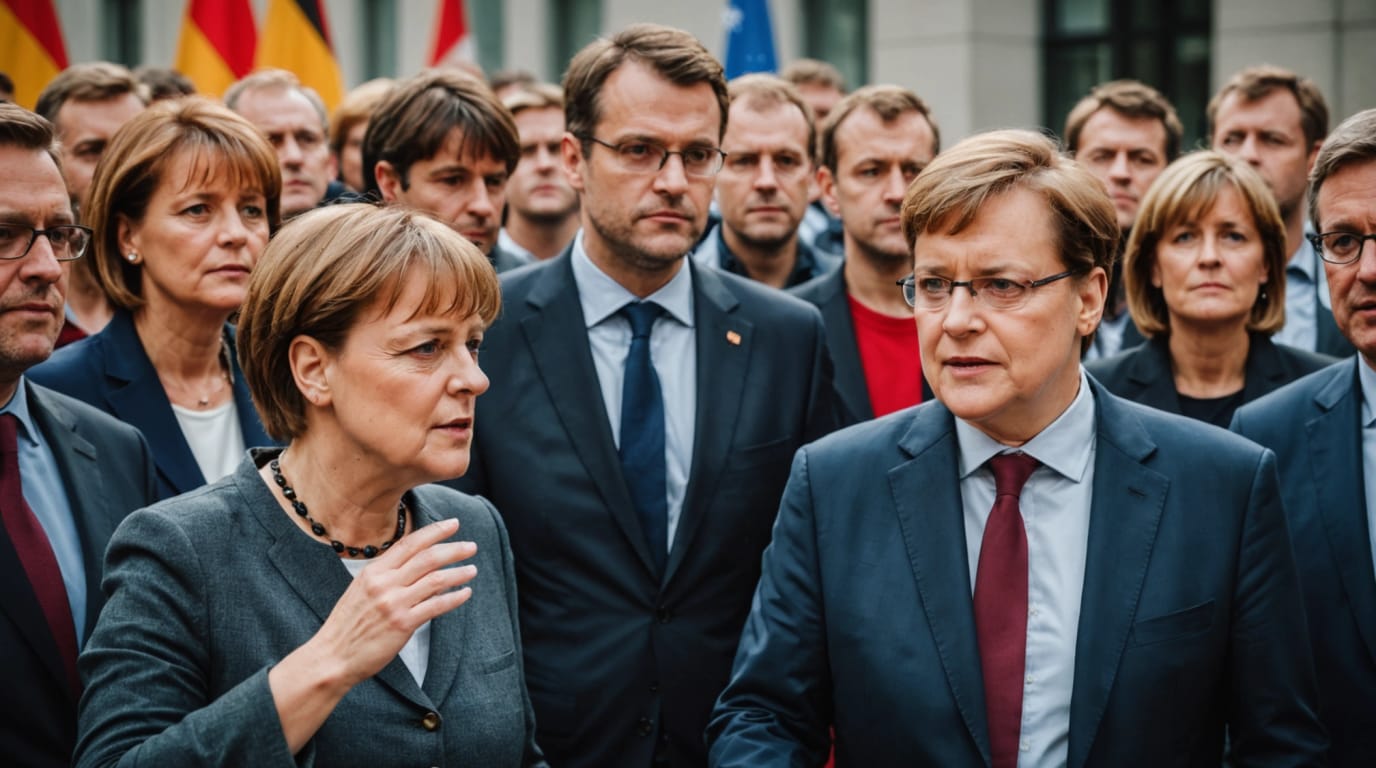
Berlin - In the wake of the recent federal election, Germany's political landscape is shifting as the Christian Democratic Union/Christian Social Union (CDU/CSU) alliance and the Social Democratic Party (SPD) have initiated preliminary discussions aimed at forming a new coalition government. These exploratory talks mark the beginning of what is expected to be a complex and potentially protracted negotiation process to determine the country's leadership and policy direction for the coming years.
Setting the Stage for Negotiations
The CDU/CSU, led by Friedrich Merz, emerged as the strongest party in the election, securing 28.5 percent of the vote. While this victory positions Merz as the frontrunner to become the next chancellor, the CDU/CSU lacks a majority, necessitating a coalition with other parties to govern effectively. The SPD, despite finishing third with 16.4 percent of the vote and their leader Olaf Scholz conceding defeat, remains a key player in the coalition-building process.
On February 28, 2025, representatives from both the CDU/CSU and SPD convened for the first round of exploratory talks. Each party sent a delegation of nine representatives to the meeting, which focused on establishing a framework for future negotiations and identifying key areas of common ground and potential conflict.
Key Issues on the Table
Several critical issues are expected to dominate the coalition negotiations. These include:
- Foreign and Security Policy: Diverging views on Germany's role in international affairs, particularly concerning defense spending, relations with Russia, and engagement in multinational initiatives, could prove to be a significant hurdle. The ongoing conflict in Ukraine and the broader geopolitical landscape add further complexity to these discussions.
- Migration: Immigration policy has long been a contentious issue in German politics. The CDU/CSU and SPD hold differing perspectives on asylum procedures, border controls, and integration measures, requiring careful negotiation to find a compromise that addresses both security concerns and humanitarian obligations.
- Economic Policy: Disagreements over fiscal policy, taxation, and investment priorities could also pose challenges. The SPD traditionally advocates for greater social spending and wealth redistribution, while the CDU/CSU tends to prioritize fiscal conservatism and market-oriented reforms.
- Energy Policy: With Germany's commitment to transitioning to renewable energy sources, disagreements on the pace and methods of this transition are expected. The CDU/CSU and SPD may have different views on the role of nuclear energy, coal-fired power plants, and investments in renewable infrastructure.
- Debt Brake: The "debt brake," a constitutional rule limiting government borrowing, is another potential sticking point. The SPD may seek to reform or relax the debt brake to allow for increased public investment, while the CDU/CSU is likely to defend its strict adherence.
Potential Coalition Scenarios
While several coalition options exist, a "black-red coalition" between the CDU/CSU and SPD is currently considered the most likely outcome. This alliance, named after the parties' traditional colors, would bring together the two largest political forces in Germany, providing a stable and experienced government.
However, significant policy differences between the CDU/CSU and SPD could make negotiations difficult. Bridging the gap on issues such as migration, economic policy, and energy policy will require compromise and flexibility from both sides.
The AfD's Position
The far-right Alternative for Germany (AfD) achieved its greatest election success to date, doubling its share of the vote to more than 20 percent. The party has demanded more influence in the new parliament, including the right to pick the parliament's vice leader, head several parliamentary committees, and get access to the national secret services control body. However, the CDU/CSU has ruled out forming a government with the AfD due to its extremist views and anti-immigrant rhetoric.
The Road Ahead
Friedrich Merz has expressed his desire to form a new government by Easter, setting an ambitious timeline for the coalition negotiations. However, given the complexity of the issues at stake and the potential for disagreements, the process could take longer.
The exploratory talks between the CDU/CSU and SPD are just the first step in a series of negotiations that will shape Germany's political future. As the parties delve deeper into policy details and seek to reconcile their differences, the coming weeks will be crucial in determining the composition and direction of the next German government. The outcome of these negotiations will have significant implications for Germany's domestic and foreign policy, as well as its role in the European Union and the wider world.


