German President Voices Concerns Over U.S. 'Self-Anointed Elite'
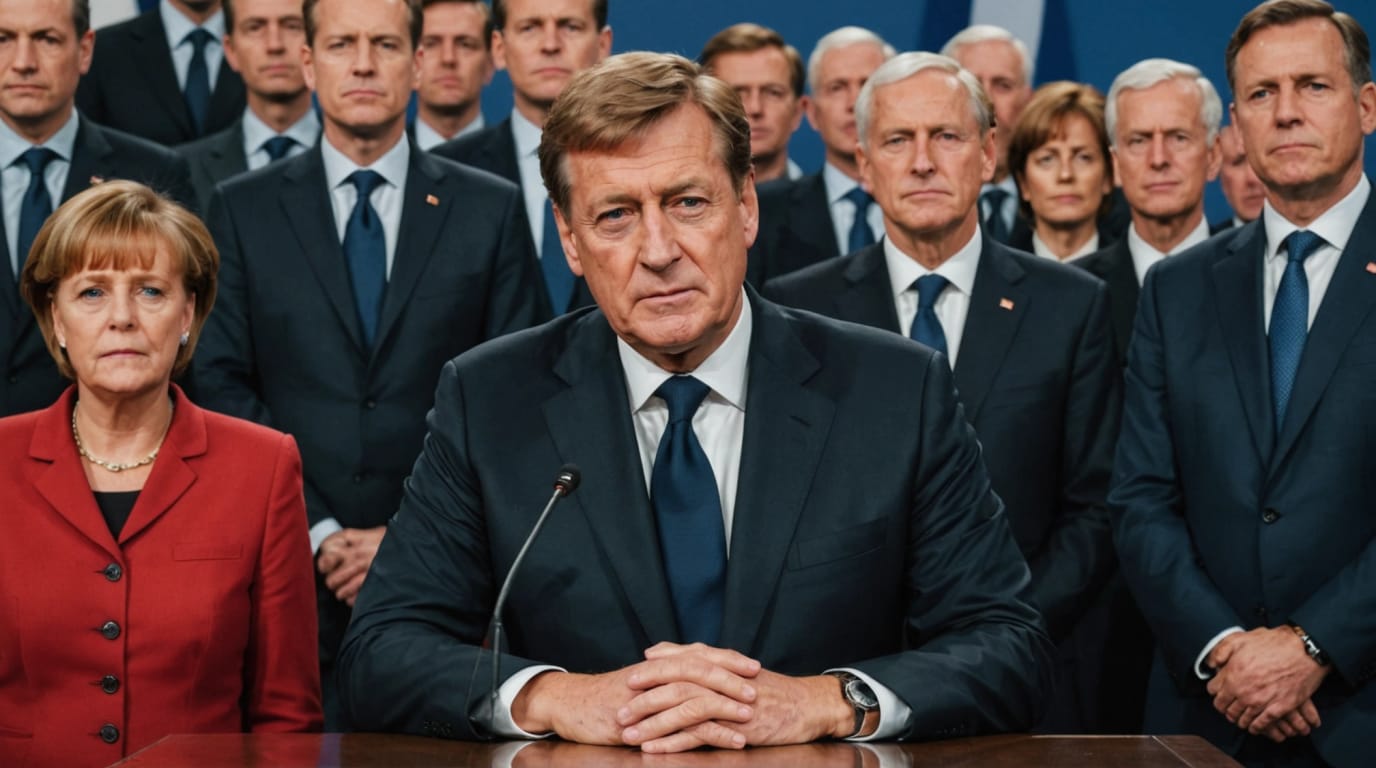
German President Frank-Walter Steinmeier has expressed apprehension regarding the current state of transatlantic relations, particularly concerning what he perceives as a growing disconnect between the United States and established international norms. Steinmeier's remarks come at a time of shifting global dynamics and increasing uncertainty about the future of the U.S.'s role in international affairs.
A Shifting Worldview
Steinmeier's comments, made during a recent address in Berlin, highlighted a divergence in worldviews between Germany and the current U.S. administration. He stated that the new American administration has a different perspective, one that "has no regard for established rules, established partnerships and trust." While acknowledging the need to accept this reality, Steinmeier voiced his conviction that it is not in the interest of the international community for this worldview to become the sole dominant paradigm.
The German president's concerns reflect a broader unease among some European leaders regarding the direction of U.S. foreign policy. This includes a perceived disregard for multilateralism and a preference for unilateral action, as well as a questioning of long-standing alliances and commitments.
Concerns About Democracy
Beyond foreign policy, Steinmeier also raised concerns about the internal dynamics of American democracy. He expressed worry about the influence of a "small entrepreneurial elite" with the power and will to redefine the rules of liberal democracy. He further stated his concern that some within this elite make no secret of their contempt for democratic institutions and norms.
These remarks touch upon a sensitive issue in American society: the concentration of wealth and power in the hands of a few, and the potential impact of this concentration on democratic processes. Steinmeier's comments suggest a concern that this trend could undermine the foundations of American democracy and its ability to serve as a model for other nations.
The Transatlantic Relationship
Germany and the United States have historically maintained a close and strong alliance, rooted in shared values and interests. The U.S. played a major role in the occupation and reconstruction of Germany after World War II, providing billions of dollars in aid through the Marshall Plan. The two nations developed a positive relationship based on democratic ideals, anti-communism, and economic trade. Today, the U.S. remains one of Germany's closest allies and partners outside of the European Union.
However, the relationship has faced challenges in recent years. Disagreements on key policy issues, such as climate change, trade, and defense spending, have created friction. The revelations of U.S. surveillance activities in Germany, including the monitoring of Chancellor Angela Merkel's cellphone, also strained relations and eroded trust.
Despite these challenges, the U.S.-Germany relationship remains solid, with 85% of Americans and 77% of Germans viewing the relationship between their countries as good. Both countries see each other as important partners on key issues, including dealing with China and the war in Ukraine.
Germany's Role in a Changing World
As the U.S. potentially shifts its focus inward, Germany is being compelled to strengthen Europe's strategic autonomy. This involves increasing defense cooperation with European partners and taking on a greater role in regional security. Germany's primary interest has been to stabilize the European continent through regional integration in the European Union (EU) and NATO. A failure of the transatlantic alliance could threaten this goal, potentially leading to divisions between Central and Western European member states.
Germany is working with NATO and the European Union to provide aid to Ukraine in the ongoing conflict with Russia. The country is also reducing its dependence on Russian oil and gas. Germany has the third-largest economy in the world, after the U.S. and China, and is a major player in international trade. In 2024, the U.S. became Germany's most important trading partner, with bilateral foreign trade totaling 252.8 billion euro.
The Future of the Alliance
The German-American partnership remains crucial for maintaining peace and security in Europe and around the world. The transatlantic security community within NATO and the approximately 35,200 U.S. military personnel permanently stationed in Germany help to ensure the security of Germany and of Europe.
However, the future of the alliance will depend on the ability of both countries to address their differences and find common ground. Germany will need to counteract the rise of isolationism in the U.S. by demonstrating its commitment to the relationship and its willingness to contribute to global security. The U.S., in turn, will need to reassure its European allies that it remains committed to the transatlantic partnership and to upholding the international order.
Conclusion
President Steinmeier's remarks serve as a reminder of the importance of open dialogue and mutual understanding in the transatlantic relationship. As the world faces new challenges and uncertainties, it is essential that Germany and the United States work together to find common solutions and to uphold the values that have underpinned their alliance for decades. The strength of this partnership will be crucial for maintaining stability and promoting democracy in an increasingly complex world.


