German Satirist Faces Russian Court in Absentia Over Putin Caricatures
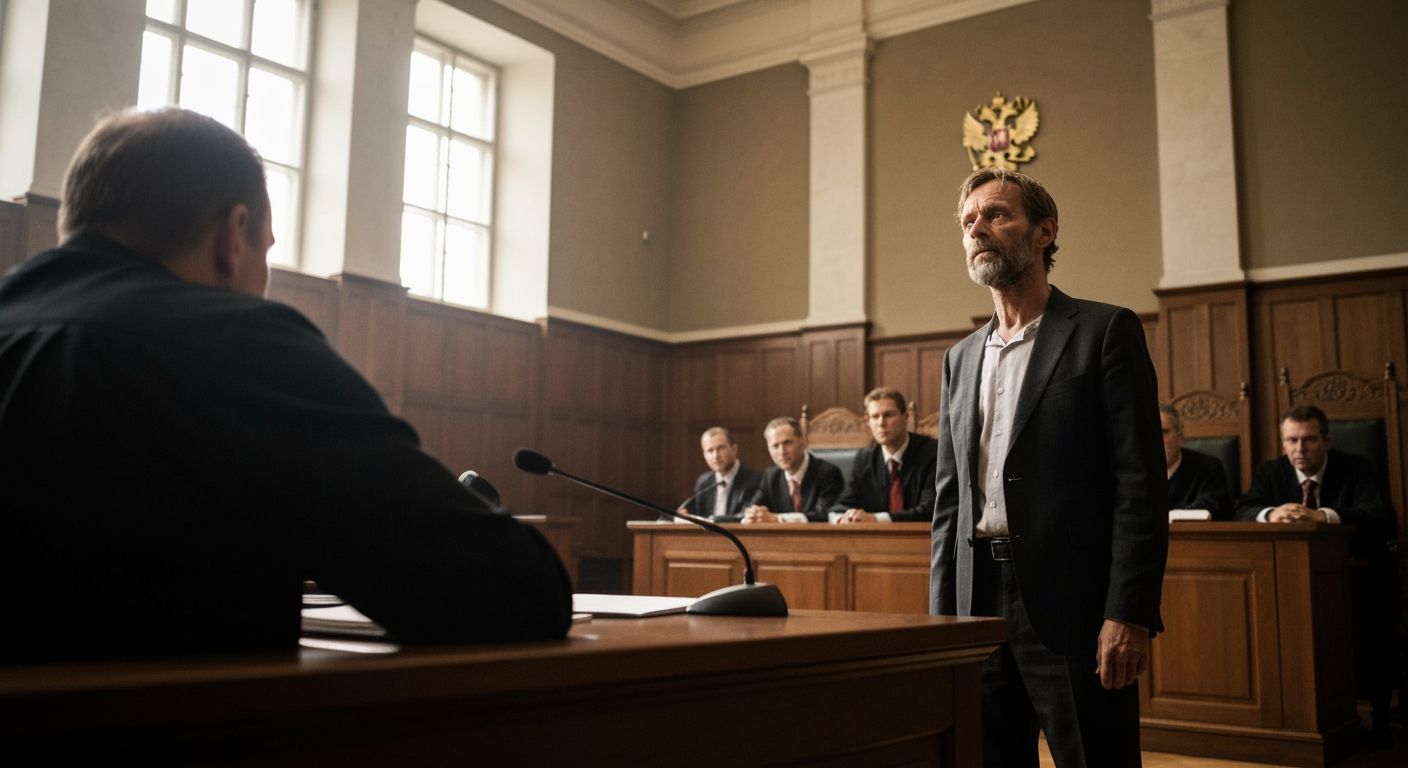
Moscow, Russia – In an unprecedented legal move that has ignited discussions about freedom of expression and the extraterritorial reach of national laws, a Russian court has initiated criminal proceedings against prominent German carnival artist Jacques Tilly. The sculptor, renowned for his politically charged floats featured in Germany's annual carnival parades, faces charges in Moscow related to his caricatures of Russian President Vladimir Putin and alleged defamation of the Russian military. The trial is being conducted in absentia, underscoring the escalating tensions surrounding satire and international relations.
The Charges: Satire Deemed Defamation
The Basmanny district court in Moscow is presiding over the case against Tilly. Russian authorities have leveled criminal charges against the Düsseldorf-based artist for his carnival floats, which have frequently depicted President Putin in critical and often unflattering ways. The specific accusations center on "defaming the Russian military" and "criticizing Vladimir Putin," according to reports. One notable float from the 2022 carnival season, for instance, depicted Putin as a bloodthirsty aggressor, a stark commentary on Russia's actions in Ukraine. Such imagery, while a staple of German carnival satire, has clearly crossed a red line for Moscow, leading to these extraordinary legal actions.
The trial, which was initially postponed in December 2025 due to the absence of the defense lawyer, was rescheduled for late January 2026. Tilly himself has not traveled to Russia and is not expected to appear in court, rendering the proceedings largely symbolic but with potentially far-reaching implications for international artists and freedom of speech.
A Tradition of Provocation: German Carnival and Political Satire
The tradition of political satire in German carnival, particularly in cities like Düsseldorf, Cologne, and Mainz, dates back centuries. These annual celebrations are not merely festivities but serve as significant platforms for biting social and political commentary. Floats often feature exaggerated caricatures of national and international figures, addressing contentious issues with sharp humor and visual metaphors.
Jacques Tilly has been at the forefront of this tradition for decades, with his creations consistently sparking debate and often drawing international attention. His floats have targeted a wide array of global leaders and political events, ranging from former U.S. President Donald Trump to Chinese President Xi Jinping and North Korea's Kim Jong-Un. The essence of this carnival art lies in its ability to provoke thought and critique power structures through visual wit. In Germany, parody and caricature are largely protected under freedom of expression laws, with legal frameworks specifically allowing for the use of copyrighted material for satirical purposes under certain conditions. This robust protection stands in stark contrast to the legal environment in Russia, where laws regarding defamation and "discrediting" the armed forces have become increasingly stringent.
Legal Echoes and International Ramifications
The Russian legal action against Tilly highlights a significant divergence in legal interpretations of satire and free speech between Western democracies and Russia. While Germany upholds a broad scope for artistic and political commentary, Russia has enacted legislation that criminalizes expressions deemed to undermine state authority or national interests. The charges against Tilly are seen by many as an attempt to extend Russian legal jurisdiction beyond its borders, targeting a German citizen for actions committed on German soil, under German law.
This extraterritorial application of law raises serious concerns among international legal experts and human rights organizations. Such actions could set a precedent where artists, journalists, or any individuals who critique foreign governments could face legal repercussions in those nations, regardless of their location. The absence of Tilly in court means he is unable to directly defend himself against the accusations, further complicating the legal and ethical dimensions of the trial.
Tilly's Unwavering Stance and the Future of Satire
Despite the looming legal battle in Moscow, Jacques Tilly has remained defiant. He has publicly stated his intention to "double down" on his satirical efforts in upcoming carnival seasons, promising even more direct and unflinching critiques through his art. This resolve underscores the perceived importance of satire as a form of resistance and commentary, particularly in times of international conflict and political upheaval.
The case also brings into focus the broader discussion surrounding the "threshold of severity" in satire, particularly when it intersects with accusations of hate speech or incitement, as seen in some European Court of Human Rights cases. However, Tilly's work is widely understood within Germany as political commentary, not hate speech, reflecting the cultural context of carnival satire.
Conclusion: A Clash of Ideologies
The trial of Jacques Tilly in Russia represents more than just a legal dispute; it is a profound clash of ideologies regarding freedom of speech, artistic expression, and national sovereignty. While German carnival art revels in its ability to satirize and challenge, the Russian state views such critiques as criminal acts. The outcome of this in-absentia trial will undoubtedly be scrutinized internationally, serving as a barometer for the boundaries of artistic freedom in an increasingly interconnected and politically charged world. It forces a critical examination of how nations interpret and enforce their laws across borders, and the potential chilling effect this could have on satirical expression globally.
Related Articles


Yayoi Kusama, Visionary Artist Whose Polka Dots and Infinity Rooms Transformed Modern Art, Dies at 97
TOKYO – Yayoi Kusama, the avant-garde Japanese artist whose kaleidoscopic visions of polka dots, immersive "Infinity Mirror Rooms," and profound exploration of mental health captivated global audiences for over six...

Martin Walser: Germany's Acclaimed Author and Enduring Enigma
Martin Walser, a literary titan whose prolific career spanned decades and garnered numerous accolades, carved out a unique and often contentious space within German letters. While celebrated for his keen observations of...