German Shipping Giant's Acquisition of ZIM Triggers National Security Alarm in Israel
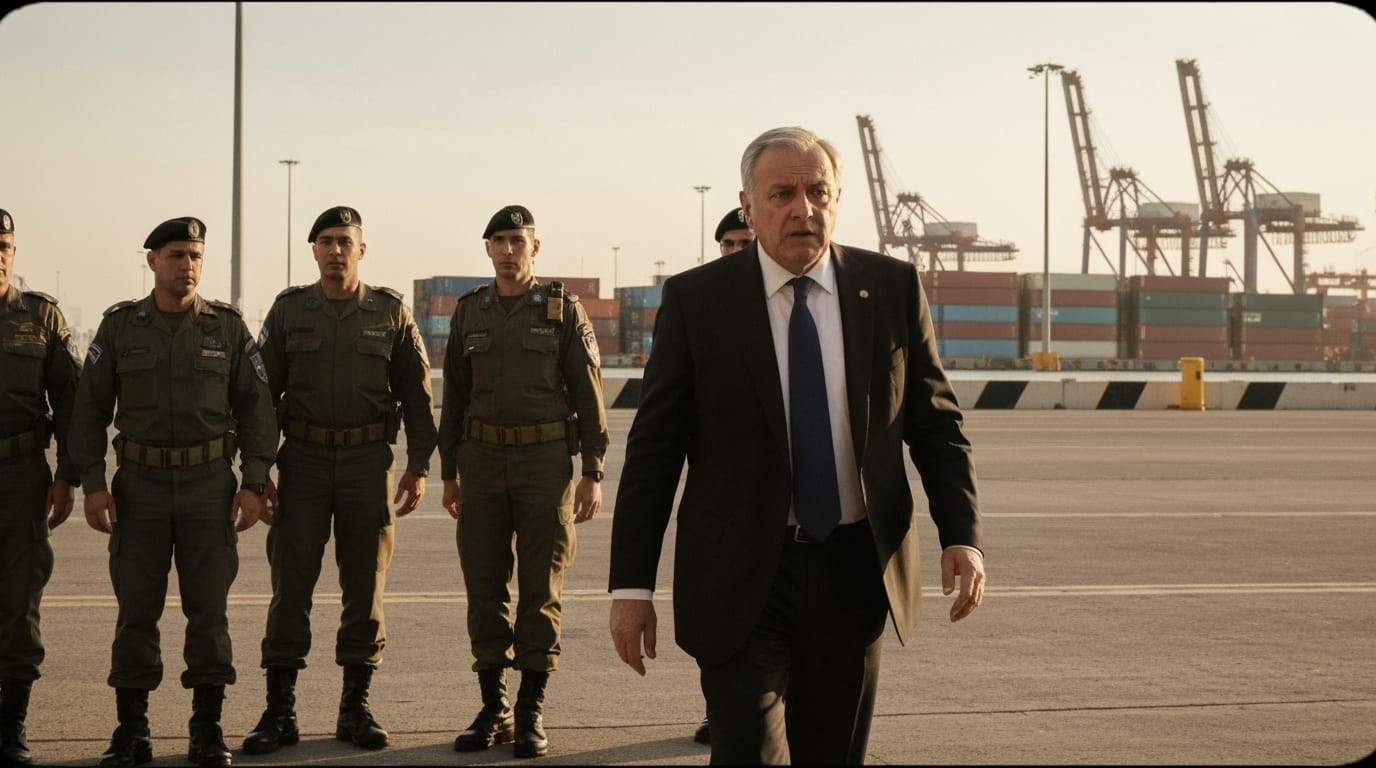
A proposed $4.2 billion deal for German shipping conglomerate Hapag-Lloyd to acquire Israel's flagship cargo company, ZIM, has ignited a firestorm of controversy and concern within the Israeli government and public. The acquisition, which would see a significant portion of Israel's maritime strategic assets transfer to foreign hands, has prompted warnings from senior officials about potential threats to national security and economic independence, particularly given the German firm's partial ownership by sovereign wealth funds of Saudi Arabia and Qatar.
The Anatomy of a Divisive Deal
The transaction, reportedly agreed upon in principle, involves Hapag-Lloyd, the world's fifth-largest shipping company, taking over ZIM's international operations, which encompass 99 chartered vessels, global trade routes, and customer agreements. To navigate Israel's sensitive "golden share" provision – a governmental right to veto foreign takeovers of strategically vital companies – the deal includes an unconventional structure. An Israeli private equity firm, FIMI, is slated to acquire ZIM's Israeli operations, including 16 Israeli-flagged vessels, with the intention of establishing a new entity named "New ZIM." This arrangement aims to satisfy the requirement for maintaining Israeli control over certain maritime capabilities, especially during times of conflict.
ZIM, founded in 1945, holds a storied history and critical role in Israel's economy and security. Its extensive global network spans 90 countries and serves 300 ports worldwide. The proposed sale, valued at $4.2 billion, represents a substantial premium over ZIM's recent market capitalization, signaling the strategic value seen by Hapag-Lloyd. However, this commercial valuation stands in stark contrast to the national security concerns raised in Jerusalem.
Israel's Strategic Vulnerability Concerns
The core of Israel's apprehension stems from the perceived loss of control over a vital national asset. Israeli officials and maritime experts emphasize ZIM's indispensable role in ensuring the continuous flow of goods to and from the country, a capability deemed crucial for national resilience, particularly during wartime. Haifa Mayor Yona Yahav voiced strong opposition, asserting that ZIM is "no longer part of the Israeli economy" and that transferring its ownership, even partially, to foreign entities "harms national security." He underscored the importance of an independent Israeli shipping company for the state's economic and security existence.
The Israeli Administration of Shipping and Ports has also issued stark warnings, with Director Zadok Redker cautioning that the transaction could lead to a "significant reduction in Israel's maritime capabilities" and an increased "reliance on foreign shipping during emergencies." This concern is magnified by the understanding that a smaller, FIMI-controlled "New ZIM" might be weaker and more vulnerable to global shipping downturns. The "golden share" provision was specifically designed to prevent such vulnerabilities, mandating that ZIM's management remain in Israel and that a minimum number of Israeli-owned ships be maintained for wartime contingencies.
Geopolitical Dimensions and German Responsibility
Adding another layer of complexity to the deal are the minority stakes held by the Qatar Investment Authority (12.3%) and Saudi Arabia's Public Investment Fund (10.2%) in Hapag-Lloyd. While Germany maintains a "special relationship" with Israel, rooted in historical responsibility and a commitment to Israel's security (Staatsräson), the involvement of Gulf states in the acquiring entity introduces a geopolitical dynamic that alarms some Israeli strategists.
This situation contrasts with the long-standing military cooperation between Germany and Israel, where Germany has historically been a crucial supplier of defense equipment, including Dolphin-class submarines. These submarine sales, often heavily subsidized by Germany, are seen as fulfilling a moral obligation following the Holocaust and providing Israel with vital "second-strike" nuclear capabilities. However, even these defense deals have been marred by corruption allegations within Israel, known as "Case 3000," highlighting internal complexities in the German-Israeli defense relationship. The current commercial shipping deal, however, presents a different type of challenge, directly impacting Israel's civilian strategic infrastructure.
Hapag-Lloyd's CEO, Rolf Habben Jansen, has acknowledged the concerns, with the company's representative in Israel stating an understanding that maintaining a profitable and resilient ZIM is a "national interest of the State of Israel."
Economic Fallout and Labor Unrest
Beyond national security, the deal has provoked significant economic and labor unrest. ZIM employees at the company's Haifa headquarters initiated strikes in protest, expressing fears of job losses and a disconnect from the company's management. Reports indicate that approximately 880 of ZIM's 1,000 Israeli employees could be at risk. While Hapag-Lloyd has reportedly pledged to guarantee employment for at least one year post-acquisition, the long-term future of these positions remains a point of contention.
The Israeli Competition Authority is currently examining the takeover, a necessary step before the deal can proceed. The Administration of Shipping and Ports has also warned that the global shipping industry is entering a significant downturn, with an oversupply of vessels anticipated, which could pose an "existential threat" to a restructured ZIM and further exacerbate Israel's maritime vulnerability.
A Balancing Act Between Commerce and Sovereignty
The proposed acquisition of ZIM by Hapag-Lloyd underscores a growing tension between the forces of global commerce and the imperatives of national sovereignty and security. For Germany, the deal represents an expansion of its influence in global shipping and an integration of a key player. For Israel, it forces a difficult choice between the economic benefits of a lucrative sale and the potential erosion of strategic independence. The final approval of the deal hinges on the Israeli government's assessment of these competing interests, as it navigates the delicate balance of international partnerships, regional dynamics, and the fundamental requirements of national resilience. The outcome will set a precedent for how nations safeguard strategic assets in an increasingly interconnected global economy.