The Architect of Fortune: Unraveling the Enigmatic Wealth of Jeffrey Epstein
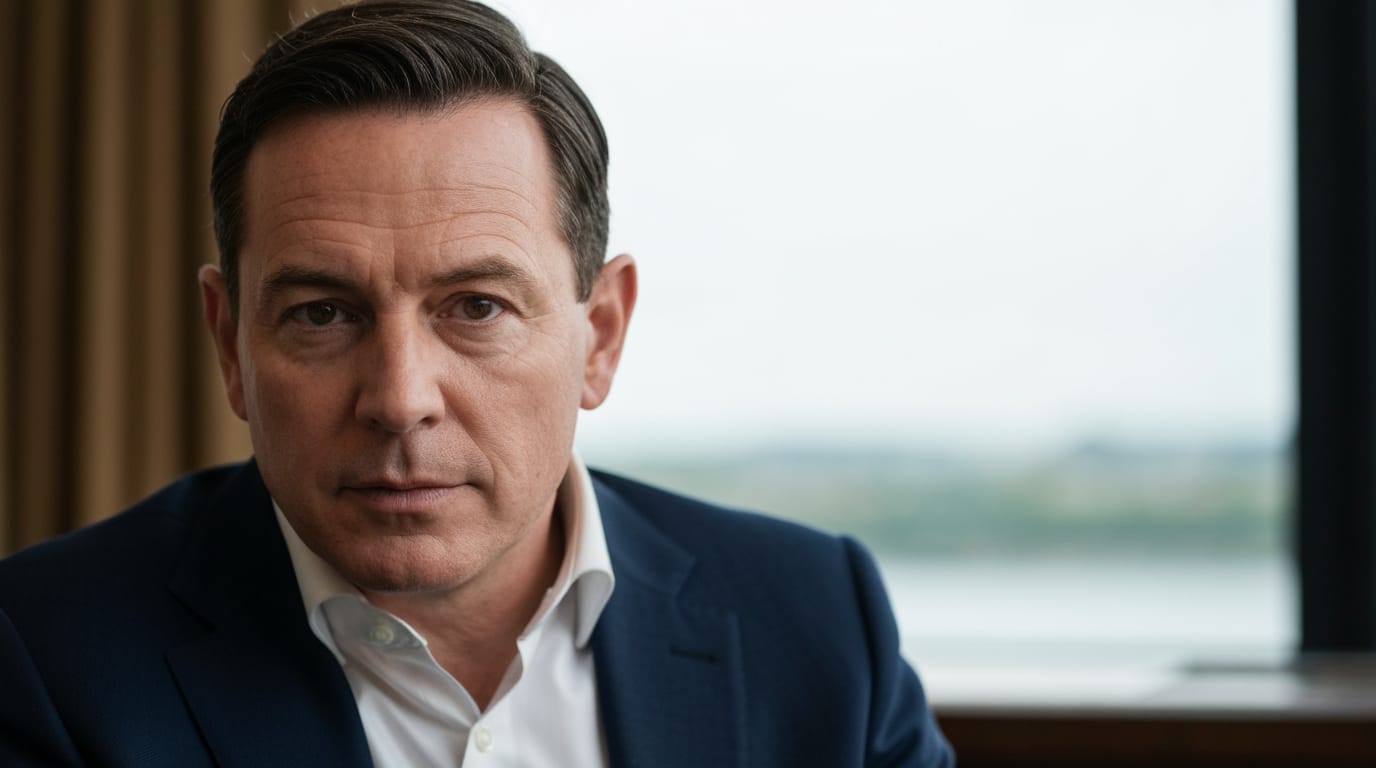
The financial ascent of Jeffrey Epstein, a man who became synonymous with scandal and depravity, remains one of the more perplexing narratives of modern finance. Without formal degrees or a public track record of investment triumphs, Epstein meticulously cultivated a financial empire reportedly worth nearly $600 million at the time of his death, built largely on the discreet management of vast fortunes for a select circle of the world's wealthiest individuals. His journey from a Brooklyn upbringing to the corridors of elite power and privilege was marked by an uncanny ability to forge influential connections, leverage financial loopholes, and maintain a veil of extreme secrecy around his operations. The story of his wealth is not one of entrepreneurial innovation or market wizardry, but rather a testament to the power of access and an insular ecosystem designed to serve the ultra-rich.
From Brooklyn Classrooms to Wall Street's Inner Sanctum
Born in Brooklyn in 1953, Jeffrey Epstein's early life offered few clues to the immense wealth he would later accumulate. He came from a working-class family, with his father working as a groundskeeper and his mother as a school aide. Despite this modest background, Epstein exhibited a remarkable aptitude for mathematics, excelling academically and even skipping two grades. This intellectual prowess, however, did not translate into conventional academic achievement; he enrolled in Cooper Union and New York University but never completed a degree.
His unconventional professional career began as a mathematics and physics teacher at the prestigious Dalton School in Manhattan, a position he secured without a college degree. It was within this elite educational environment that Epstein made a pivotal connection: Alan Greenberg, a senior partner at the prominent investment bank Bear Stearns, whose son was a student at Dalton. Impressed by Epstein's mathematical acuity, Greenberg reportedly offered him a job at Bear Stearns in 1976. Starting as a low-level junior assistant, Epstein rapidly climbed the corporate ladder, transitioning to an options trader and later advising the firm's wealthiest clients on complex tax mitigation strategies. By 1980, he had become a limited partner, a rapid ascent that underscored his ability to navigate and succeed within the high-stakes world of Wall Street. He departed Bear Stearns in 1981 under circumstances cited as a "Reg D violation," but notably maintained connections with key figures at the firm.
The Genesis of a Billionaire's Broker: J. Epstein & Company
Following his departure from Bear Stearns, Epstein embarked on establishing his own financial ventures, initially founding Intercontinental Assets Group Inc. in 1981, before launching J. Epstein & Company in 1988. This new firm positioned itself as an exclusive money management operation, purportedly catering only to individuals with a net worth exceeding $1 billion. However, the specifics of his client roster and the full scope of his operations remained largely undisclosed, shrouded in a deliberate cloak of mystery that would become a hallmark of his financial dealings.
The bedrock of Epstein's wealth and influence was cemented through his relationship with Leslie Wexner, the billionaire founder of L Brands, which included the globally recognized Victoria's Secret. Their association, which began in the mid-1980s, evolved into an extraordinary level of trust, with Wexner granting Epstein comprehensive control, including power of attorney over his personal finances, trusts, and foundations. This unprecedented access to Wexner's vast fortune not only provided Epstein with substantial fees, estimated to be over $200 million, but also lent him an invaluable veneer of legitimacy and respectability within the ultra-wealthy circles he aspired to serve. It opened doors and facilitated connections that would prove instrumental in his ongoing financial growth.
Beyond Wexner, Epstein attracted other high-profile clients, albeit with less publicly known details. Among them was Leon Black, co-founder of Apollo Global Management, who paid Epstein approximately $170 million between 2012 and 2017 for tax and estate planning services. More recently revealed documents have also identified real estate magnate Mortimer Zuckerman and Ariane de Rothschild as clients, with payments collectively amounting to tens of millions of dollars for similar financial services. Epstein reportedly described himself in a 2013 corporate filing as "an experienced and successful financier and businessman," and "one of the pioneers of derivative and option-based investing," despite the secretive nature of his actual investment strategies.
Leveraging Offshore Havens and Strategic Investments
A significant component of Epstein's wealth accumulation strategy involved leveraging favorable tax environments. In the mid-1990s, he relocated his companies, which were later renamed Financial Trust Company and Southern Trust, to the U.S. Virgin Islands. This strategic move provided substantial tax advantages, reportedly reducing his federal income tax burden by as much as 90 percent. From 1999 to 2018, these two entities collectively generated over $800 million in revenue, comprising approximately $490 million in fees from his affluent clientele and an additional $310 million from investment returns.
While his core business revolved around managing money for billionaires, Epstein also diversified his financial interests. He ventured into financing media companies, developing securities funding, and making investments in hedge funds and startups. His foray into the technology sector, in particular, revealed shrewd, albeit controversial, investments. Epstein notably committed $40 million to Peter Thiel's Valar Ventures, a venture capital firm, which has since grown to an estimated value of $170 million for his estate. He also made an early investment of $3 million in Coinbase in 2014, the prominent cryptocurrency exchange, and backed Blockstream, a bitcoin-focused technology firm, further illustrating his reach into emerging and lucrative markets.
His increasing wealth was reflected in an extravagant portfolio of luxury properties worldwide, including a sprawling Manhattan townhouse acquired from Wexner, mansions in Palm Beach, Florida, and Paris, a New Mexico ranch, and the infamous private Caribbean islands of Little St. James and Great St. James. These assets painted a picture of immense personal fortune and provided the backdrop for the illicit activities that would eventually lead to his downfall.
The Enduring Mystery and Unanswered Questions
Despite the public revelations and ongoing investigations, the precise mechanisms and full scope of Jeffrey Epstein's wealth generation remain partly obscured by the deliberate opacity of his financial dealings. He operated in an environment of extreme secrecy, and skepticism persisted regarding the true extent of his fortune, with some reports suggesting his "billionaire" status might have been "more illusion than fact." The unusually high fees charged for what appeared to be standard estate planning or financial services to his wealthy clients have also raised questions among financial experts.
His ability to command such lucrative arrangements without readily apparent, exceptional financial performance led to theories that his "connections" were more valuable than traditional credentials. Journalists and prosecutors have pointed to suggestions of financial manipulation and possible fraud underpinning some aspects of his wealth. Furthermore, his long-standing relationships with major financial institutions like JPMorgan Chase, which continued to service his accounts despite internal red flags, highlight the extent of his embeddedness within the financial system. While many have speculated that his sex crimes were intrinsically linked to his financial success, perhaps through blackmail, this remains a theory without concrete, publicly confirmed evidence directly linking such activities to the primary accumulation of his wealth, though it certainly facilitated his access to powerful circles.
In conclusion, Jeffrey Epstein's considerable wealth was primarily amassed through his role as a secretive financial advisor to an exclusive roster of ultra-high-net-worth individuals, notably Leslie Wexner and Leon Black. His success was enabled by a potent combination of cultivating influential connections, exploiting offshore tax benefits, and making strategic investments. The ultimate irony of Epstein's financial narrative is the stark contrast between his lack of traditional credentials and the immense wealth and influence he wielded. His financial life, much like his personal life, was characterized by a profound enigma, leaving behind a legacy of unanswered questions regarding the true origins and precise methods that built his controversial fortune. His estimated net worth of nearly $600 million at the time of his death continues to be subject to legal proceedings and victim compensation claims, a grim testament to the devastating impact of his actions.