German State Confronts Neo-Nazi Plot in "Saxon Separatists" Terror Trial
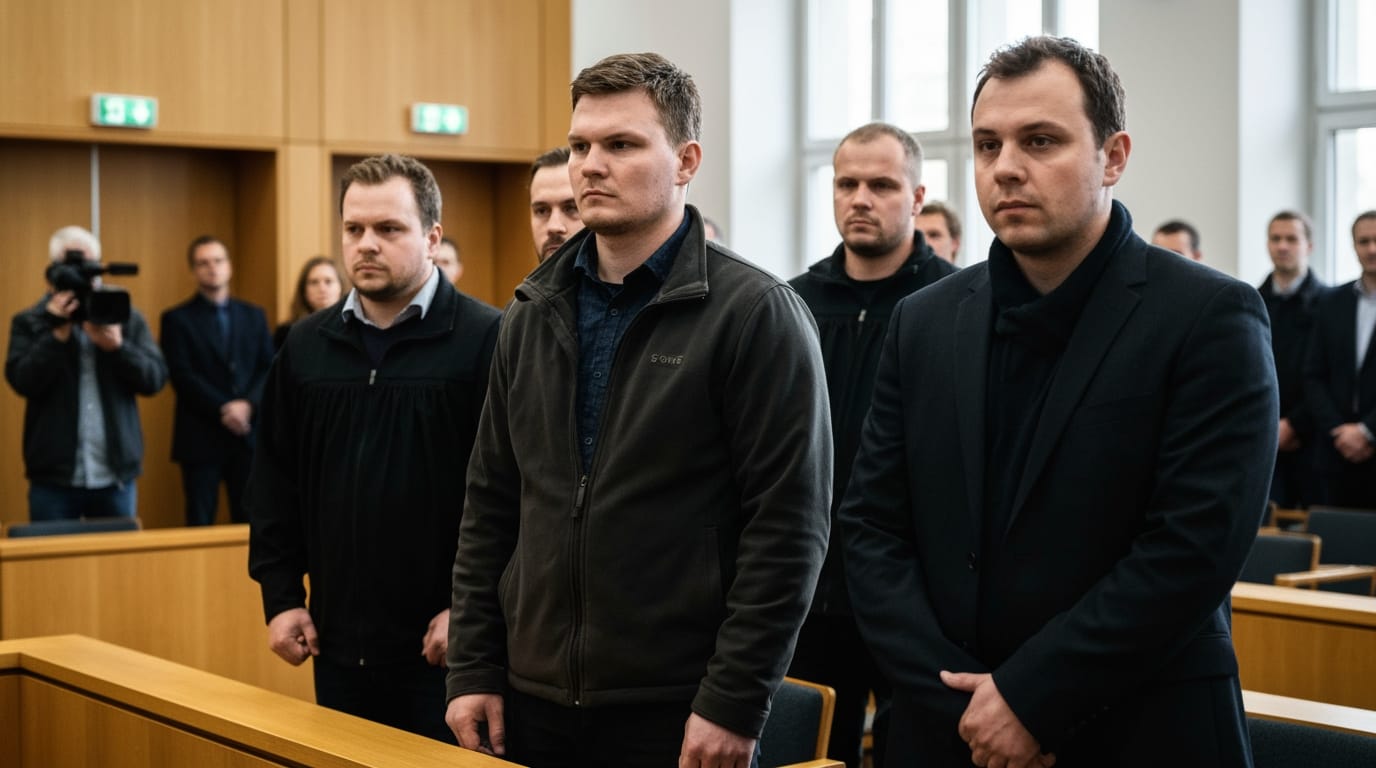
A high-stakes trial is underway in Germany, where eight alleged members of a far-right extremist group, styling themselves the "Saxon Separatists," face charges of forming a terrorist organization and plotting a violent neo-Nazi takeover in the eastern state of Saxony. The proceedings in Dresden spotlight the persistent threat of right-wing extremism within the Federal Republic, particularly in regions where such ideologies have found fertile ground. Prosecutors contend that the group meticulously prepared for a "Day X" to establish a state rooted in National Socialism, including plans for "ethnic cleansing," sending a chilling echo through Germany's post-war democratic institutions.
Accusations of Terror and Treason
The eight defendants stand accused of serious crimes under German law, primarily the formation of a domestic terrorist organization and the preparation of a high treasonous undertaking. One of the accused also faces an attempted murder charge. These legal actions fall under Section 129a of the German Criminal Code, which specifically targets the creation of terrorist groups dedicated to committing human rights violations and other serious offenses. The Federal Prosecutor's Office has identified Jörg S., apprehended in Poland, as the alleged ringleader of the group, which reportedly consisted of 15 to 20 members. The arrests, conducted in November 2024, involved over 450 police officers across Germany, Poland, and Austria, underscoring the perceived gravity and transnational nature of the alleged plot. The Dresden Higher Regional Court is now tasked with deciding on the admission of the indictment, a critical step that will determine the full scope of the trial.
A Vision of National Socialism and "Ethnic Cleansing"
At the core of the prosecution's case lies the "Saxon Separatists'" sinister ideology and their meticulously planned "Day X." Prosecutors assert that the group harbored deeply racist, anti-Semitic, and partially apocalyptic beliefs, aiming to reject Germany's liberal democratic order and replace it with a state modeled on National Socialism. Their vision extended beyond mere secession of Saxony; they allegedly intended to seize control of parts of Saxony and other Eastern German states, establishing "governmental and societal structures inspired by National Socialism". Disturbingly, central to their alleged plan was the intent to "remove unwanted groups of people from the area by means of ethnic cleansing, if necessary". The group reportedly referred to their planned uprising internally as "Boogaloo," a term adopted from the far-right extremist scene in the United States, associated with the desire for a second civil war. This alleged aspiration for a racially "pure" state marks a particularly alarming dimension of the accusations, evoking the darkest chapters of German history.
Paramilitary Training and Disturbing Connections
The indictment details extensive preparations undertaken by the "Saxon Separatists" to realize their violent aims. The group allegedly engaged in paramilitary training drills, focusing on urban warfare, the use of firearms, night-time marches, and patrols. These exercises reportedly took place at an abandoned airfield near Brandis, with some members even traveling to neighboring Poland or the Czech Republic for shooting practice. Authorities confiscated a significant arsenal of military equipment during the arrests, including fatigues, helmets, gas masks, protective vests, registered and unregistered firearms, ammunition, silencers, and cartridges for Kalashnikov assault rifles.
Further raising concerns are the alleged ties between several defendants and the Alternative for Germany (AfD) party. At least three individuals among the accused, Kurt Hättasch, Kevin R., and Hans-Georg P., reportedly held prior connections to the AfD. Kurt Hättasch, in particular, was a faction leader on the local city council for the AfD, a board member of a district association, and the treasurer of the Saxon Junge Alternative, the party's youth wing. Although the AfD has initiated expulsion proceedings against these individuals following their arrests, the revelations highlight the challenges political parties face in preventing extremist infiltration. Notably, the State Office for the Protection of the Constitution in Saxony has classified the AfD Saxony as "confirmed right-wing extremist," underscoring broader official concerns about the party's trajectory in the region.
The Enduring Shadow of Extremism in Eastern Germany
The "Saxon Separatists" trial unfolds against a backdrop of heightened concern over right-wing extremism in Germany, particularly in the eastern states. Saxony, a state historically grappling with a robust far-right presence since German reunification in 1990, has often been described as a "hotbed of far-right agitation". Studies have indicated that residents of former East German states may be more susceptible to xenophobic and right-wing extremist views, attributed to factors such as limited exposure to ethnic minorities during the communist era, and a perceived sense of collective victimhood post-reunification. This environment has contributed to the rise of far-right political entities, including the AfD, which has seen significant electoral success in Eastern Germany, emerging as the largest party in Saxony and Thuringia in recent federal elections.
The current trial is not an isolated incident but rather another stark reminder of the persistent and evolving threat posed by domestic extremism. It follows other recent high-profile cases, such as the "Reichsbürger" network plot to overthrow the government and various acts of right-wing terrorism, including the murder of politician Walter Lübcke and the Halle synagogue attack. These events underscore the continuous vigilance required from law enforcement and the judiciary to safeguard democratic principles against those who seek to undermine them through violence and radical ideologies.
A Test for German Democracy
As the trial of the "Saxon Separatists" progresses, it represents a crucial test for the resilience of German democracy and its legal system. The proceedings aim not only to bring alleged perpetrators of severe crimes to justice but also to send a clear message that plots to establish neo-Nazi regimes and conduct ethnic cleansing will be met with the full force of the law. The outcome will be closely watched, both within Germany and internationally, as it reflects on the nation's ongoing commitment to confronting its past and upholding the values of freedom, human dignity, and democratic order in the face of extremism. The collective effort to counter such radical movements remains a defining challenge for modern Germany.# German State Confronts Neo-Nazi Plot in "Saxon Separatists" Terror Trial
A high-stakes trial is underway in Germany, where eight alleged members of a far-right extremist group, styling themselves the "Saxon Separatists," face charges of forming a terrorist organization and plotting a violent neo-Nazi takeover in the eastern state of Saxony. The proceedings in Dresden spotlight the persistent threat of right-wing extremism within the Federal Republic, particularly in regions where such ideologies have found fertile ground. Prosecutors contend that the group meticulously prepared for a "Day X" to establish a state rooted in National Socialism, including plans for "ethnic cleansing," sending a chilling echo through Germany's post-war democratic institutions.
Accusations of Terror and Treason
The eight defendants stand accused of serious crimes under German law, primarily the formation of a domestic terrorist organization and the preparation of a high treasonous undertaking. One of the accused also faces an attempted murder charge. These legal actions fall under Section 129a of the German Criminal Code, which specifically targets the creation of terrorist groups dedicated to committing human rights violations and other serious offenses. The Federal Prosecutor's Office has identified Jörg S., apprehended in Poland, as the alleged ringleader of the group, which reportedly consisted of 15 to 20 members. The arrests, conducted in November 2024, involved over 450 police officers across Germany, Poland, and Austria, underscoring the perceived gravity and transnational nature of the alleged plot. The Dresden Higher Regional Court is now tasked with deciding on the admission of the indictment, a critical step that will determine the full scope of the trial.
A Vision of National Socialism and "Ethnic Cleansing"
At the core of the prosecution's case lies the "Saxon Separatists'" sinister ideology and their meticulously planned "Day X." Prosecutors assert that the group harbored deeply racist, anti-Semitic, and partially apocalyptic beliefs, aiming to reject Germany's liberal democratic order and replace it with a state modeled on National Socialism. Their vision extended beyond mere secession of Saxony; they allegedly intended to seize control of parts of Saxony and other Eastern German states, establishing "governmental and societal structures inspired by National Socialism". Disturbingly, central to their alleged plan was the intent to "remove unwanted groups of people from the area by means of ethnic cleansing, if necessary". The group reportedly referred to their planned uprising internally as "Boogaloo," a term adopted from the far-right extremist scene in the United States, associated with the desire for a second civil war. This alleged aspiration for a racially "pure" state marks a particularly alarming dimension of the accusations, evoking the darkest chapters of German history.
Paramilitary Preparations and Disturbing Connections
The indictment details extensive preparations undertaken by the "Saxon Separatists" to realize their violent aims. The group allegedly engaged in paramilitary training drills, focusing on urban warfare, the use of firearms, night-time marches, and patrols. These exercises reportedly took place at an abandoned airfield near Brandis, with some members even traveling to neighboring Poland or the Czech Republic for shooting practice. Authorities confiscated a significant arsenal of military equipment during the arrests, including fatigues, helmets, gas masks, protective vests, registered and unregistered firearms, ammunition, silencers, and cartridges for Kalashnikov assault rifles.
Further raising concerns are the alleged ties between several defendants and the Alternative for Germany (AfD) party. At least three individuals among the accused, Kurt Hättasch, Kevin R., and Hans-Georg P., reportedly held prior connections to the AfD. Kurt Hättasch, in particular, was a faction leader on the local city council for the AfD, a board member of a district association, and the treasurer of the Saxon Junge Alternative, the party's youth wing. Although the AfD has initiated expulsion proceedings against these individuals following their arrests, the revelations highlight the challenges political parties face in preventing extremist infiltration. Notably, the State Office for the Protection of the Constitution in Saxony has classified the AfD Saxony as "confirmed right-wing extremist," underscoring broader official concerns about the party's trajectory in the region.
The Enduring Shadow of Extremism in Eastern Germany
The "Saxon Separatists" trial unfolds against a backdrop of heightened concern over right-wing extremism in Germany, particularly in the eastern states. Saxony, a state historically grappling with a robust far-right presence since German reunification in 1990, has often been described as a "hotbed of far-right agitation". Studies have indicated that residents of former East German states may be more susceptible to xenophobic and right-wing extremist views, attributed to factors such as limited exposure to ethnic minorities during the communist era, and a perceived sense of collective victimhood post-reunification. This environment has contributed to the rise of far-right political entities, including the AfD, which has seen significant electoral success in Eastern Germany, emerging as the largest party in Saxony and Thuringia in recent federal elections. This phenomenon is further exacerbated by a history of authorities allegedly being "blind in the right eye" when it comes to prosecuting right-wing extremists.
The current trial is not an isolated incident but rather another stark reminder of the persistent and evolving threat posed by domestic extremism. It follows other recent high-profile cases, such as the "Reichsbürger" network plot to overthrow the government and various acts of right-wing terrorism, including the murder of politician Walter Lübcke and the Halle synagogue attack. The presence of radicalized extremists within security services, with access to weapons, training, and confidential information, also presents a significant and ongoing challenge to Germany's intelligence community. These events underscore the continuous vigilance required from law enforcement and the judiciary to safeguard democratic principles against those who seek to undermine them through violence and radical ideologies.
A Test for German Democracy
As the trial of the "Saxon Separatists" progresses, it represents a crucial test for the resilience of German democracy and its legal system. The proceedings aim not only to bring alleged perpetrators of severe crimes to justice but also to send a clear message that plots to establish neo-Nazi regimes and conduct ethnic cleansing will be met with the full force of the law. The outcome will be closely watched, both within Germany and internationally, as it reflects on the nation's ongoing commitment to confronting its past and upholding the values of freedom, human dignity, and democratic order in the face of extremism. The collective effort to counter such radical movements remains a defining challenge for modern Germany.


