German Student-Led Initiative Aims to Tackle Growing Space Debris Crisis
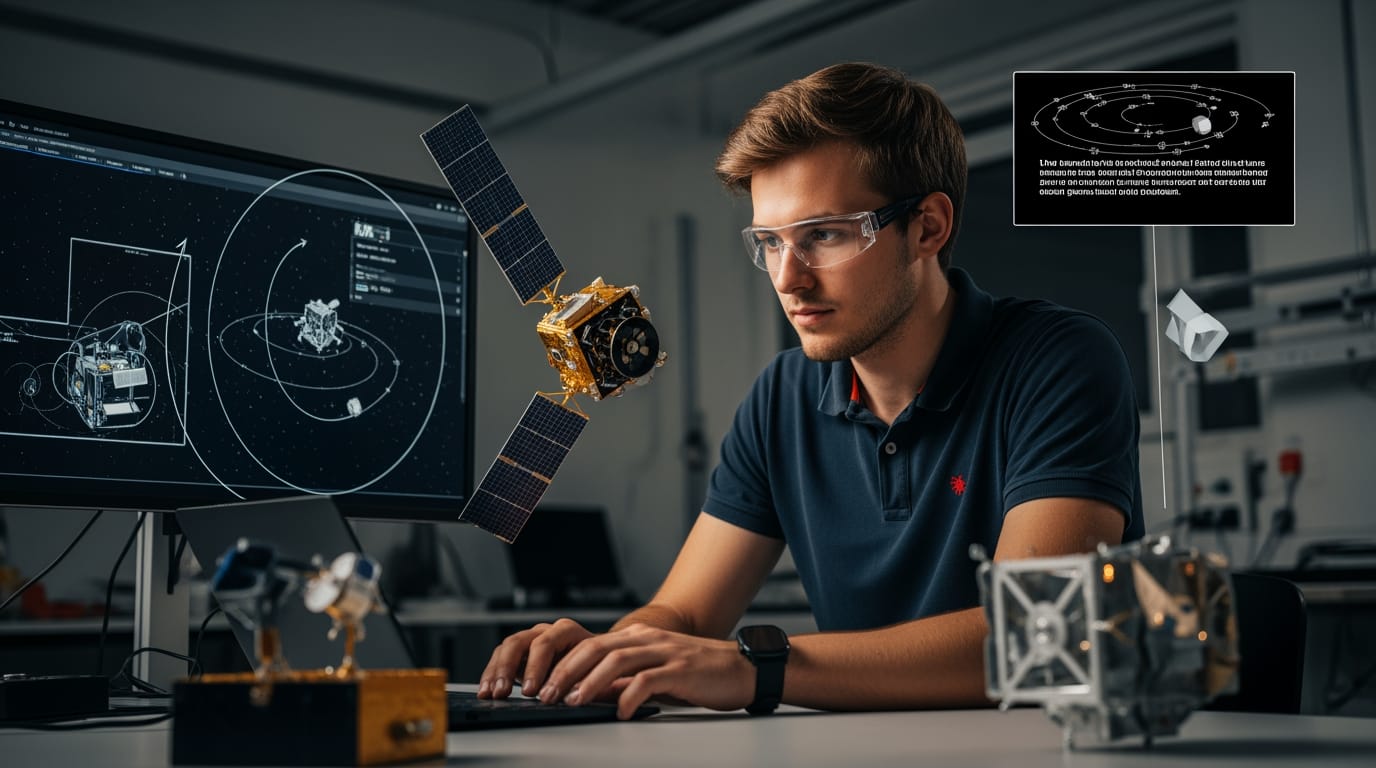
Berlin, Germany – As humanity’s footprint expands into the cosmos, the silent threat of orbiting space debris intensifies, jeopardizing critical satellite infrastructure and future space exploration. In response to this escalating challenge, a nascent German initiative, spearheaded by ambitious students, is emerging to develop innovative solutions for mitigating this cosmic clutter. While details remain in their early stages, the very existence of such a project underscores a growing recognition within the scientific and entrepreneurial communities that the problem of space junk demands urgent and creative intervention.
The increasing number of defunct satellites, spent rocket stages, and tiny fragments hurtling around Earth at speeds reaching tens of thousands of kilometers per hour poses a significant risk. Even millimeter-sized objects can cause catastrophic damage due to their immense kinetic energy, threatening operational satellites essential for communication, navigation, weather forecasting, and defense. Experts estimate that approximately 130 million pieces of debris currently orbit our planet, a figure that continues to grow with every new launch and every collision. This accumulation creates a potential for a cascading effect, known as the Kessler Syndrome, where collisions generate more debris, leading to an uncontrollable chain reaction that could render certain orbital regions unusable for generations.
The Looming Threat of Orbital Pollution
The problem of space debris is not new, but its urgency has escalated dramatically with the proliferation of satellite constellations, particularly in Low Earth Orbit (LEO). Each new satellite launched, while serving vital purposes on Earth, adds to the congestion and increases the probability of collisions. The consequences of such impacts extend beyond the loss of a single satellite; they can disrupt essential services on Earth and create thousands of new, untrackable pieces of debris, exacerbating the threat. For instance, a 2009 collision between a defunct Russian satellite and a working Iridium communications satellite generated thousands of pieces of debris that continue to orbit today. Monitoring these objects is a monumental task, currently relying on radar and laser systems that can track items typically five to ten centimeters or larger. However, the vast majority of dangerous debris is smaller and undetectable.
The economic implications are also substantial. Billions of euros are invested annually in space infrastructure, and the risk of damage or destruction due to debris presents a constant financial threat to governments and private companies alike. Beyond monetary losses, the disruption of satellite services could have profound societal impacts, affecting everything from global logistics and financial transactions to emergency services and climate monitoring. This critical situation has prompted international bodies, like the European Space Agency (ESA), to push for initiatives such as the Zero Debris Charter, aiming to ensure that by 2030, no new debris is left in orbit.
A New Generation Takes on the Challenge
Amid this complex and costly problem, a new wave of innovators, often students, are stepping forward. While specific details about the German student startup directly tackling space debris remain under wraps in general public discourse, the spirit of such ventures is exemplified by projects emerging from academic institutions across Germany. For example, students like Bahar Karahan, an aerospace engineering student at the University of Stuttgart, have been instrumental in pushing universities to commit to initiatives like the ESA's Zero Debris Charter, reflecting a deep engagement with the issue at the student level. This proactive involvement signals a commitment to developing sustainable space practices from the ground up.
Furthermore, academic groups such as the TU Darmstadt Space Technology (TUDSaT) e.V. are actively developing CubeSats – small, standardized satellites – for educational and research purposes. Their TRACE (TU Darmstadt Research CubeSat for Education) project, planned for a 2026 launch, aims to demonstrate lightweight and cost-effective technology for passive, laser-based orbit and attitude determination. While not a direct debris removal mission, such technological advancements are crucial for improving the tracking and identification of debris, a foundational step in any mitigation strategy. These student-led projects, whether through formal startups or university associations, highlight the enthusiasm and ingenuity of a generation keenly aware of the environmental responsibilities that come with space utilization.
The Path Forward: Technology and Collaboration
The challenge of space debris requires multifaceted solutions, ranging from prevention and tracking to active removal. Current and proposed solutions include robotic systems designed to capture and deorbit defunct satellites, like the ClearSpace-1 mission, a Swiss-led project with ESA support aiming to remove a rocket stage by 2025. Other concepts involve using large nets or even laser-based systems to nudge debris into decaying orbits. The ambitious nature of these projects often leads to skepticism within the space industry regarding timelines and funding, as reflected in discussions surrounding nascent startups in this field. Critics often point out that while innovative, the journey from concept to operational deployment in space is fraught with immense technological hurdles, regulatory complexities, and significant financial requirements.
However, the emergence of student-driven initiatives in Germany and across Europe contributes to a vital ecosystem of research and development. These young entrepreneurs bring fresh perspectives and a readiness to embrace high-risk, high-reward endeavors. Their contributions are essential not only for developing new technologies but also for fostering a culture of "clean space" that emphasizes sustainability and responsibility in orbital operations. The success of these ventures will depend heavily on robust funding, strategic partnerships with established space agencies and industry players, and a supportive regulatory framework that encourages innovation while ensuring safety.
Conclusion: A Brighter Future for Orbital Space
The proliferation of space debris presents one of the most pressing environmental and operational challenges facing the global space community. Yet, the energy and ingenuity emanating from young innovators, particularly in technologically advanced nations like Germany, offer a beacon of hope. The efforts of students launching new ventures, engaging with international charters, and developing cutting-edge technologies are crucial steps toward securing the long-term sustainability of orbital space.
While the path to a cleaner, safer orbital environment is undoubtedly complex and requires significant investment and international cooperation, the passion and innovation demonstrated by this new generation of space enthusiasts underscore a collective commitment to protecting humanity's access to this vital frontier. Their work, even in its early stages, is a testament to the belief that with determination and scientific rigor, the challenges of space debris can be overcome, ensuring that space remains a domain for exploration and benefit for generations to come.