Germany Activates Advanced Missile Shield, Reshaping European Defense Landscape
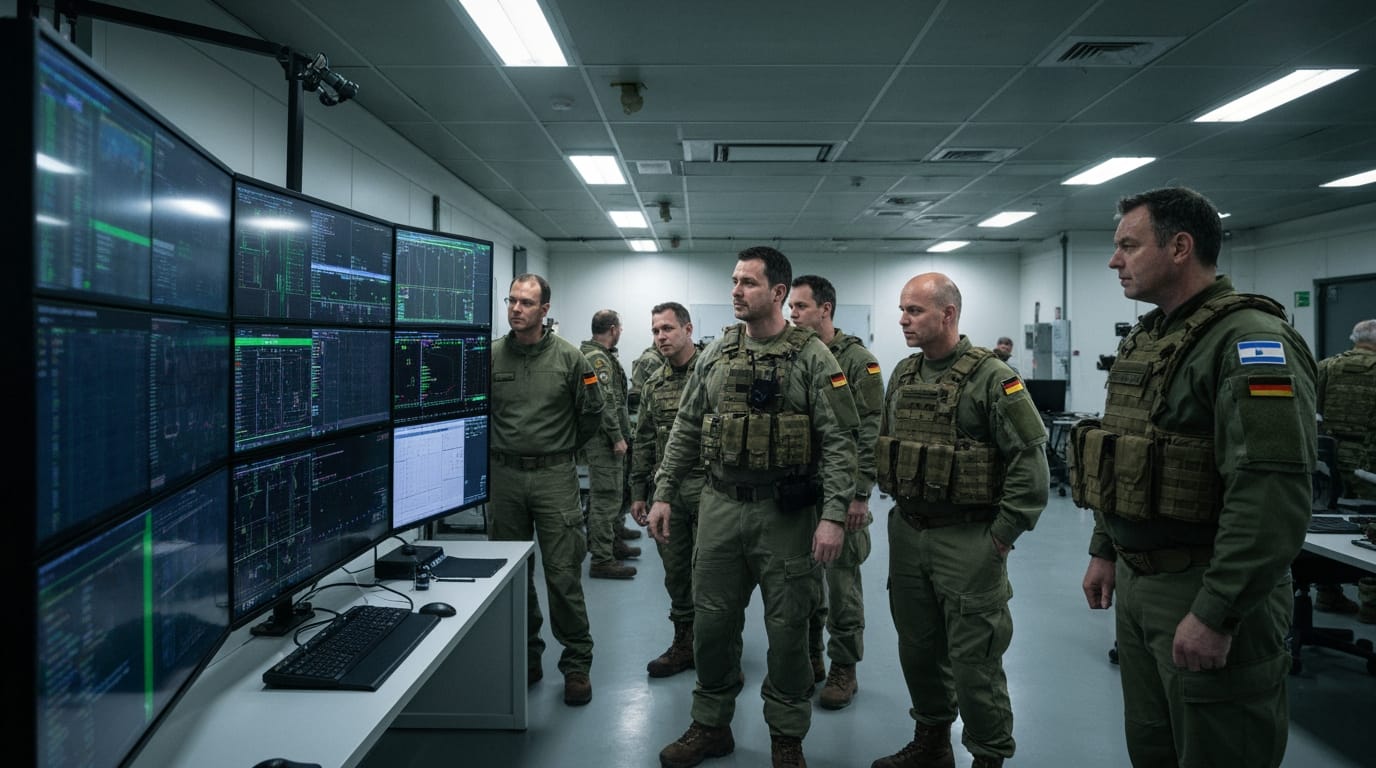
HOLZDORF-SCHÖNEWALDE AIRBASE, Germany – Germany has formally activated its first battery of the Israeli-made Arrow 3 anti-ballistic missile system, a monumental step that introduces an advanced layer of defense into Europe and signals a profound shift in Berlin's security posture. The deployment, declared initially operational this week at the Holzdorf-Schönewalde airbase south of Berlin, marks the first time this sophisticated long-range interceptor system has been operated outside of Israel, underscoring a new era of strategic cooperation and a robust response to evolving regional threats. This multi-billion-euro acquisition, Israel's largest defense export to date, is a cornerstone of Germany's "Zeitenwende" (turning point) defense initiative, aimed at bolstering national and continental security in the wake of heightened geopolitical tensions.
Germany's "Zeitenwende": A Reassessment of Security
The decision to procure the Arrow 3 system emerged directly from Chancellor Olaf Scholz's declaration of a "Zeitenwende" in February 2022, following Russia's full-scale invasion of Ukraine. This historic pronouncement acknowledged years of underinvestment in Germany's armed forces and initiated a comprehensive overhaul of the nation's defense policy. A special fund of €100 billion was established to modernize the Bundeswehr, with Germany committing to significantly increase its defense spending. Plans now aim for Germany to reach NATO's target of 2% of its Gross Domestic Product on defense, with projections to increase spending to 3.5% of GDP by 2029, equating to approximately €162 billion annually. The acquisition of the Arrow 3 system stands as a pivotal element within this rearmament agenda, addressing a critical capability gap in Germany's and Europe's layered air defense architecture.
The Arrow 3 System: Sentinel of the Upper Atmosphere
The Arrow 3 is an exo-atmospheric anti-ballistic missile system, jointly developed by Israel Aerospace Industries and Boeing with significant U.S. support. Its primary mission is to intercept and destroy medium- and long-range ballistic missiles, including those potentially carrying weapons of mass destruction, at altitudes exceeding 100 kilometers and from ranges up to 2,400 kilometers. This "hit-to-kill" technology neutralizes threats outside Earth's atmosphere, minimizing the risk of debris or warhead remnants impacting populated areas.
Each Arrow 3 unit is a complex network, comprising multiple interceptor launchers, a substantial missile inventory, the advanced EL/M-2080S Super Green Pine long-range radar, and the Citron Tree battle management system. These integrated components allow the system to detect, track, and engage multiple ballistic missile threats simultaneously and rapidly. The system was chosen by Germany to provide a crucial "upper-tier" defense, complementing its existing Patriot surface-to-air missile batteries and the domestically developed IRIS-T SLM systems, which target medium- and short-range threats. This layered approach is designed to offer comprehensive protection against a wide spectrum of aerial dangers.
The procurement agreement, valued at approximately €4 billion (or $4 billion to $4.6 billion by various accounts), was officially signed in August 2023 by German and Israeli defense ministries, with formal United States approval being a necessary prerequisite due to its co-development. This deal represents the single largest defense export in Israel's history, reflecting the system's strategic importance and the urgency of Germany's defense needs.
Anchoring the European Sky Shield Initiative
The deployment of the Arrow 3 system is a foundational element of the European Sky Shield Initiative (ESSI), a German-led project launched in 2022 by Chancellor Scholz. ESSI aims to create an integrated European ground-based air defense system to protect the continent's airspace against a range of threats, from drones and cruise missiles to ballistic missiles. Currently, 24 European nations participate in the initiative, seeking to enhance collective defense capabilities, streamline procurement, and improve interoperability.
The Arrow 3 will be integrated into NATO's air and missile defense command network, providing a strategic high-altitude interception layer that extends protection against long-range missile threats originating from beyond Europe's borders. Germany plans to deploy four complete Arrow 3 air defense units, with the initial operational capability now achieved at Holzdorf-Schönewalde. Future installations are planned for northern Germany (Schleswig-Holstein) and southern Germany (Bavaria) to ensure maximum coverage across the country, with full operational capability expected by 2030. Analysts suggest the system has the range to intercept ballistic missiles, such as Russia's Iskander, while still over hostile territory.
A Deepening Strategic Partnership
Beyond its immediate defense implications, the Arrow 3 acquisition underscores a deepening strategic partnership between Germany and Israel. This historic deal, coming barely 80 years after the Holocaust, symbolizes a profound shift in their relationship, with Israeli officials emphasizing a shared commitment to security. Senior Israeli defense officials, including Director General of the Ministry of Defense Amir Baram, were present at the handover ceremony, highlighting the significance of the event.
Future cooperation between the two nations appears set to expand. Germany has already expressed interest in the upcoming Arrow 4 system, designed to counter even more complex ballistic threats and provide additional interception opportunities. Discussions are also underway for joint production of Arrow 3 interceptor missiles and further acquisitions of Israeli defense systems, signaling a long-term commitment to security collaboration across air, land, and space domains. This alliance represents not only a technological achievement but also a powerful statement of solidarity and a united front in a volatile global security environment.
Conclusion
The activation of Germany's first Arrow 3 missile defense battery marks a watershed moment for European security. It solidifies Germany's commitment to its "Zeitenwende" defense transformation and positions the nation at the forefront of European missile defense capabilities. By acquiring this advanced system, Germany not only strengthens its own protection against long-range ballistic missile threats but also significantly enhances the collective security framework of the European Sky Shield Initiative and NATO. This strategic investment, forged in cooperation with Israel and the United States, sends a clear message about Europe's determination to safeguard its population and infrastructure, providing a crucial layer of deterrence in an increasingly unpredictable world.